
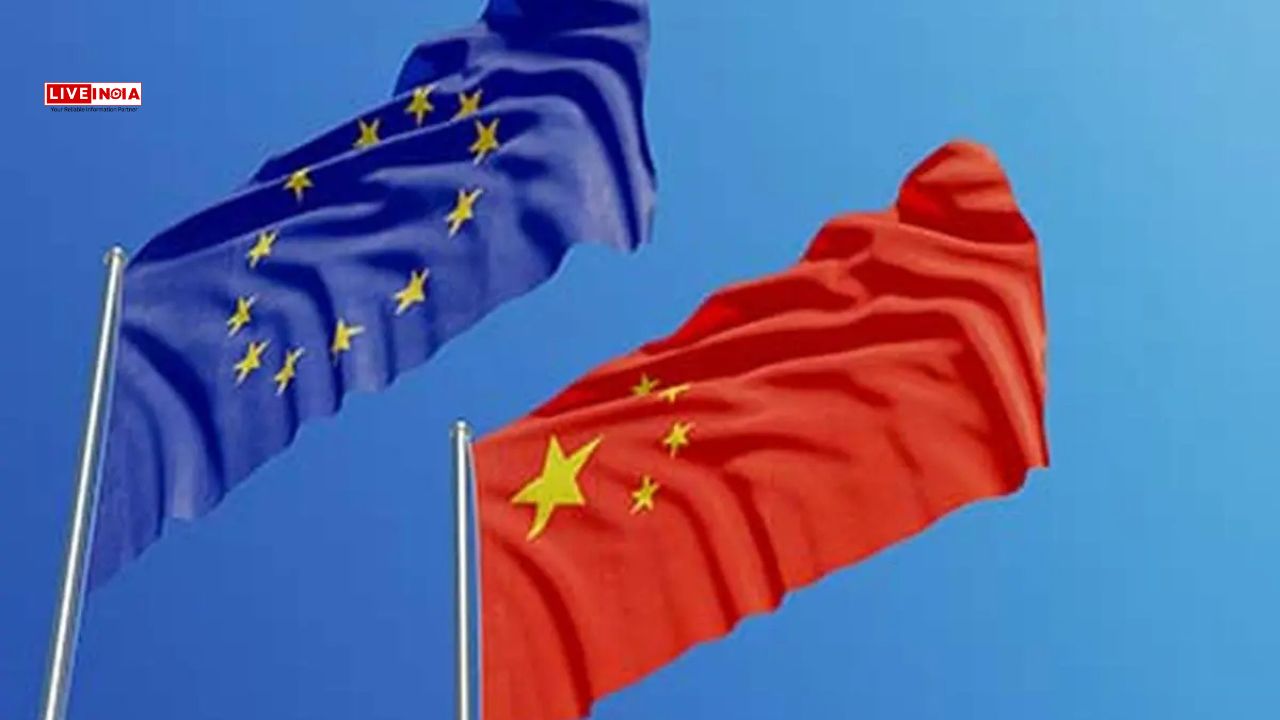


President Xi Jinping warns of deepening global economic instability as China raises tariffs, calls for Europe and India to unite against Trump’s aggressive trade policies.
New Delhi, April 11 – As trade tensions with the United States spiral, China on Friday urged the European Union to unite with Beijing in resisting what it called “unilateral bullying” by the Trump administration. The call comes just days after a similar diplomatic outreach to India, signaling a shift in China’s global strategy amid a fierce tariff war.
Also Read: Rupee Surges 51 Paise to 86.17 vs USD on Trump Tariff Pause, Weaker Dollar
Speaking in Beijing after a meeting with Spanish Prime Minister Pedro Sanchez, President Xi Jinping said,
“China and Europe should fulfill their international responsibilities and jointly resist unilateral bullying practices… This is essential to safeguard legitimate rights and international justice.”
China’s latest outreach follows President Donald Trump’s decision to raise tariffs on Chinese imports to 145%, the most aggressive such move to date. In retaliation, China has imposed tariffs of 125% on American goods, effective Saturday.
China Warns of Escalation
In a separate briefing, Chinese Foreign Ministry spokesperson Lin Jian emphasized Beijing’s firm position:
“China does not want to fight these wars… but it is not scared. If the US insists on tariffs and a trade war, China’s response will continue to the end.”
Jian reiterated that “trade wars have no winners”, calling on Washington to stop “acting recklessly” and return to diplomatic negotiations.
Xi’s Subtle Praise of India-China Cooperation
In an unusual show of openness, Xi also praised growing dialogue with India, saying both nations should collaborate in defending the interests of the Global South. On April 1, he told Indian President Droupadi Murmu that the two Asian giants should “make the elephant and the dragon dance.”
A Chinese Embassy post further emphasized the need for Delhi and Beijing to “stand together” against economic coercion, even as India has opted not to retaliate against Trump’s 26% tariff on Indian goods.
India, while impacted—particularly in seafood, steel, and automotive exports—is instead focusing on negotiated solutions through trade clause provisions rather than reciprocal tariffs.
Europe’s Response: Diplomatic but Measured
Spanish Prime Minister Pedro Sanchez, whose country imports over $50 billion worth of Chinese goods annually, responded diplomatically, stating:
“We must not let trade tensions stand in the way of the potential growth of our relationship, even if we recognize Europe’s trade deficit with China.”
Backdrop: Trump’s Expanding Tariff Strategy
Trump’s current tariff regime targets multiple global partners:
- 145% on Chinese imports (including 20% over fentanyl-related concerns)
- Suspended 20% tariff on EU goods (after brief retaliation)
- 26% “discounted” reciprocal tariff on India
Excluded from these hikes are steel, aluminium, and autos, which remain under separate 25% levies.
While Trump maintains that China will eventually “want to make a deal,” Beijing’s messaging this week signals a hardened posture and widening diplomatic counterbalance, with efforts to unite major economies against American protectionism.
Tags:
China EU alliance, Trump China tariffs, Xi Jinping EU outreach, China India trade diplomacy, US China trade war 2025, Donald Trump tariffs, Spanish PM China visit, India US trade relations, global trade war, China retaliation, Xi Jinping Pedro Sanchez meeting