
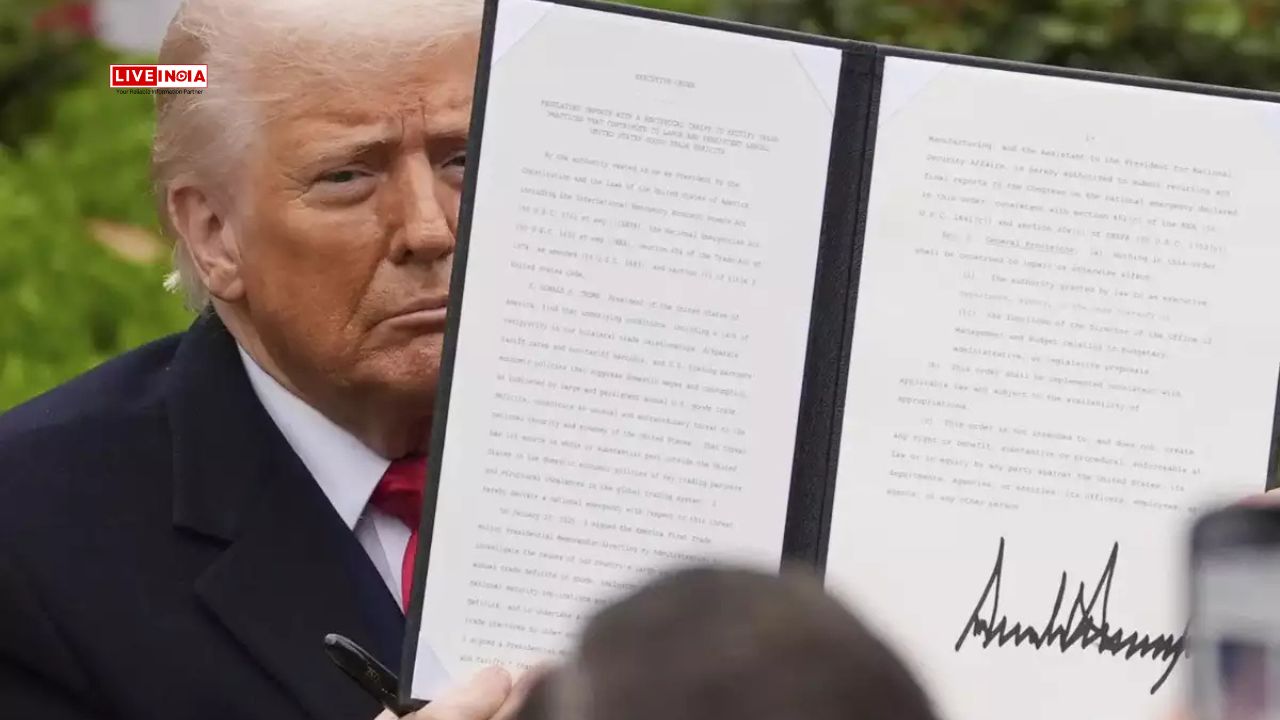


From China to India, Trump’s sweeping tariffs target over 60 countries, raising fears of a global trade war and inflation in the US.
📍 Washington, D.C. | April 3, 2025
In a landmark move triggering global concern, US President Donald Trump has officially unveiled his long-promised “reciprocal tariffs”, labeling April 2 as “Liberation Day” for the American economy. With a 10% baseline import tax kicking in from April 5, and additional country-specific retaliatory tariffs from April 9, the decision is expected to reshape trade flows and could have far-reaching economic consequences worldwide.
Also Read: “Mixed Bag, Not Setback”: India Analyzing Impact of Trump’s 26% Tariff
Here’s a 10-point summary of what these tariffs mean and who’s affected:
🔟 10-Point Guide To Trump’s Reciprocal Tariffs
Also Read: Trump Spares Russia in Tariff Blitz Despite Harsh Rhetoric, Raises Eyebrows Globally
- Universal 10% Tariff:
All US imports (excluding a few categories) will face a 10% base tariff starting April 5. - Country-Specific Tariffs Effective April 9:
Tailored reciprocal tariffs, aimed at countries with alleged unfair trade practices, come into effect April 9. - Highest Hit Nations:
- China: 34% (plus a previous 20% fentanyl-related tariff = 54%)
- India: 26%
- Vietnam: 46%
- EU: 20%
- Japan: 24%
- South Korea: 25%
- Taiwan: 32%
- Thailand: 36%
- China’s Small Parcels Targeted:
Trump eliminated the de minimis exemption for small Chinese shipments (under $800), citing loopholes exploited by Shein and Temu. These now face 30% duty or $25/item, increasing to $50 from June 1. - Russia Exempted:
Despite recent tensions and sanctions, Russia is not on the tariff list, with the White House citing “already minimal trade.” - Canada & Mexico Exempt (For Now):
These two major partners escape the new tariffs but continue to face earlier 25% levies on certain goods, including steel, autos, and border-related imports. - Sectoral Exemptions Continue:
Existing Section 232 tariffs remain on items like steel, aluminum, auto parts, and semiconductors, with no additional reciprocal tariffs added. - Trump Uses Emergency Powers:
The tariffs are enacted under the International Emergency Economic Powers Act (IEEPA)—historically used for sanctions, not trade duties. - Consumer Impact Likely:
Experts warn that US consumers may face price hikes, especially on electronics, clothing, autos, and groceries due to increased import costs. - Global Trade War Risks Rising:
With retaliatory actions expected from impacted countries, analysts are warning of instability in global supply chains, slower growth, and higher inflation globally.
Also Read: Inside Trump’s Tariffs: China, India, EU Among Hardest Hit in New Trade Blitz
🎯 What This Means For India:
India faces a 26% reciprocal tariff, which Trump termed a “discounted rate” compared to what the US faces in return. Indian exporters may now see shrinking margins, and US-bound goods like textiles, auto parts, and pharmaceuticals could become less competitive.
🏷️ Tags:
Trump tariffs, reciprocal tariffs, US import tax, Trump India tariff, China trade war, April 5 tariffs, global trade war, Shein Temu loophole, Trump economic policy, US IEEPA law, US manufacturing push, Trump vs China trade, India-US trade, tariff impact on consumers