
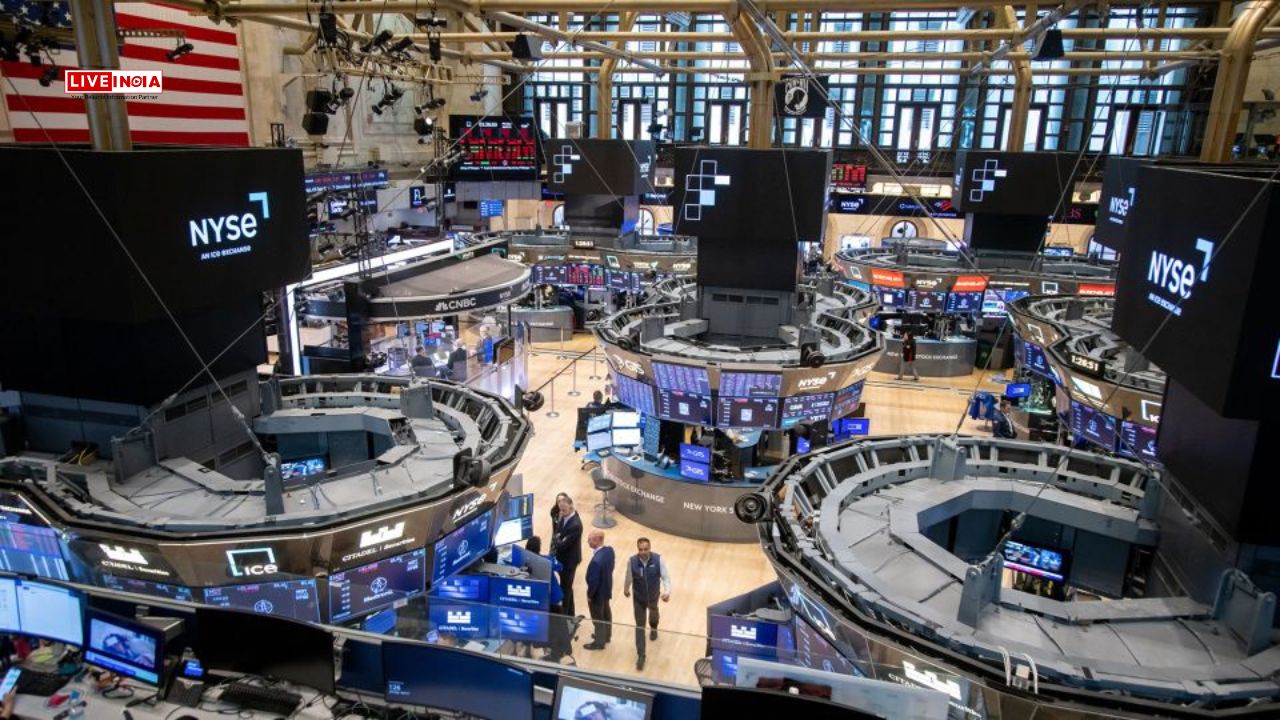


With the S&P 500 down 7.3% in 100 days, investor anxiety surges amid trade tensions, dollar slump, and fears of long-term volatility under Trump’s renewed protectionist policies.
New York, May 1:
President Donald Trump’s second term in office has rattled financial markets, delivering the worst 100-day stock market performance since President Richard Nixon’s second term in 1973. The S&P 500 has declined 7.3% since the January 20 inauguration, mirroring the deep uncertainty investors now associate with Trump’s confrontational trade agenda and erratic policy shifts.
Also Read: Sensex, Nifty End Flat; Investors Lose ₹4 Lakh Crore Amid Mid, Small-Cap Selloff
Key Market Indicators Reflect Deepening Anxiety:
- The Cboe Volatility Index (VIX) reached a five-year high in early April.
- Futures markets for stocks, bonds, and currencies suggest volatility will persist well beyond the near term.
- The US Dollar Index has slumped 9%, the steepest decline for any president’s first 100 days in office.
Also Read: Why Are Stock Markets Closed Today? Here is a Comprehensive List of All Holidays
“Semi-Permanent Uncertainty” in the Markets:
“They’ve injected a sort of a semi-permanent uncertainty,” said Matt Thompson of Little Harbor Advisors.
Worries about tariffs disrupting global supply chains, weakening consumer spending, and fanning inflation have driven the S&P 500 near bear market territory. Though some ground has been recovered, the sharp drop marks one of the worst early-term market performances in modern presidential history.
Comparisons with Past Presidents:
- Nixon (1973): S&P 500 fell 9.7% in 100 days amid Watergate and inflation.
- Bush (2001): Index dropped 6.9% due to the dot-com bubble burst.
- Trump I (2017): S&P 500 rose 5.3% in the first 100 days, ending his term with nearly 70% stock market growth.
In stark contrast, Trump’s second-term start has been marred by protectionist policies and an unpredictable stance on global trade — unnerving domestic and foreign investors alike.
Dollar’s Safe-Haven Status in Question:
The dollar has been hit harder this term than during Trump’s first. While the 2017 decline was tied to delayed trade policy actions and positive global growth, the current slide is directly linked to aggressive trade restrictions and policy uncertainty.
“The biggest lesson of the first hundred days is that the U.S. policy agenda is a negative for the dollar,” said Thierry Wizman of Macquarie.
Treasury Markets Outperform Amid Chaos:
Interestingly, U.S. Treasury returns ranked second-highest among modern presidencies during this 100-day stretch, trailing only Bill Clinton’s debut term.
Despite the stock plunge, the White House has focused on positive inflation data and major investment commitments from companies like Apple, Hyundai, and Nvidia aimed at reshoring manufacturing.
“Within 100 days, Americans saw the first monthly price drop in years,” said White House spokesperson Kush Desai.
Outlook: More Turbulence Ahead?
While some analysts believe the White House may moderate its pace, others warn the initial phase of Trump’s second term could set the tone for prolonged market instability.
“It could set the tone for his term, based on history,” noted Matt Gertken of BCA Research.
Tags:
Trump second term, stock market crash 2025, 100-day market performance, S&P 500 decline, Nixon market comparison, dollar index, trade policy volatility, VIX index, global markets, investor sentiment