
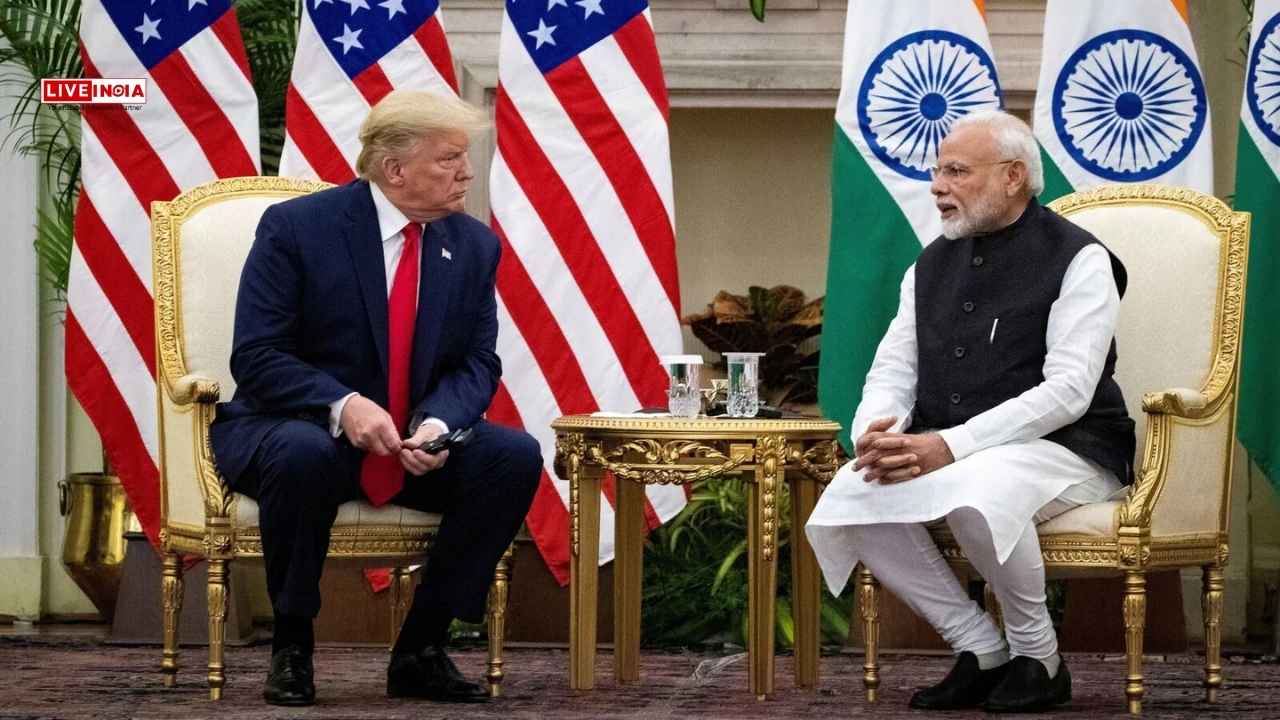


With the 90-day US tariff pause ending on July 9, Indian markets remain cautious. A favorable trade pact could energize key export sectors and investor sentiment, while deadlock risks fresh volatility.
July-5, 2025: As the July 9 deadline for US President Donald Trump’s 90-day tariff suspension draws near, anxiety is building in Indian financial circles. The Indian stock market has entered a wait-and-watch consolidation phase, posting a weekly dip of 0.7%, reflecting global investor uncertainty.
Also Read: Stock Market Weekly Wrap: Top Gainers, Losers, and Market Movers You Can’t Ignore
Commerce Minister Piyush Goyal has made it clear: India will not rush into any deal unless it is fully negotiated and in the national interest. This cautious stance comes amid a backdrop of a 26% additional duty imposed by the US on Indian goods and pending issues in agriculture, steel, aluminium, and automobiles.
🔍 Where Do Talks Stand?
India’s trade delegation has returned from Washington D.C. after initial discussions on an interim trade agreement. While some progress has been made, disagreements over tariffs—especially the 25% duty on autos and 50% on metals—remain.
Also Read: Gold Prices Expected to Surge in H2 2025- Can Cross These Levels: ICICI Report
Despite this, experts see signs of optimism. According to Sujan Hajra, Chief Economist at Anand Rathi Group, signals from both New Delhi and Washington point to a deal being “within reach” before the July 9 deadline.
📈 Who Stands to Gain?
If a deal is struck, expect a rally in IT, pharmaceuticals, textiles, auto components, and electronics—all key export-driven sectors.
- Textiles: India exported $9.7 billion worth of textiles to the US in 2023.
- Pharma: 31% of India’s $8 billion drug exports go to the US.
- Electronics: Exports to the US exceeded $6.6 billion in 2023.
“Reduced tariffs and better access could trigger foreign investor interest, higher FDI inflows, and boost the rupee, especially in sectors aligned with export and services,” said Harshal Dasani, Business Head at INVasset PMS.
Also Read: Foxconn Posts Record Q2 Revenue on AI Surge, Warns of These Risk Factors
⚠️ What if Talks Collapse?
If talks fail or stall, markets may face short-term volatility, particularly in export-reliant sectors. Sectors such as agriculture and dairy, already grappling with high tariffs, may bear the brunt.
Nitin Jain, Senior Analyst at Bonanza, recommends a defensive strategy:
“Stick to domestic-focused sectors like FMCG and banking. Avoid highly globalized plays like metals and capital goods for now.”
He also suggested gold-linked ETFs and high-quality Indian stocks for long-term plays during potential pullbacks.
🎯 Market Strategy Ahead of July 9:
- Positive Deal Outcome → Surge in IT, pharma, electronics; boost to rupee and FII flows
- No Deal or Partial Breakthrough → Volatility, pressure on export sectors, defensive pivot to FMCG/banking
- Geopolitical Fallout → Caution across global indices, possible dips in risk assets
As Trump’s tariff deadline nears, the outcome of the India-US trade negotiations could determine the next major trigger for Indian markets.
🗂️ Tags:
India US Trade Deal, Trump Tariff Deadline, Indian Stock Market Outlook, Piyush Goyal Trade Talks, US India Tariff War, FDI Inflows India, Export Sector India, Pharma Exports, Textile Exports India, Electronics Trade, Stock Market Strategy 2025