
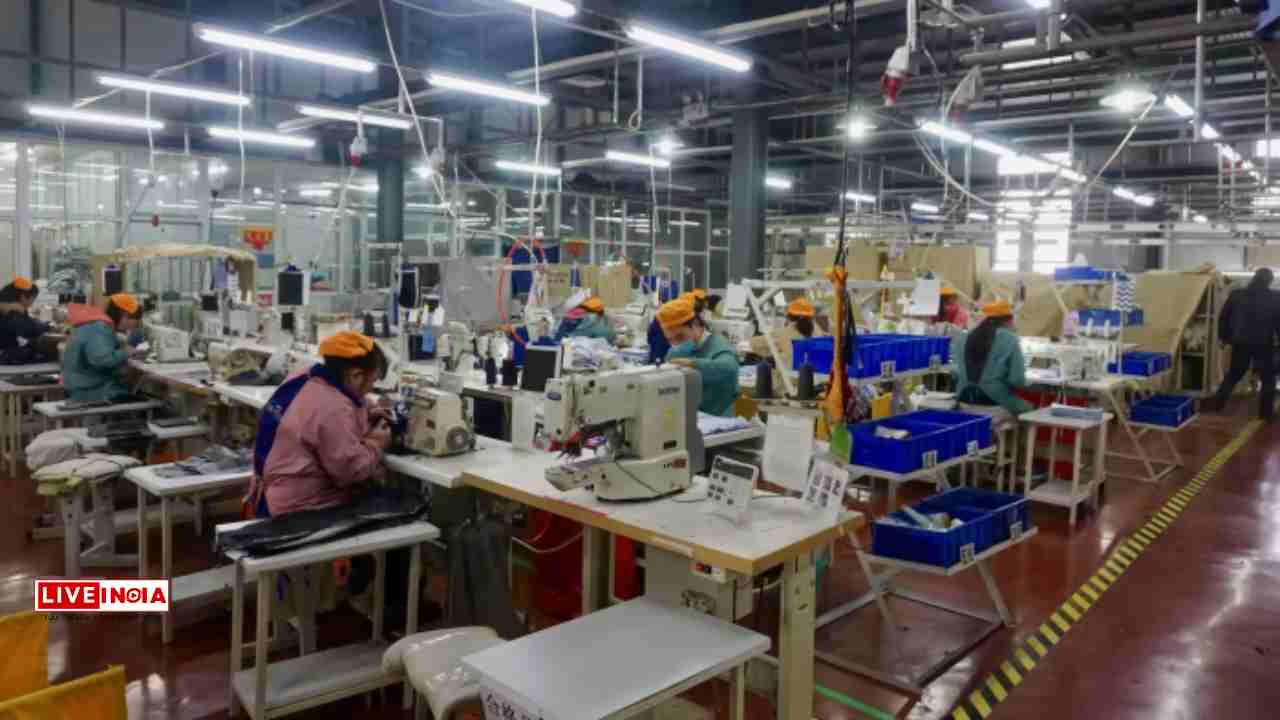


U.S. tariffs under Trump’s second term are pushing Chinese manufacturers to the brink, with collapsing orders, job losses, and a desperate scramble to survive amid rising costs and falling margins.
SHANGHAI, March 31: As U.S. President Donald Trump reactivates his aggressive trade policy in his second term, small and mid-sized Chinese manufacturers are bearing the brunt of a renewed tariff storm. Richard Chen, a Christmas decoration supplier in Dongguan, says orders from U.S. retail giants like Walmart and Costco have been slashed in half — leaving him in survival mode.
“There’s no room left to cut prices. Yet we sometimes still have to just to get an order,” Chen said grimly. “We’re losing money.”
Trump’s new tariffs — a 10% duty on $400 billion worth of Chinese goods as of February 4, followed by another 10% hike in March — are expected to be followed by further increases on April 2. While the trade war of 2018 was bruising, manufacturers say this round could be fatal.
A Perfect Storm for Low-End Producers
Unlike in 2018, when local governments provided support and some factories absorbed costs, this time China’s manufacturing backbone is too financially stretched. Thin profit margins, rising raw material costs, and global competition have squeezed producers dry.
Brooklyn-based entrepreneur Liz Picarazzi, CEO of trash box maker Citibin, has been forced to rethink her supply chain after tariffs on her Chinese-made goods soared to 52.5%.
“We knew this could happen, but no one can survive an additional 45% in tariffs,” she said. Picarazzi is now relocating all manufacturing to Vietnam.
A Downward Spiral
U.S. retailers are demanding 10% price cuts from Chinese suppliers, but manufacturers say 7% is the most they can manage — and even that is unsustainable.
“Some buyers are just sending out mass letters requesting 10% discounts across the board,” said Jonathan Chitayat, Asia head of Genimex Group. “It’s unrealistic. Most suppliers don’t even have 10% margin to begin with.”
After getting burned in 2018 when customers refused to pay for tariff-impacted goods, some Chinese exporters now demand 100% upfront payment — especially from U.S. clients.
“We warned our buyers early, right after Trump’s reelection,” said Dominic Desmarais of Liya Solutions, which connects international businesses with Chinese suppliers. “Full payment upfront, no exceptions.”
Job Cuts on the Horizon
With orders drying up and costs rising, many factories are downsizing or shutting down entirely. According to Monash University professor He-Ling Shi, “a lot of enterprises have already decided to close their doors.”
Research from Stanford University found that every 1% rise in tariffs cuts supplier margins by 0.35% — a death knell in a market already operating on razor-thin margins. The 2018 trade war cost China an estimated 3.5 million manufacturing jobs. Analysts expect similar, if not worse, fallout this time.
Despite hopes that local governments would step in with subsidies, rent waivers, or rebates, many are heavily indebted due to China’s ongoing property crisis.
“If there’s no money in their pockets, how can they help?” asks Shi. “And Beijing isn’t keen on them borrowing more.”
A Pivot That’s Not So Simple
The Chinese government is urging exporters to turn inward or explore new international markets. But that’s easier said than done — especially in a climate of overcapacity and weak domestic consumption.
While Trump aims to push manufacturing back to the U.S., businesses like Citibin say it’s not feasible.
“I’ve explored U.S. manufacturing half a dozen times,” said Picarazzi. “But cost and quality just don’t add up.”
As she moves her production to Vietnam, she’s already told her customers to expect price hikes.
“This is a really unfair thing for the American government to do — to its own companies and consumers,” she said. “There’s no patriotism in crushing American businesses.”