
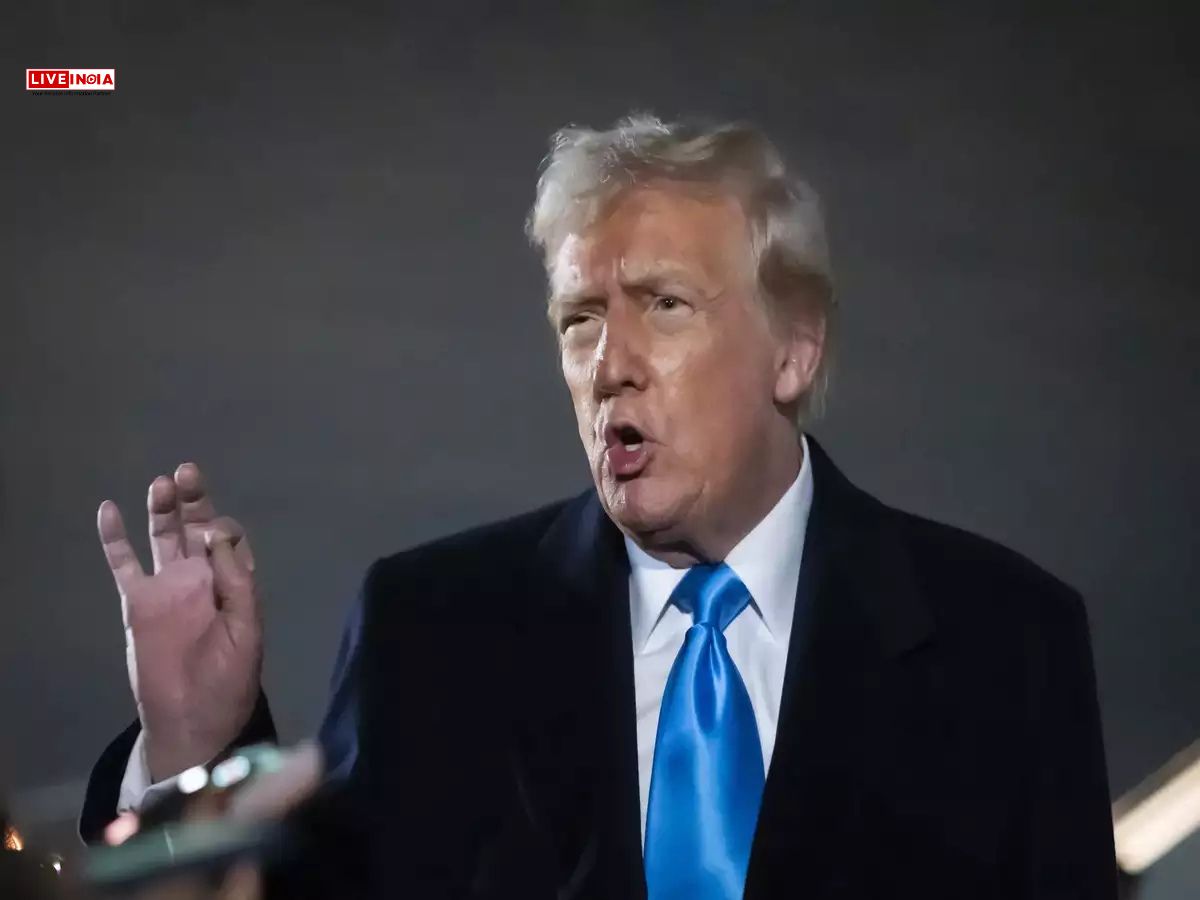


Former U.S. President Trump reiterates his stance on global trade, demanding equal tariffs on Indian imports.
February 19, 2025: In a recent conversation with Fox News’ Sean Hannity, former U.S. President Donald Trump emphasized his commitment to enforcing reciprocal tariffs on countries, including India. Trump recalled his discussion with Prime Minister Narendra Modi, stating that the U.S. would impose the same level of tariffs on Indian imports as India levies on American goods.
Also Read: Trump Hails Elon Musk as America’s Smartest Mind, Approves Astronauts’ Return from Space
“I told Prime Minister Modi yesterday—he was here—I said, ‘Here’s what we’re going to do: reciprocal. Whatever you charge, I’m charging,'” Trump stated. “He (PM Modi) goes, ‘No, no, I don’t like that.’ ‘No, no, whatever you charge, I’m going to charge.’ I’m doing that with every country.”
Trump’s remarks come amid long-standing concerns over India’s high import duties, particularly in the automobile sector, where foreign car imports face tariffs of up to 100%. Tesla CEO Elon Musk, who was also present, confirmed these figures, adding, “It’s 100 percent—auto imports are 100 percent.”
Trump argued that such steep tariffs make it difficult for American businesses to operate in India without setting up local manufacturing plants, a move he considers unfair to the U.S. economy. Under his proposed reciprocal system, Washington would mirror India’s tariff rates, ensuring a level playing field.
Also Read: Why are we giving $21 Million to India? They have a Lot more Money- Trump
This is not the first time Trump has criticized India’s trade policies. During his first term, he labeled India the “tariff king” and pushed for lower duties on U.S. goods. However, despite trade tensions, both nations recently pledged to double bilateral trade to $500 billion by 2030 and aim to finalize a bilateral trade agreement (BTA) by Autumn 2025.
With Trump’s continued push for economic reforms, it remains to be seen how India will respond—whether by adjusting tariff policies or preparing for a potential trade dispute.