
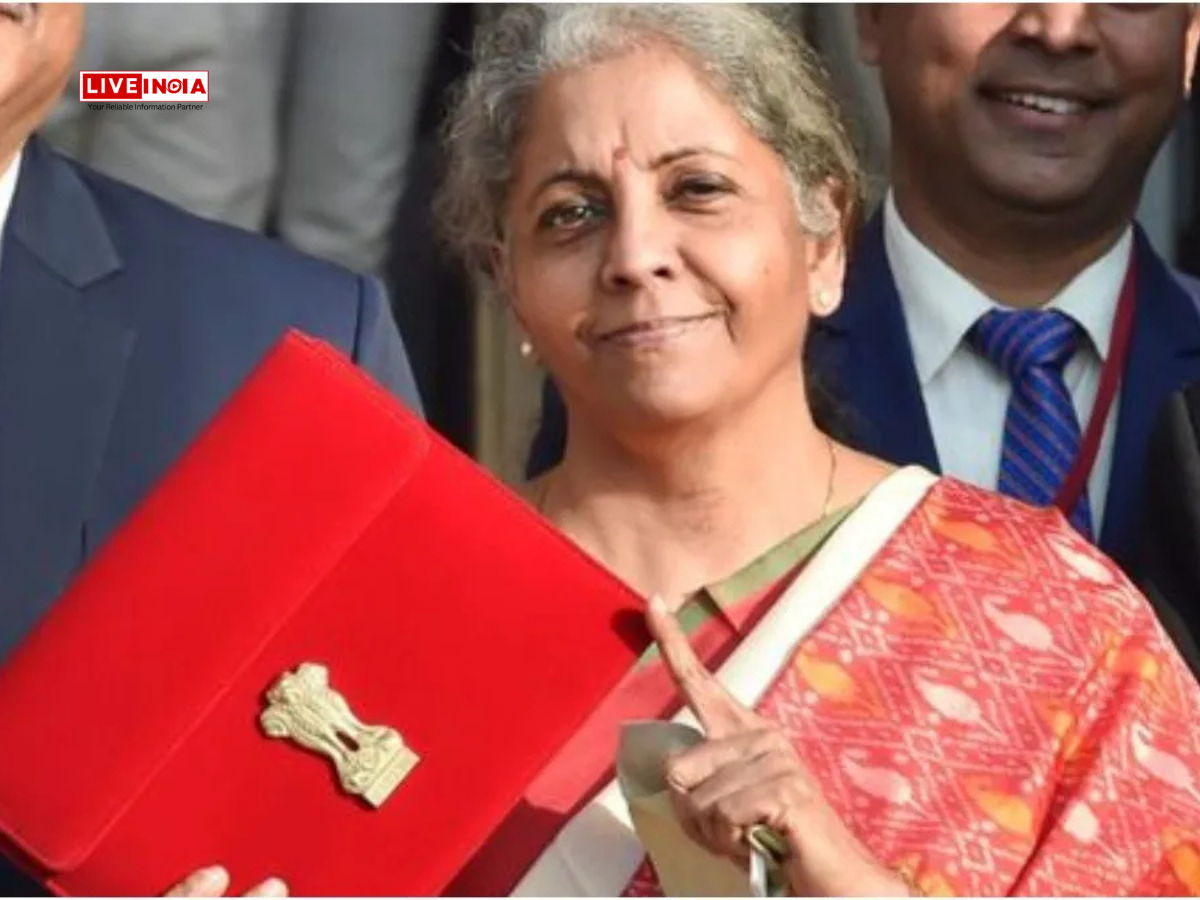


From middle-class tax relief to AI-driven growth and tariff reforms, Finance Minister Nirmala Sitharaman gears up for transformative policies amidst geopolitical challenges.
February 1, 2025: Finance Minister Nirmala Sitharaman is set to present the first full Union Budget of Prime Minister Narendra Modi’s third term today. Marking her record eighth consecutive budget, Sitharaman’s announcements are highly anticipated, especially in the face of slowing economic growth and mounting geopolitical uncertainties.
Also Read: Will Budget 2025 Bring Income Tax Relief for the Middle Class? PM Modi Drops Hints
Here’s your 10-point summary of what to expect:
Also Read: Budget Session 2025 Kicks Off: Nirmala Sitharaman to Present Economic Survey
- Budget Timing and Context
Sitharaman will present the Budget amidst global challenges, including US President Donald Trump’s tariff threats and India’s economic growth slowing to a four-year low. Her speech is scheduled to begin at 11 a.m. - Middle-Class Tax Relief
Following PM Modi’s invocation of Goddess Lakshmi to bless the middle class, significant tax concessions are expected. Hopes are high for a reduction in income tax rates and an increase in the standard deduction, benefiting salaried individuals. - Income Tax Expectations
Current income tax exemption limits stand at ₹2.5 lakh under the old regime and ₹3 lakh under the new regime. Many anticipate revised tax slabs to reduce the financial burden on the middle class. - Financial Inclusion Drive
Inspired by the Economic Survey, Sitharaman may introduce policies to expand credit access for rural households and small businesses through microfinance institutions and self-help groups. - Massive Infrastructure Push
To meet India’s development goals, substantial investments in infrastructure are expected. Analysts predict announcements of new projects to boost economic growth and employment. - Revised Tariff Structures
The Budget is likely to revisit tariffs to promote domestic manufacturing and reduce import dependency. This would also support exchange rate stability amidst rising global challenges. - AI Initiatives
Following global discussions at Davos, Sitharaman is expected to focus on Artificial Intelligence (AI). India might announce policies to compete with China’s DeepSeek AI model, pushing innovation and technology-driven growth. - Corporate Tax Reforms
Economists expect Sitharaman to consider corporate tax relief to counter potential US policy changes. India reduced its corporate tax rate from 30% to 22% in 2019, but further reductions could incentivize global investments. - Boosting Manufacturing
The Budget may unveil concessionary tax rates for new manufacturing facilities, enhancing India’s competitiveness in the global market. - Fiscal Consolidation Path
The government is likely to aim for a fiscal deficit target of 4.5% of GDP by FY26, continuing its commitment to fiscal discipline.
Key Expectations:
Also Read: Gold Prices Hit Record ₹83,800 Per 10 Grams: Key Drivers Behind the Surge
With geopolitical and domestic economic challenges in focus, Budget 2025 is expected to deliver critical reforms that shape India’s growth trajectory. All eyes are on Sitharaman’s speech to see how these expectations unfold.
Tags:
Union Budget 2025, Nirmala Sitharaman, Middle-Class Tax Relief, AI Policies, Corporate Tax Reforms, Infrastructure Development, India Economic Growth, Fiscal Deficit Targets