
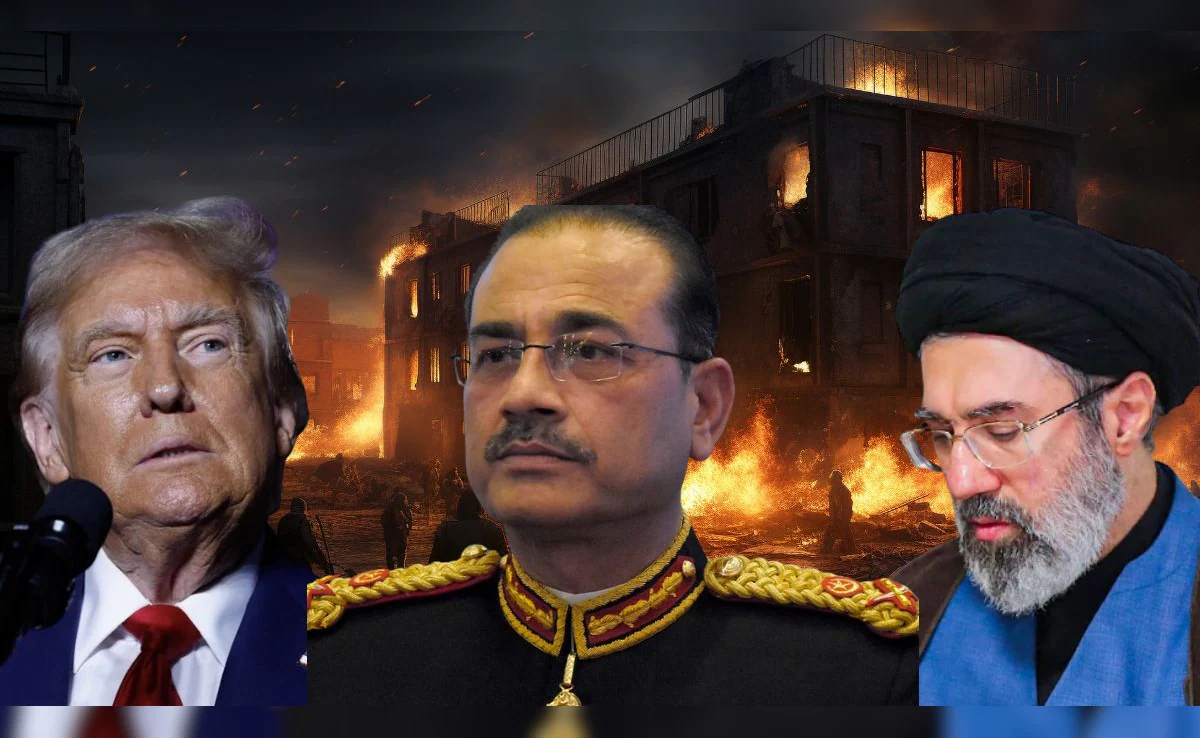


What appears to be a diplomatic success for Pakistan in brokering a ceasefire between the United States and Iran is, in reality, a story driven by compulsion rather than strategy. Faced with economic fragility, geopolitical pressure, and internal security risks, Pakistan’s leadership stepped into a role it could scarcely avoid.
At the centre of this development were Prime Minister Shehbaz Sharif and Army Chief Asim Munir, who were reportedly under intense pressure to facilitate dialogue and prevent further escalation in the region.
Economic Pressures Forced Islamabad’s Hand
Pakistan’s heavy dependence on Gulf oil imports made the situation particularly urgent. Disruptions in the Strait of Hormuz—a critical channel for global energy supplies—threatened to push fuel prices up by nearly 20%.
Such a spike would have worsened inflation, triggered austerity measures, and deepened Pakistan’s already fragile economic condition. Additionally, remittances from millions of Pakistanis working in Gulf countries—equivalent to a major share of export earnings—were at risk.
For a government already navigating economic instability and reliant on international financial support, a prolonged conflict was simply not an option.
US Pressure And Backchannel Diplomacy
According to reports, the United States sought a ceasefire without directly engaging Iran, making Pakistan a strategic intermediary. Its geographic proximity and established ties with Iranian institutions made it a suitable conduit.
Pakistan’s involvement reportedly came after sustained diplomatic pressure from Washington. High-level backchannel communications included interactions with US Vice President JD Vance and Iran’s Foreign Minister Abbas Araghchi, reflecting the urgency of the situation.
Security Concerns Added To The Urgency
Beyond economics, the potential spillover of conflict posed serious risks. Islamabad faced concerns over refugee inflows, instability in border regions like Balochistan, and prolonged energy disruptions.
These risks made mediation not just a diplomatic choice but a national security necessity.
Strategic Optics And Potential Gains
By facilitating the ceasefire, Pakistan has attempted to position itself as a key diplomatic player. Domestically, this has strengthened the leadership’s image, with even discussions emerging around international recognition.
From a strategic standpoint, Islamabad may also seek to leverage this role for future economic and geopolitical benefits, including stronger ties with Gulf nations and potential support from Western allies.
India’s Perspective: Compulsion Over Strategy
Indian assessments suggest that Pakistan’s role was largely driven by external pressure rather than independent diplomatic ambition. The move is seen as a way for the US to manage the situation indirectly, while providing Pakistan’s leadership with short-term political leverage.
A Fragile Balance Ahead
While the ceasefire offers temporary relief, its sustainability remains uncertain. Pakistan’s involvement highlights the complex interplay of economic vulnerability, geopolitical pressure, and regional security dynamics that continue to shape South Asia’s role in global conflicts.