
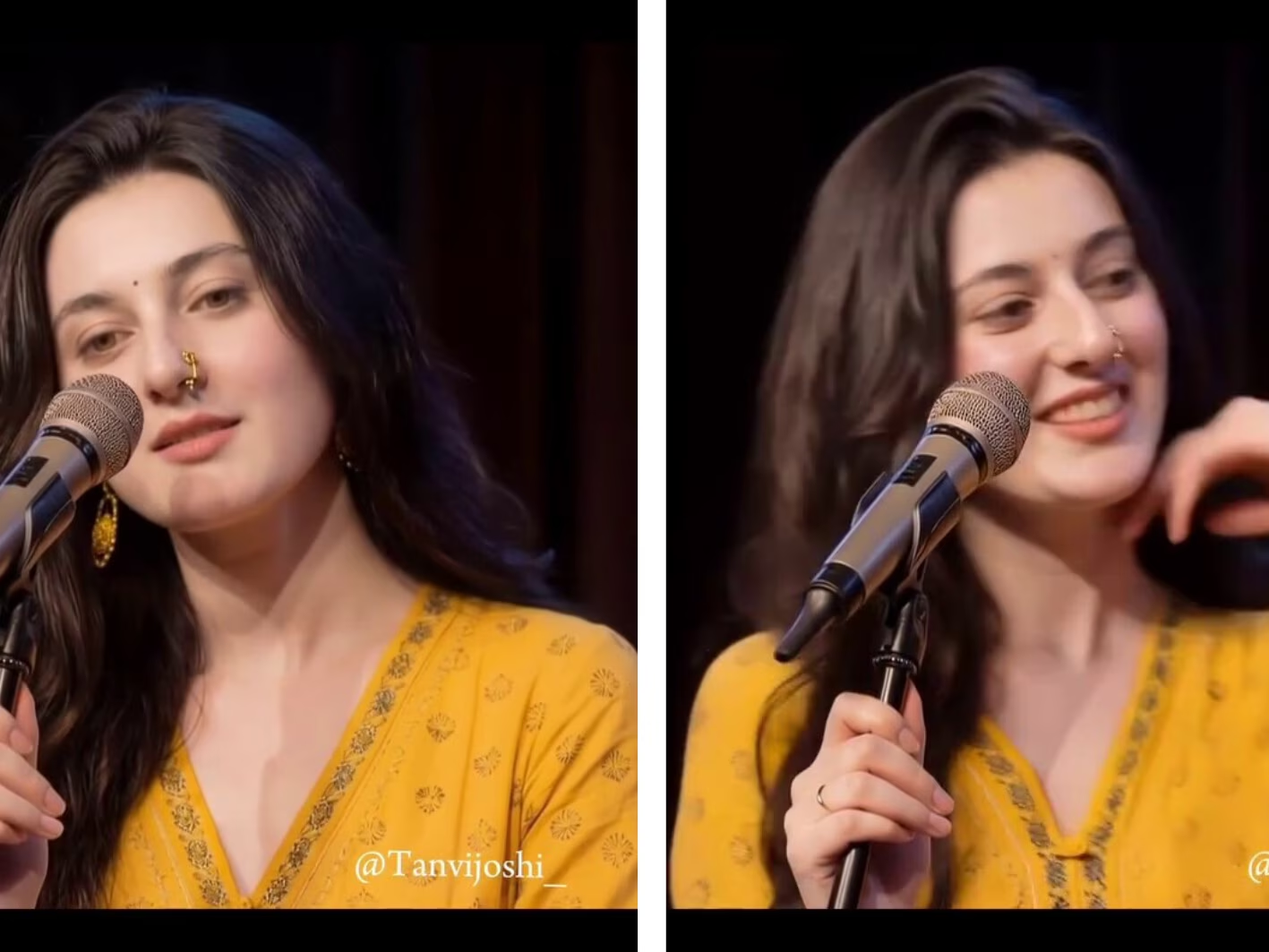


In a yellow kurta and with a poise that appeared unmistakably human, an Instagram creator named Tanvi Joshi took the internet by storm this week.
Reciting a classic couplet about “old money” vs. “new money,” the video amassed a staggering 28 million views in a single day. However, behind the grace and the viral numbers lies a digital illusion: Tanvi Joshi does not exist.
The video is a sophisticated product of generative AI, and the soul-stirring voice delivering the poetry belongs to someone else entirely.
1. The Illusion: “People with Old Money Act with Grace”
The video shows the AI model delivering a sharp piece of shayari that resonated with millions:
“Khaandani raees rakhte hain mijaaz naram apna… tumhara lehja bata raha hai ki tumhari daulat nayi nayi hai.”
(Translation: “The truly wealthy carry themselves with a gentle temperament… your tone reveals that your wealth is brand new.”)
While viewers debated the pronunciation of mizaj (temperament) in the comments, most failed to notice the hallmarks of an AI-generated person: the “uncanny valley” of blemish-free skin and a voice that slightly shifts in frequency across different posts on the profile.
2. The Reality: Voice Theft and Attribution
The viral success of “Tanvi Joshi” has sparked a heated debate over digital ethics. The audio for the video was not original; it was lifted from a real-life recording of Marziya Shanu Pathan, a corporator of the Thane Municipal Corporation.
- The Original vs. The Clone: Pathan had posted the actual footage of herself reciting the couplet six days prior. Ironically, the original video reached fewer than 900,000 views, while the AI-cloned version saw nearly 30 times that engagement.
- The “Call Out”: Underneath the viral post, Pathan commented, “Aye thats my voiceeeeeee,” a simple sentence that shattered the illusion for thousands of fans who had praised the “AI girl” for her wisdom.
3. The High Cost of Virality
The “Tanvi Joshi” incident highlights three critical issues in the 2026 social media landscape:
| Issue | Impact |
| Attribution Gap | AI aggregators often strip credit from the original human creators (like Pathan). |
| Synthetic Identity | Non-existent influencers are competing with real people for brand deals and reach. |
| Truth Decay | As AI faces become indistinguishable from human ones, users lose the ability to verify witness testimony or performances. |
4. How to Spot an AI Influencer in 2026
Digital experts suggest looking for these specific “tells” that still plague high-end AI models:
- The Blink Rate: AI models often blink less frequently or with unnatural timing compared to humans.
- Voice Inconsistency: Check older videos on the profile; if the accent or pitch varies significantly without explanation, it is likely synthetic.
- The “Blemish-Free” Mask: Look for a lack of micro-expressions or natural skin textures (pores, fine lines) around the eyes and mouth during speech.