
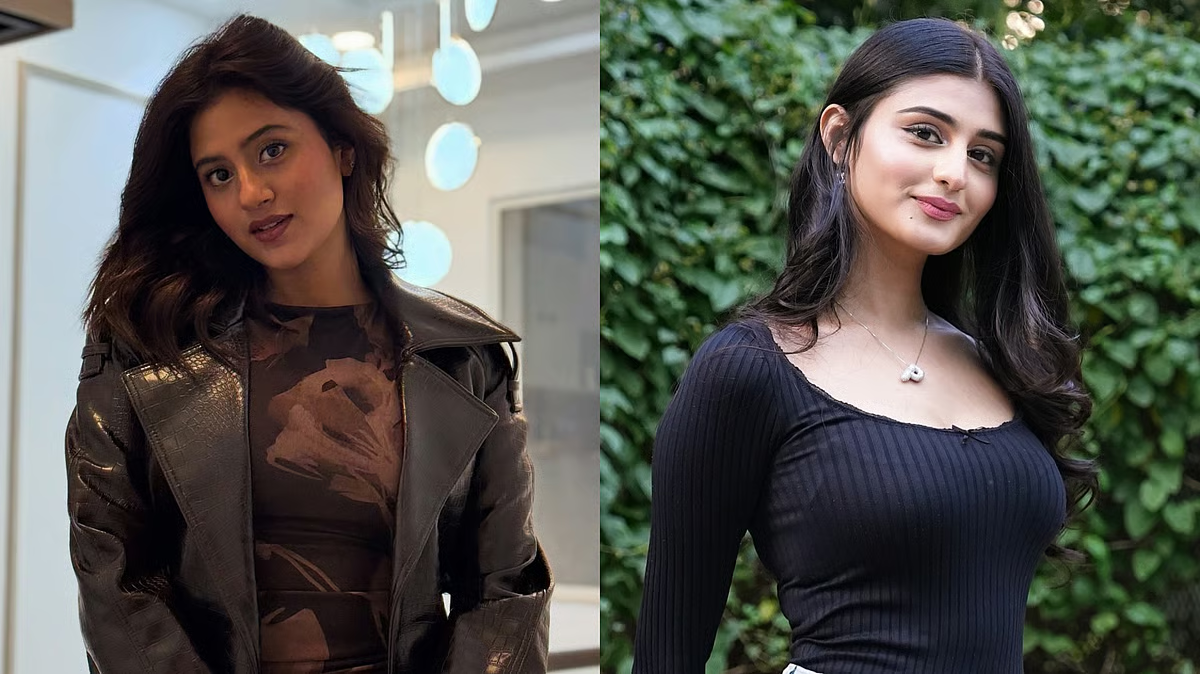


Reality star Anjali Arora has stepped forward to support gaming influencer Payal Dhare (Payal Gaming), sharing her own haunting experience with a fake MMS controversy to highlight the devastating impact of deepfake technology and online abuse.
December 18, 2025: As a “19-minute” viral video falsely linked to Payal Gaming continues to circulate, Anjali Arora released a poignant statement. Recalling the trauma she faced three years ago when a morphed video was attributed to her, Anjali noted that such incidents are not “one-minute entertainment” but life-altering scars.
“Three years ago, I went through the trauma of a fake MMS being circulated using my name. Seeing the same thing happen to Payal today brings back those painful memories,” Anjali wrote.
She emphasized that even years later, she faces constant abuse and vulgarity in her comment sections, proving that the digital footprint of a lie often outlasts the truth.
Professional Toll: “Removed from Good Projects”
Anjali’s statement shed light on the tangible damage these hoaxes cause to a woman’s career:
- Industry Backlash: She revealed that she was dropped from several high-profile projects following her controversy, not due to her work ethic, but because of the “false narrative” that brands feared.
- Online Misogyny: She condemned the “disgusting mindset” where empathy is replaced by judgment and “filthy language” becomes the norm for trolls.
Payal Gaming Breaks Her Silence
On Wednesday, Payal Dhare, one of India’s leading female gamers with over 4.5 million YouTube subscribers, issued a firm denial of the viral clips.
- The Clarification: “I want to state this clearly: the individual depicted in that video is not me. It has no connection to my life, my choices, or my identity,” Payal stated in an emotional Instagram post.
- Legal Action: The 25-year-old influencer confirmed that she is initiating legal steps to hold those spreading the “dehumanizing” content accountable.
- The “Dubai MMS” Myth: Fact-checkers have debunked claims of a “Dubai leak,” noting that the links being shared often lead to phishing sites or are clearly AI-generated deepfakes.
The Rise of Deepfake Harassment
The controversy has reignited a national conversation about the misuse of AI. Experts warn that creators are increasingly being targeted with sophisticated deepfakes to garner “clickbait” views, with victims often having limited immediate recourse to stop the spread.