
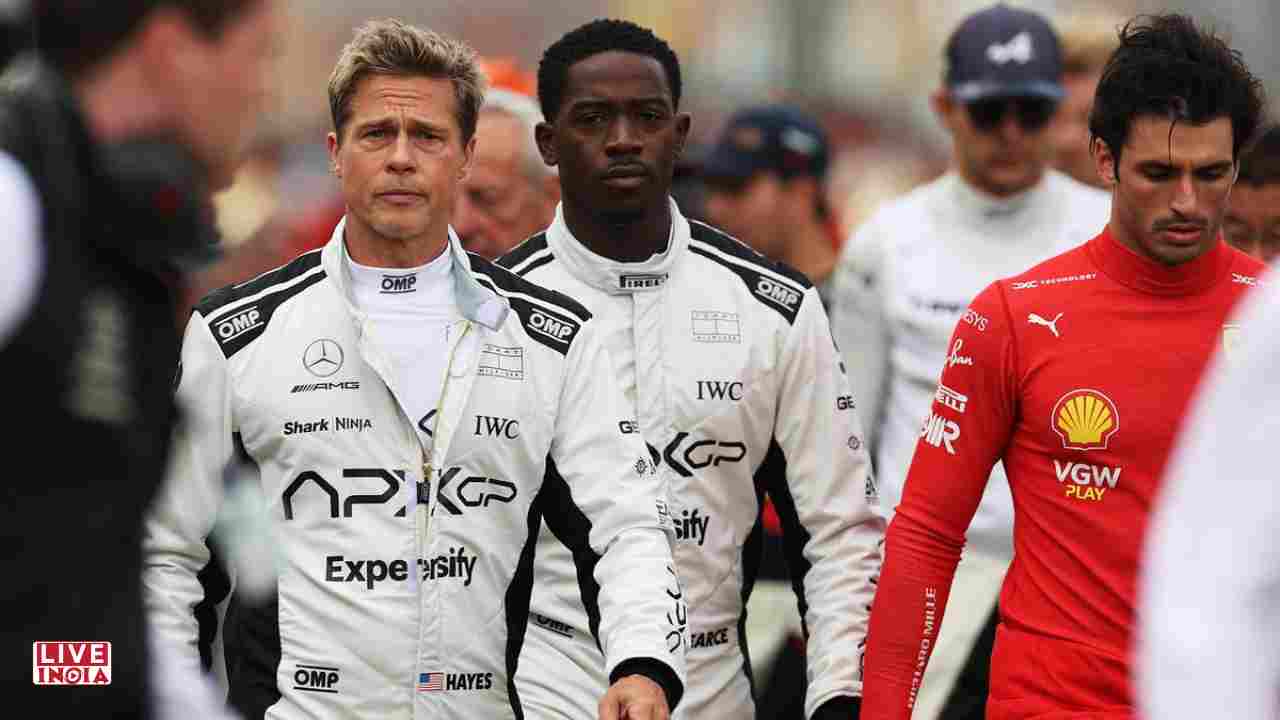


Joseph Kosinski’s high-octane Formula One drama races ahead of all previous Apple films, with massive audience turnout, global momentum, and top Rotten Tomatoes scores.
Brad Pitt’s much-anticipated Formula One movie F1, directed by Joseph Kosinski and produced by Jerry Bruckheimer, has roared into theaters with a projected $55M+ domestic opening, becoming Apple Original Films’ most successful big-screen debut to date. The high-octane drama, backed by Warner Bros., is now speeding toward a $115M+ global launch, putting it leagues ahead of previous Apple-backed titles like Killers of the Flower Moon and Napoleon. With a 97% Rotten Tomatoes audience score and surging interest among the coveted 13–24 demo, F1 is not just a comeback for Pitt—it’s a major acceleration for Apple’s theatrical game plan.
F1 is in pole position to become one of the most significant theatrical releases of the summer. The Apple Original Movie, helmed by Top Gun: Maverick director Joseph Kosinski and produced by action-movie veteran Jerry Bruckheimer, is pacing toward a $55M+ opening from 3,661 theaters, with substantial international upside.
That puts F1 not only well ahead of Apple’s earlier theatrical efforts—such as Killers of the Flower Moon ($23.2M opening), Napoleon ($20.6M), and Argylle ($17.4M)—but also places it second only to World War Z ($66.4M) in Brad Pitt’s career as a leading man.
The buzz is already translating into significant early numbers: F1 raked in $7M on Thursday night from early 3PM screenings and added another $3M from Imax and premium format previews earlier in the week. That brings the total pre-Friday preview haul to $10M, a remarkable figure that outpaces 2019’s Ford v Ferrari ($2.1M previews), a high watermark for racing films.
RelishMix reports F1’s social media reach across TikTok, Instagram, YouTube, Facebook, and X is a staggering 845.6 million—62% above typical action-adventure norms—rivalling Mission: Impossible – Final Reckoning (847.2M) and beating Fast X (798M).
The film has also broken through with younger audiences. An impressive 30% of last night’s crowd fell within the 13–24 age group—typically hard to engage for adult dramas—indicating the film’s pop-cultural resonance beyond just Formula One fans.
Warner Bros. has been instrumental in the rollout, handling marketing and distribution while splitting global P&A costs with Apple. WB recoups its costs first before collecting an 8% distribution fee. While the official budget sits at $200M, industry insiders speculate it may have crept closer to $300M.
Critically, F1 is resonating. Rotten Tomatoes lists the film as 84% Certified Fresh with an audience score of 97%, a potent combo that should ensure strong legs in the weeks to come.
Meanwhile, Universal and DreamWorks’ How to Train Your Dragon reboot continues its strong run, targeting an $18.5M third weekend (-49%) and closing in on the $200M milestone with a current tally of $199.1M. If it crosses $200M, it will become the fifth film this year to do so.
On the flip side, M3GAN 2.0 underperformed with a $10M debut, down from expectations in the high teens. With a Friday take of just $4.3M, the $25M Blumhouse horror sequel—though inexpensive—is trending lower than the original, which grossed $30.4M in its opening weekend. The franchise’s audience may be cooling, with critics scoring it 59% on Rotten Tomatoes compared to 93% for the first film.
Meanwhile, Sony’s 28 Years Later, directed by Danny Boyle, continues a solid run, projected to earn another $10M in its second weekend for a ten-day total of $50.6M. And Pixar’s Elio is experiencing a 45% dip in its second frame, settling around $11M–$12M with a running total of $43.4M.
On a milestone note, Lilo & Stitch has crossed the $400M mark this weekend, becoming the second film this year to do so after A Minecraft Movie.
With F1 racing ahead of expectations and setting a new benchmark for Apple Original Films in theaters, the film not only marks a commercial triumph but also signals a cultural gear shift in how streamers tackle theatrical releases. Backed by star power, social momentum, and enthusiastic word of mouth, F1 is not just a hit—it’s a high-speed statement.