
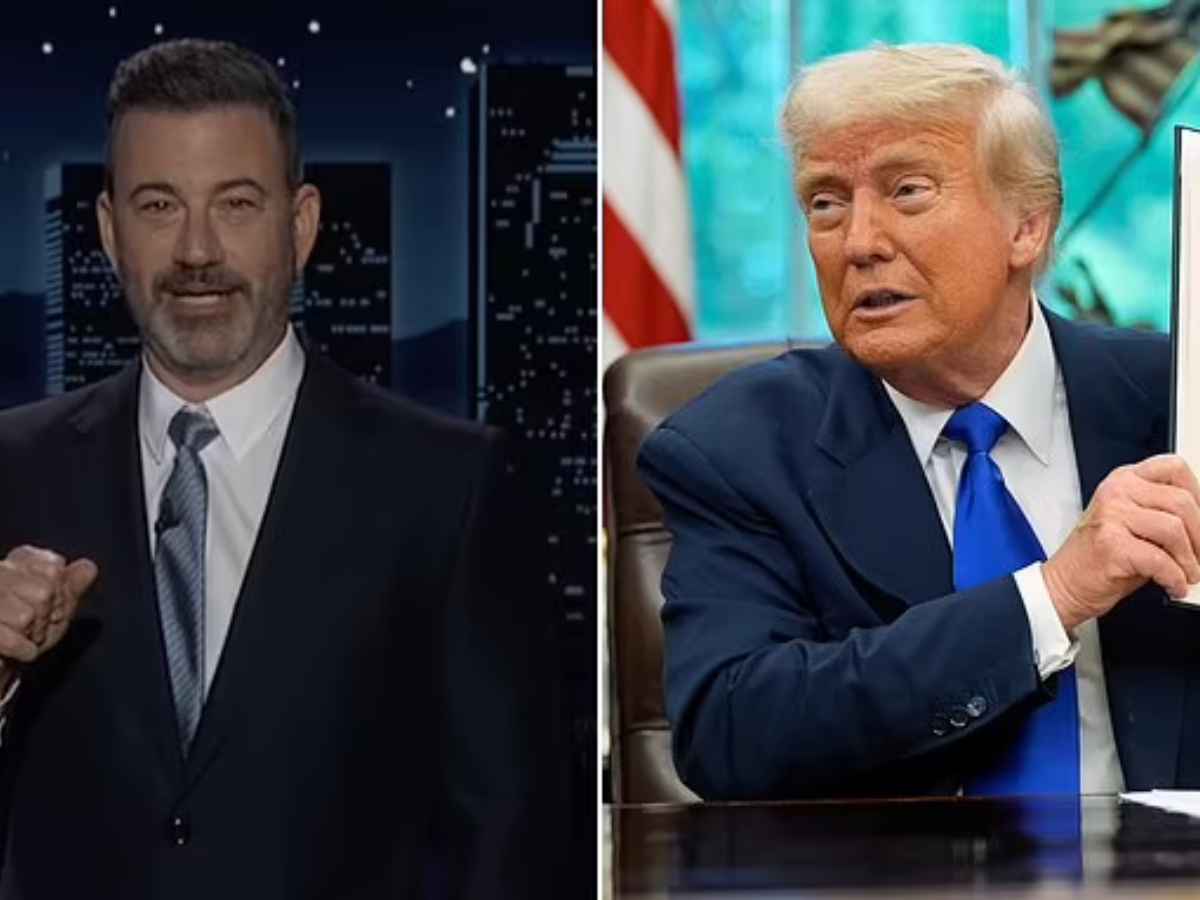


May 7, 2025: Hollywood is up in arms following former President Donald Trump’s recent proposal to impose a 100% tariff on all films produced overseas, a move he claims is intended to protect the American movie industry from foreign “messaging and propaganda.”
Announced via his Truth Social platform over the weekend, Trump declared that foreign films pose a “national security threat” and are luring U.S. filmmakers abroad with incentives, thereby “devastating” Hollywood. “We want movies made in America, again!” he posted.
The announcement prompted swift backlash from the entertainment industry, with critics highlighting its potential to cripple international collaboration, drive up production costs, and limit creative freedom. Among the loudest voices reacting was late-night host Jimmy Kimmel, who used his platform to ridicule the proposal.
“He’s now aiming his wrecking ball at Hollywood,” Kimmel said during a recent segment on Jimmy Kimmel Live!. Mocking the logic behind the tariff, he joked that Trump’s “strong research” likely amounted to a casual brunch with actor Jon Voight at Mar-a-Lago:
“I have done some very strong research over the last week,” Kimmel mimicked. “Which means he had brunch with Jon Voight at Mar-A-Lago this weekend.”
Kimmel also took aim at the idea of foreign movies being a threat to American security by sarcastically singling out the animated hit Sonic the Hedgehog:
“Sonic – the illegal immigrant hedgehog – is a national security threat and he must be stopped!” he joked.
The comedian continued by imagining how the entertainment industry might adjust to such drastic policy shifts, quipping:
“Next year, The White Lotus is gonna be set at a Hampton Inn.”
Despite the backlash, Trump later clarified to reporters that he wasn’t trying to damage the film industry but wanted to bolster domestic production:
“I’m not looking to hurt the industry; I want to help the industry… We’re all about jobs.”
Still, the reaction from the industry has been overwhelmingly negative. Actors, directors, and producers alike have warned that such a policy could undermine global partnerships that are vital to the creation and success of both indie and blockbuster films.
The controversy adds another layer of political friction between the entertainment world and Trump, who has long been at odds with Hollywood elites.