Kim Novak’s Vertigo: A Poetic Journey Through Memory, Mystery, and Hollywood Shadows
Venice [Italy], September 1:
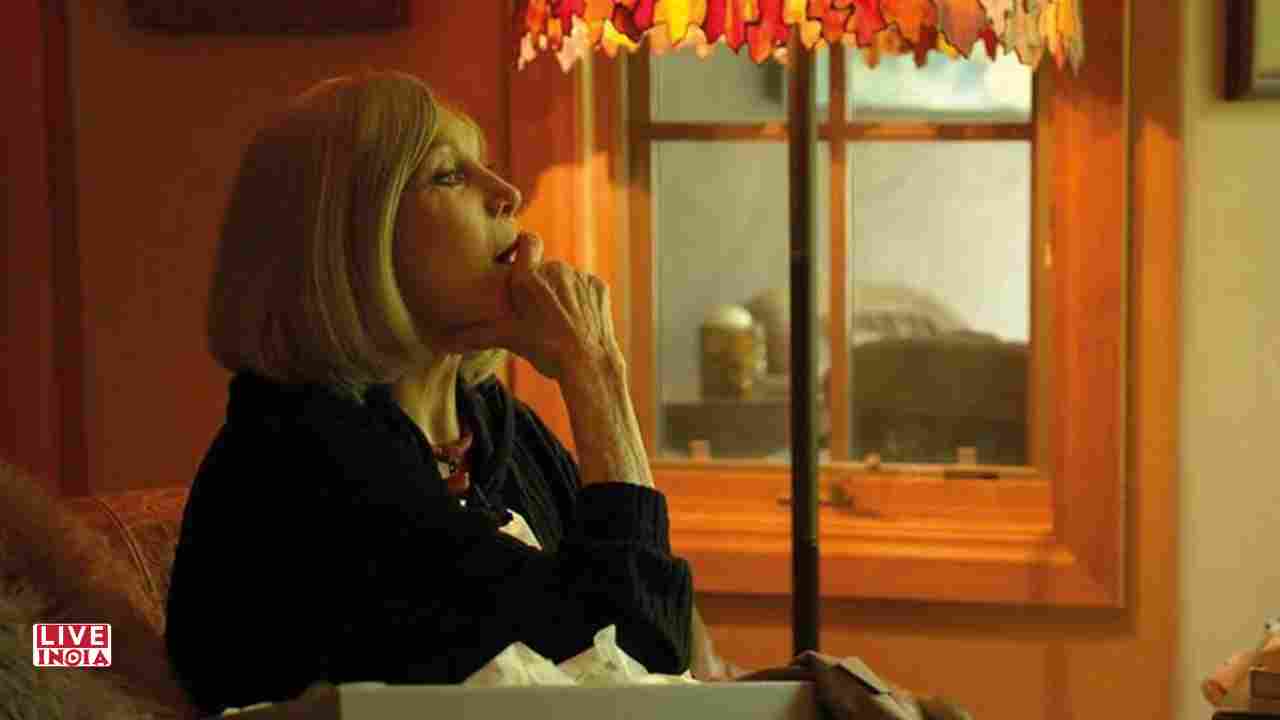
The ghost of Alfred Hitchcock hovers gently over Alexandre O. Philippe’s latest documentary, Kim Novak’s Vertigo, but unlike Hitchcock’s famously fraught relationships with his leading ladies, this story unfolds with tenderness, reverence, and a touch of melancholy. For Kim Novak, now 92, her brief but unforgettable collaboration with the master of suspense on 1958’s Vertigo remains the defining highlight of a career that burned bright before she deliberately stepped away from Hollywood’s harsh glare.
Philippe, known for digging into the unspoken layers of cinema (Memory: The Origins of Alien, Lynch/Oz), approaches Novak’s story like one of Hitchcock’s spirals—full of nuance, mystery, and subtext rather than cold, linear truth. The film draws inspiration from Saul Bass’s hypnotic Vertigo title sequence, circling around themes of identity, obsession, and reinvention.
Far from basking in her Hollywood years, Novak recalls them with a mixture of detachment and pain. Having stumbled into acting after modeling for a refrigerator company, she soon found herself under contract to Columbia Pictures and the notorious studio boss Harry Cohn. Cohn dismissed her cruelly as “the fat Polack” and forced her to change her name from Marilyn to Kim.
“I was Marilyn Novak from nowhere,” she admits in the film, exposing a lifelong struggle with impostor syndrome. Like her dual roles in Vertigo—the vulnerable brunette Judy and the icy blonde Madeleine—Novak’s real life mirrored a tension between who she was and who Hollywood wanted her to be.
She even resists the word “actor,” preferring to describe herself as a “re-actor,” a mirror to emotions and experiences rather than a polished performer.
The film reveals not just Novak’s cinematic past but also her present life as a painter in Oregon, where her left-handed brushstrokes fill canvases with ethereal spirals and bluebirds—symbols of hope that stand in stark contrast to Hitchcock’s famously sinister take on birds.
“I had to get reborn,” she says, her art serving as both therapy and testimony to resilience. Clips from The Man with the Golden Arm (1955), Pal Joey (1957), Kiss Me, Stupid (1964), and the haunting The Legend of Lylah Clare (1968) remind audiences of her underappreciated range.
Philippe himself appears in the film—an unusual move for the documentarian—guiding viewers through Novak’s memories, ultimately uncovering a deeply symbolic artifact: the iconic gray suit she wore in Vertigo. Hidden away for decades, its rediscovery brings Novak to tears.
“My body was in this, and my body and soul were in it too,” she reflects, treating the garment less as a costume than as a relic of her own becoming.
Premiering at the Venice Film Festival, where Hitchcock himself once unveiled Spellbound (1945), Rear Window (1954), and To Catch a Thief (1955), Philippe’s documentary doesn’t seek to explain Vertigo’s mysteries. Instead, it deepens them, giving Novak the long-overdue permission to narrate her own story—raw, unfiltered, and unapologetic.
If Hitchcock’s Vertigo was about obsession and illusion, Kim Novak’s Vertigo is about survival, identity, and the courage to embrace one’s own spirals. It’s not just a film about cinema history—it’s a portrait of a woman who walked away from Hollywood, but never from herself.
As the Single's Inferno Season 5 finale approaches on February 10, 2026, the island has…
trade agreement as a transformative moment for American exporters. While the formal legal text is…
Days after US President Donald Trump claimed that India had agreed to halt its oil…
In a major blow to the ICC Men’s T20 World Cup 2026, Pakistan Prime Minister…
On February 4, 2026, in what is being described as one of the "darkest days"…
The wait is over for the fans of Purvanchal’s most notorious throne. Excel Entertainment has…