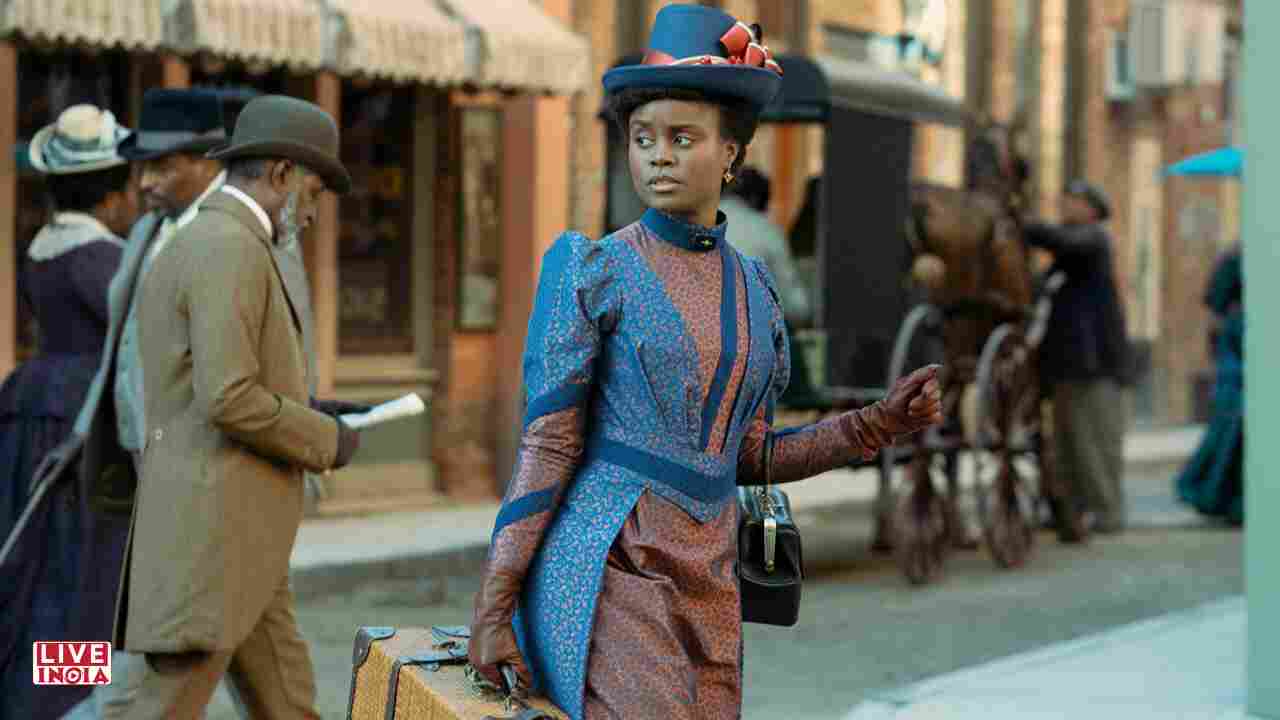
‘The Gilded Age’ Season 3 Episode 2: Power, Pressure & Promises as Bertha Pushes for a Royal Match
In Season 3, Episode 2 of The Gilded Age, titled “What the Papers Say,” power, privilege, and personal stakes escalate dramatically. At the heart of the episode is Bertha Russell’s (Carrie Coon) unapologetic attempt to secure a royal match for daughter Gladys (Taissa Farmiga) with the Duke of Buckingham — a move that brings her into direct conflict with her husband George (Morgan Spector), who had once promised their daughter the freedom to marry for love. Meanwhile, themes of social mobility, race, gender, and personal reinvention ripple through Newport and New York alike, as old hierarchies are challenged and new identities emerge. Sonja Warfield, who co-writes alongside Julian Fellowes, unpacks the episode’s intense emotional and cultural undercurrents in an exclusive conversation with The Hollywood Reporter.
Episode 2 of The Gilded Age Season 3 boldly pulls back the curtain on Bertha Russell’s true agenda: a royal future for her daughter Gladys, secured through a marriage to Hector, the Duke of Buckingham. While last week’s premiere hinted at this ambition, What the Papers Say confirms Bertha’s intent — regardless of whether the young couple even know each other. Gladys, however, places her faith in her father George, who had once assured her that love would be her guiding light. But as Warfield reveals, George and Bertha are headed toward a collision — one rooted not only in power and class, but in the deeper emotional contract of their marriage.
“George promised his daughter she could marry for love,” Warfield said, “so now he’s caught between his wife’s ruthless ambition and his daughter’s trust. This storyline challenges not just family unity but also the gendered spheres of power in Gilded Age society.”
Billy Carlton, once a suitor for Gladys, is aware enough of the power dynamics to bow out. “He knows he can’t compete,” Warfield confirms. “The Russells are on another level, and George Russell’s influence is something Billy can’t — and won’t — challenge.”
As Bertha plots Gladys’ future, Aurora’s storyline adds another layer to the episode’s meditation on women’s roles in society. Cast aside by her adulterous husband, Aurora faces social exile and judgment, not sympathy — a painful reminder of how patriarchal power worked in the 1880s. “Even Agnes admits she’ll no longer be welcome at dinners,” Warfield notes. “It wasn’t just about marriage — it was about survival.”
Meanwhile, Peggy (Denée Benton) battles worsening health and systemic racism, though the introduction of Black physician Dr. William Kirkland (Jordan Donica) hints at a new chapter. “It’s Peggy’s time,” Warfield says. “We wanted to show her entering a ‘soft life era’ after so much struggle. And Newport’s historically significant Black elite community offered us a natural place to tell that story.”
Romance blooms subtly elsewhere, with Marian and Larry’s relationship evolving gently. “There’s something sweet and hopeful in their bond,” Warfield notes. “They’re navigating love, class expectations, and family reactions.”
Even the formidable van Rhijn sisters face a shift. With Ada inheriting money from her late husband, her dynamic with Agnes (Christine Baranski) begins to tilt. “Ada now has voice and autonomy,” Warfield says. “That kind of disruption to the social order plays right into our larger theme — power.”
Power is also central to George Russell’s escalating business gamble, which tests his marriage further. “He and Bertha have always been aligned. Now we’ll see what happens when ambition pulls them in opposite directions.”
Elsewhere, Oscar’s reunion with his old friend John offers quiet support in turbulent times, while Jack’s pursuit of success paints a picture of American reinvention — in sharp contrast to Europe’s fixed class system.
The Gilded Age Season 3 is proving to be more than a period drama — it’s a study in power, privilege, and personal stakes. As Bertha seeks royal recognition, Peggy finds resilience, Aurora redefines survival, and George weighs love against legacy. Through it all, the show reminds us that the gilded surface often hides deeper tensions — tensions that reflect not just the past, but our present.
Sunny Deol and Akshaye Khanna face off in a high-stakes courtroom drama of ethics and…
No refund for Vande Bharat and Amrit Bharat tickets cancelled within eight hours of departure…
Services to four destinations suspended till February 28 over regional security concerns February 3, 2026:…
Eight Opposition MPs suspended after repeated disruptions over national security debate February 3, 2026: The…
Makers consider recast after Deepika Padukone’s exit from Kalki 2898 AD 2 February 3, 2026:…
Former India captain calls award a special moment, vows to keep winning matches for the…