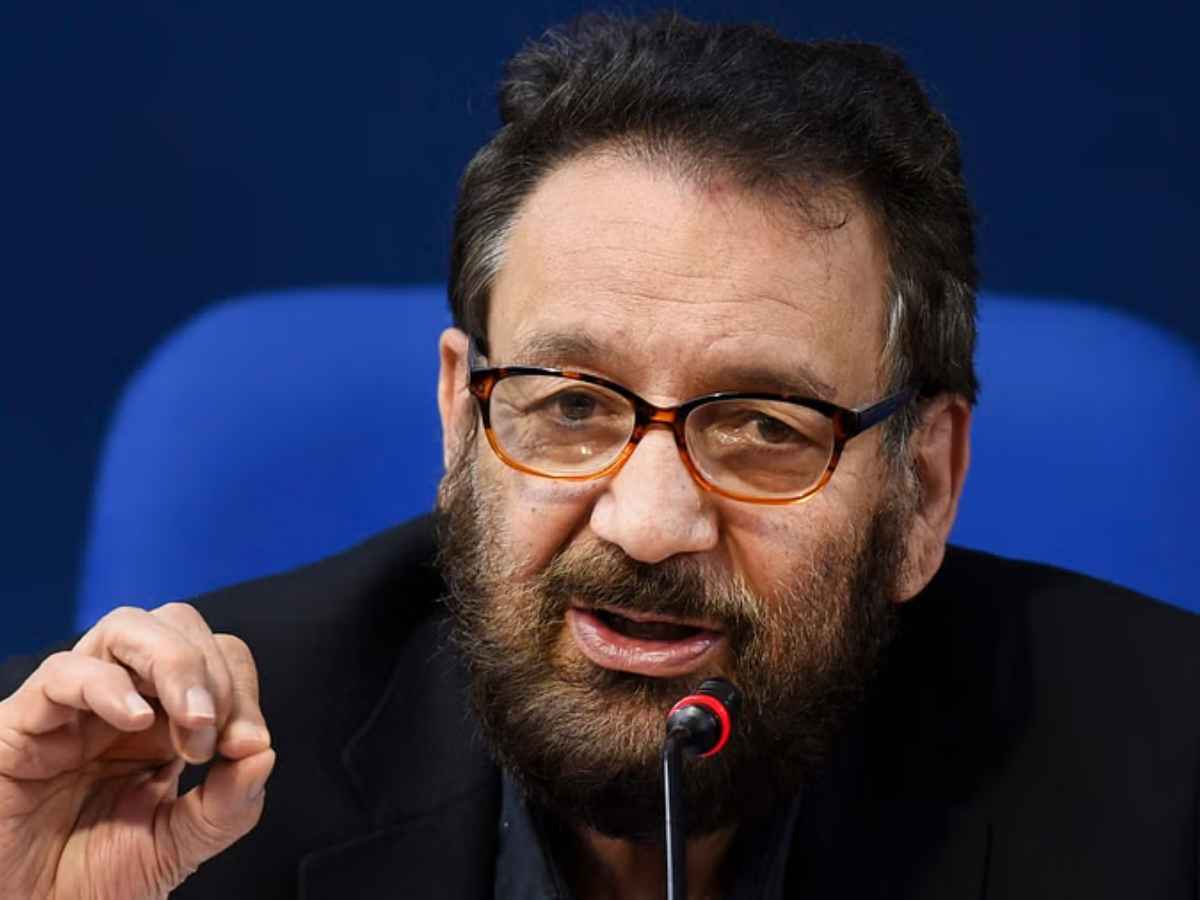
Trump’s Film Tariff Could Backfire, Warns Filmmaker Shekhar Kapur
May 5, 2025: Acclaimed filmmaker Shekhar Kapur has raised concerns over former U.S. President Donald Trump‘s recent announcement to impose a 100% tariff on films produced outside the United States. Kapur believes the move could inadvertently harm the U.S. film industry by pushing Hollywood productions further offshore.
On Monday, Kapur took to his X (formerly Twitter) account to respond to Trump’s declaration.
“Over 75% of box office of Hollywood films come from outside the US. And a significant part of the budget of those films are spent outside the US. President Trump’s imposition of 100% tariff on all films imported into the US may encourage Hollywood to move outside the US! Quite the opposite of what he intended,” he wrote.
Kapur’s remarks come amid rising global tensions in the entertainment trade sector and fears of economic retaliation from U.S. trading partners.
Also Read: Ajaz Khan Booked for Rape Amid Controversy Over ‘House Arrest’ Web Show
President Trump made the announcement on his platform, Truth Social, claiming the American film industry is under threat from foreign nations offering generous incentives to attract U.S. productions abroad.
“The Movie Industry in America is DYING a very fast death,” Trump posted. “Other Countries are offering all sorts of incentives to draw our filmmakers and studios away from the United States… This is a concerted effort by other Nations and, therefore, a National Security threat… I am authorizing the Department of Commerce and the United States Trade Representative to immediately begin the process of instituting a 100% Tariff on any and all Movies coming into our Country that are produced in Foreign Lands. WE WANT MOVIES MADE IN AMERICA, AGAIN.”
The tariff proposal is seen as part of a broader protectionist agenda, coinciding with the ongoing trade war between the U.S. and China.
On April 10, China’s National Film Administration announced it would “moderately reduce” the number of Hollywood films allowed in Chinese cinemas, citing U.S. tariffs on Chinese goods as a reason. The decision hints at growing cultural and economic pushback.
Meanwhile, analysts warn that such a U.S. policy could disrupt the globalized nature of film production, which often involves international crews, overseas locations, and non-American financing. Countries like Canada, the UK, New Zealand, and Australia—already key players in Hollywood’s production pipeline—may stand to benefit if Hollywood productions relocate to avoid the tariff.
As of now, the Motion Picture Association has not issued a formal response, but industry insiders are watching closely.
Filmmaker Shirish Kunder, husband of choreographer-director Farah Khan, has set social media ablaze this week…
Indian pop sensation Armaan Malik shared his deep admiration for the K-pop global icons BTS,…
Global icon Priyanka Chopra Jonas is taking "method dressing" to the next level as she…
Taking to Reddit, the applicant detailed a brief, disheartening interview at the US Consulate. Despite…
In a heartbreaking development for the Indian cricketing community, Rinku Singh’s father, Khanchand Singh, passed…
Gujarat Dy CM links rising seizures to enforcement success, defends marriage registration changes February 27,…