
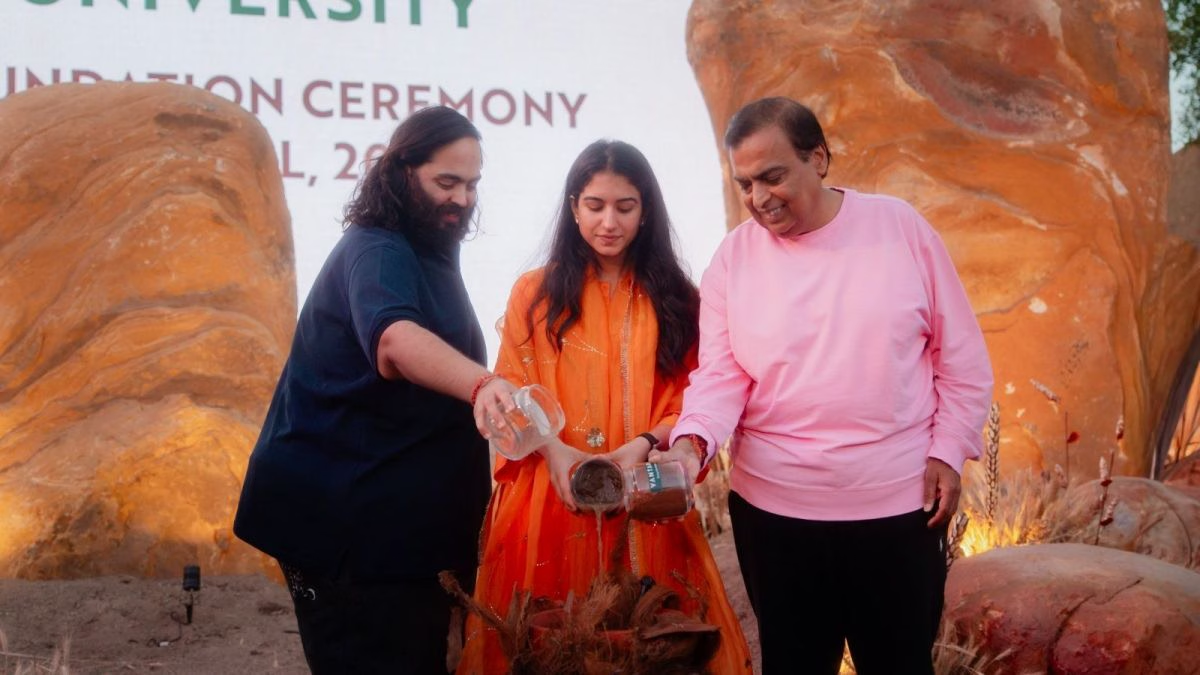


A major step in wildlife conservation and education has been taken by Vantara with the launch of a unique global university in Jamnagar. The initiative, led by Anant Ambani, is being described as the world’s first integrated university dedicated exclusively to wildlife conservation and veterinary sciences.
A Vision Rooted In Conservation And Science
The newly announced Vantara University aims to train future professionals in animal care, veterinary medicine, and environmental conservation. It will combine scientific research with practical, field-based learning drawn from Vantara’s ongoing wildlife rescue and rehabilitation work.

According to Anant Ambani, the idea behind the university comes from a deep commitment to animal welfare and the need to build stronger global capabilities in conservation.
Inspired By Ancient Indian Knowledge
The institution draws inspiration from the legacy of Nalanda University, reflecting India’s long-standing tradition of knowledge-sharing. Symbolically, stones from the Vindhyan region—linked to ancient Nalanda—were used during the foundation ceremony to represent continuity of learning.
The event followed traditional rituals, where soil, water, and stones from diverse ecosystems across India were brought together, highlighting the country’s rich biodiversity—from forests and wetlands to Himalayan regions.
What Makes It Unique
Vantara University will stand out due to:
- A fully integrated approach combining veterinary science, ecology, and conservation
- Strong focus on real-world training and fieldwork
- Global-level curriculum with scholarships for students
- Emphasis on compassion-driven education alongside scientific advancement
A Step Toward Future Environmental Leadership
The university aims to create a new generation of experts capable of tackling complex environmental challenges such as wildlife protection, habitat loss, and ecosystem health.
By blending traditional knowledge with modern science, Vantara University seeks to position India as a global leader in conservation education.
This initiative is not just an academic institution—it’s an ambitious attempt to reshape how the world trains professionals to protect wildlife and preserve biodiversity for the future.