
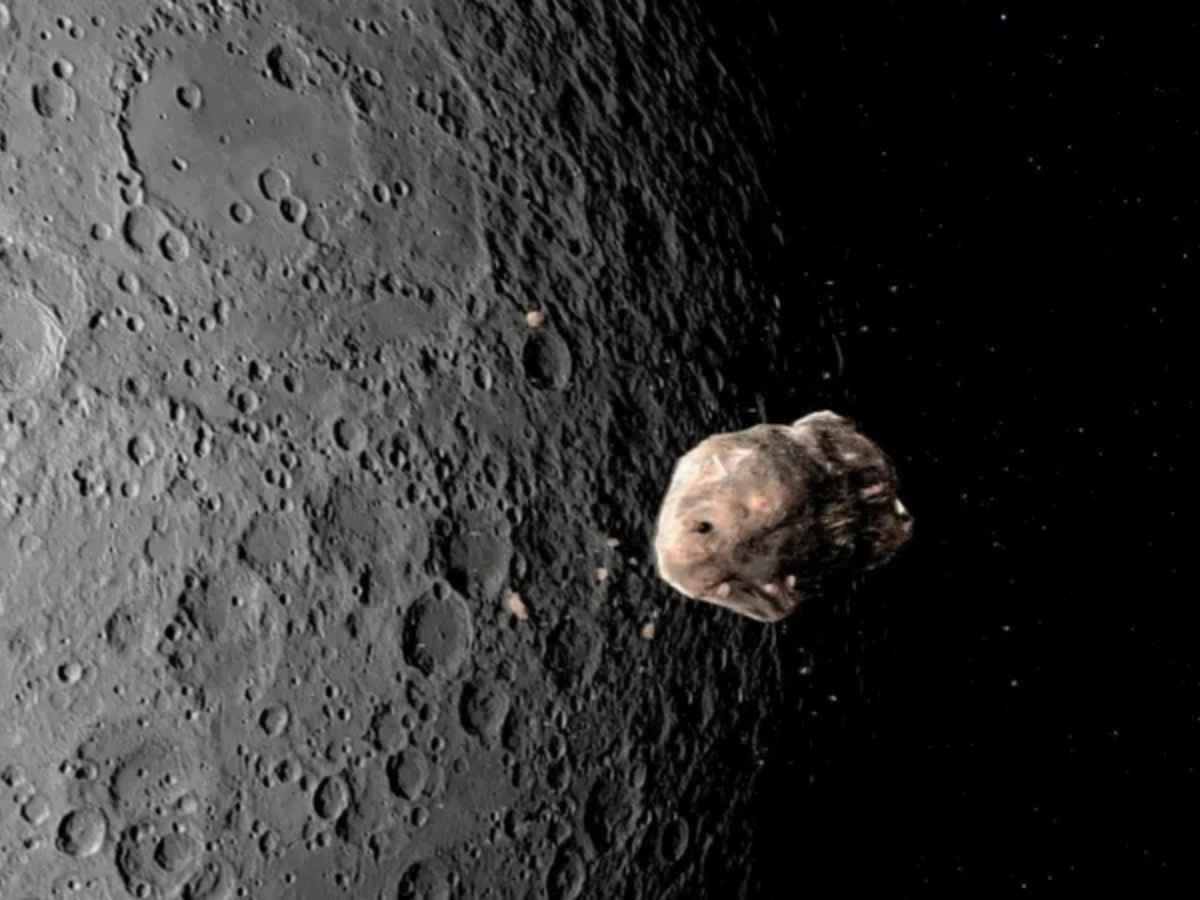


June 20, 2025: Astronomers have recently updated their calculations on asteroid 2024 YR4, suggesting the 53–67 m (174–220 ft) space rock has roughly a 4.3% probability of colliding with the Moon on December 22, 2032, according to data from the James Webb Space Telescope. While the risk of a direct strike on Earth has been reduced to a negligible 0.004%, the lunar impact possibility has garnered significant attention .
What Happens If It Hits the Moon?
The impact is anticipated to create a crater about 0.6 miles (≈1 km) wide, marking the largest lunar impact in 5,000 years.
Simulations led by Dr. Paul Wiegert estimate that up to 10% of ejected debris could be gravitationally pulled toward Earth, threatening satellites and lunar missions.
This debris could potentially cause a “decade’s worth of damage” to orbital assets—communications, GPS, weather, and navigation satellites—compressed into just a few days .
Why the Odds Shifted
Initial threat assessments in early 2025 suggested up to a 3.1% chance of an Earth strike, leading to serious concern.
Enhanced observational data—from ground telescopes, ESA, and especially JWST—dramatically reduced the Earth-risk to near-zero and slightly increased the lunar-threat to 4.3%.
Broader Implications
Although Earth impact is no longer a concern, the potential lunar hit underscores a gap in planetary defense strategies: the need for preparedness not just for Earth impacts but also lunar ones that could send dangerous debris our way .
NASA and international space agencies plan to continue tracking 2024 YR4, with its next close approach forecast for 2028, and are refining mitigation concepts for celestial objects that threaten both Earth and the Moon.
✅ Main Takeaway:
Asteroid 2024 YR4 poses no direct risk to Earth, but its elevated chance of hitting the Moon poses a serious threat to satellite infrastructure. Monitoring and planning now could help protect space assets in the coming decade.