
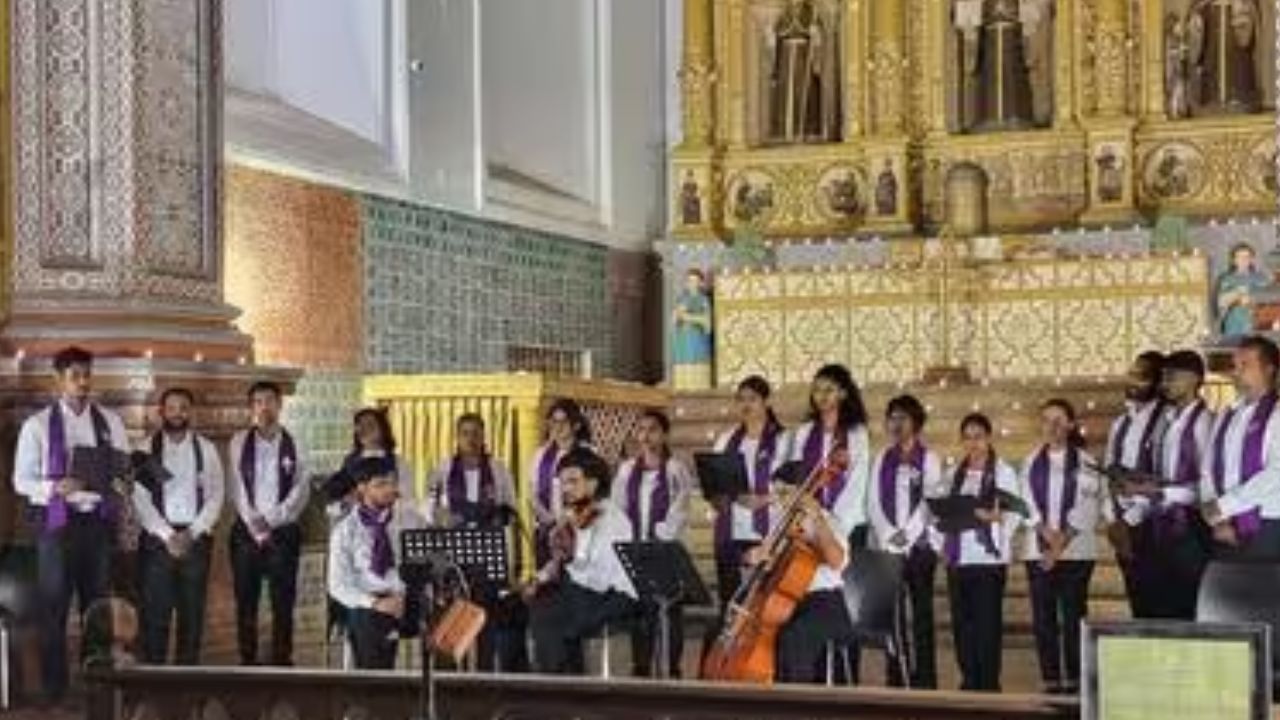


Centuries-old sacred music tradition returns as young choirs revive Goa’s Lenten heritage
April 3, 2026: As dusk settles over Mae de Deus Church, the haunting strains of centuries-old motets are once again echoing through its neo-Gothic halls, marking a quiet cultural revival in Goa. These sacred Lenten compositions, rooted in Biblical narratives of the suffering and death of Jesus Christ, were once central to Holy Week observances but had faded over time. Today, a new generation of choirs is rediscovering and reviving this deeply meditative musical tradition, bringing back a unique blend of Latin and Konkani hymns performed in rich, polyphonic harmony.
Motets, which originated in medieval Europe and flourished during the Renaissance, were introduced to Goa by European clergy and gradually evolved into a distinct local form. Traditionally sung during the Sacred Triduum and processions like Santos Passos, these compositions combined Western classical structures with Indian musical influences. Over time, however, changing liturgical practices and fading oral traditions led to their decline, with only a limited number preserved through handwritten notes and memory. Efforts by musicians and historians have now become crucial in documenting and sustaining this heritage.
Revival initiatives, including competitions and structured choir training, are helping restore the lost repertoire and engage younger singers. Institutions like the Pilar Music Academy are encouraging parishes to reintroduce motets into daily services during the Lenten season, ensuring that at least one is performed between Palm Sunday and Easter. By blending tradition with renewed participation, Goa is not only preserving a rare form of sacred music but also reconnecting communities with a deeply spiritual and cultural legacy.