
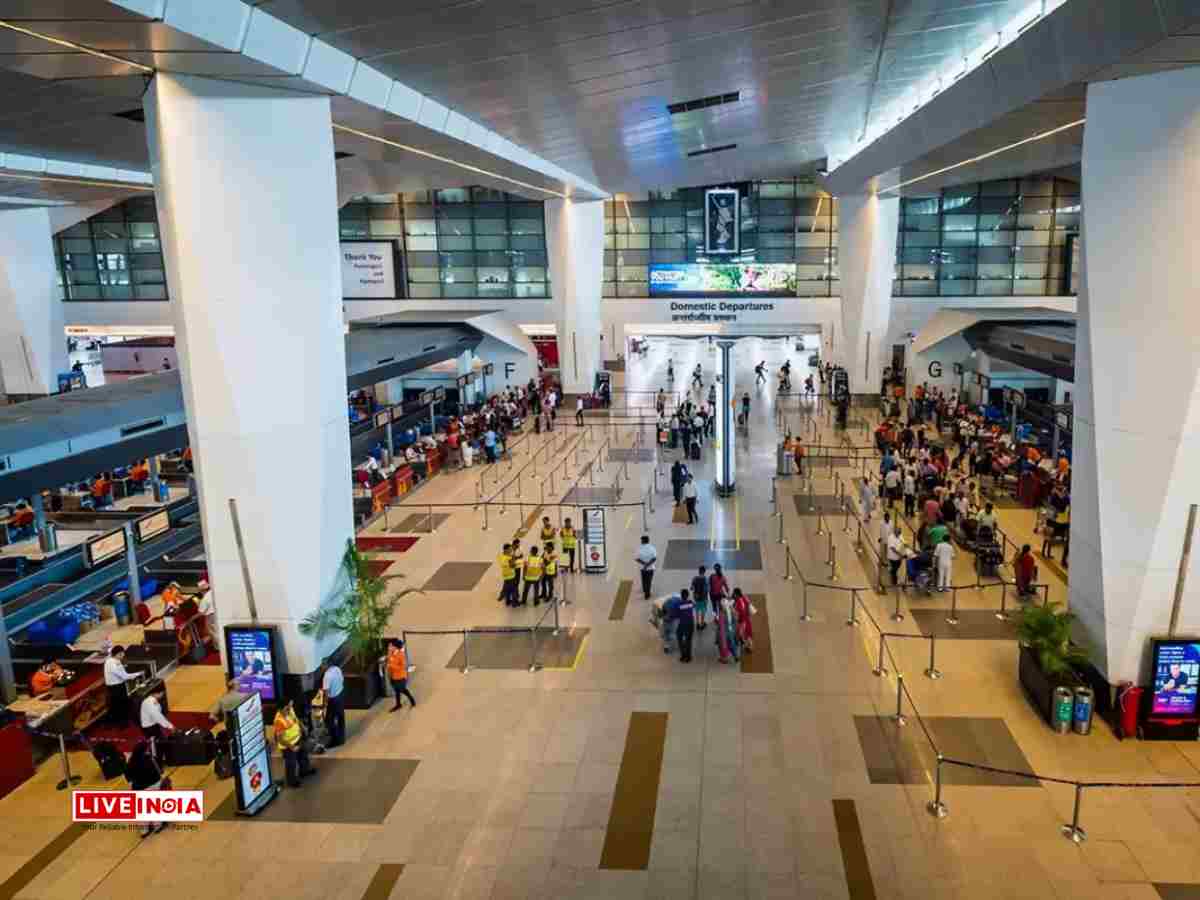


Major upgrades at T1 & T2, enhanced passenger experience, and increased tariffs on the horizon
New Delhi, February 26: Delhi’s Indira Gandhi International Airport is set to reach its full operational capacity of 109 million passengers annually by the end of this year, marking a major milestone in India’s aviation sector. The Delhi International Airport Limited (DIAL) has announced that Terminal 1 (T1) will be fully operational by April, while Terminal 2 (T2) will undergo a comprehensive refurbishment for 4-5 months.
Terminal Upgrades & Passenger Load Distribution
DIAL CEO Videh Kumar Jaipuriar stated that T1 will reopen in April following regulatory approvals. Once operational, T2 will be closed for renovation to enhance passenger facilities and modernize its infrastructure.
“We expect T1 to start in April after regulatory approvals. Once T1 is fully functional, T2 will be shut down for a thorough refurbishment, which will take about 4-5 months,” Jaipuriar said.
Delhi Airport’s terminals have the following passenger capacities:
- T1: 40 million
- T2: 15 million
- T3: 54 million
During T2’s renovation, T1 and T3 will handle the passenger load, ensuring smooth operations. Additionally, one of the runways will be non-operational during this period for an Instrument Landing System (ILS) upgrade, which must be completed before winter.
Increase in Passenger Tariffs
Alongside infrastructure enhancements, DIAL has proposed a tariff revision at Delhi Airport. The current per-passenger tariff of ₹145 is set to increase to ₹370, a hike of ₹225 per passenger.
Jaipuriar justified the increase, stating:
“The ₹145 tariff has remained unchanged since 2006. Considering inflation and the massive investments in airport expansion, this revision is necessary and has been validated by regulatory agencies.”
The increased charges will support Delhi Airport’s Phase 3A expansion, which involved a ₹12,500 crore investment for the revamp of T1, a new taxiway, additional parking stands, and other infrastructure upgrades.
Terminal 2 Refurbishment: A Modernized Aviation Experience
Originally built 40 years ago by the Airports Authority of India (AAI), T2 is set for a major transformation under the GMR Airports Limited-led DIAL initiative. The refurbishment aims to modernize key areas of the terminal and surrounding infrastructure, ensuring that T2 remains a world-class aviation facility.
Key Upgrades at T2:
✅ New Passenger Boarding Bridges with India’s first autonomous docking technology
✅ Modern ceilings and skylight designs for a more spacious, aesthetically appealing environment
✅ Advanced flooring and better road connectivity for seamless passenger movement
These enhancements are designed to accommodate the rising surge in domestic air travel. DIAL projects that Delhi Airport will reach maximum passenger capacity by FY 2025-26, making these developments crucial for managing future demand.
Conclusion
With Delhi Airport’s infrastructure expansion, technological advancements, and increased passenger tariffs, the aviation hub is set to strengthen India’s position as a global air travel leader. While passenger convenience remains a top priority, the significant tariff hike may spark debate among travelers. However, DIAL’s investment in modernization ensures that Delhi Airport is well-prepared for the future of Indian aviation.