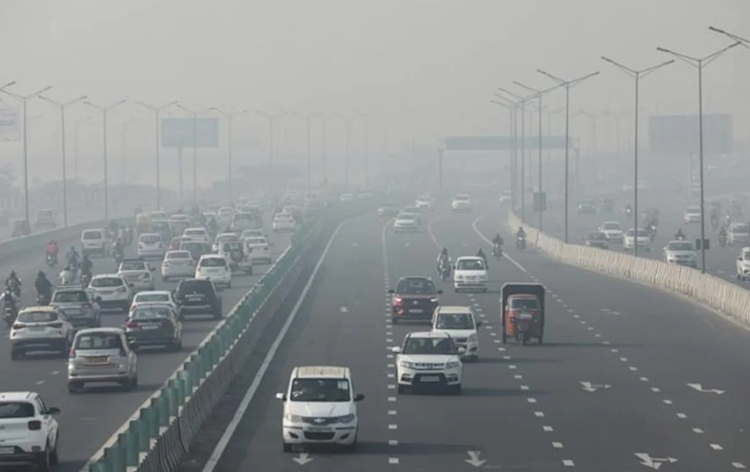
Delhi Remains In 'Very Poor' Category But Sees Improvement In Air Quality
Delhi recorded a ‘Very Poor’ Air Quality Index (AQI) of 373 on Friday morning, marking the seventh consecutive day the capital has been enveloped in a thick blanket of smog, with 13 monitoring stations tipping into the ‘Severe’ category.
November 21, 2025: The national capital continues to battle toxic air pollution as its Air Quality Index (AQI) settled at 373 this morning, remaining firmly in the ‘Very Poor’ category, according to data released by the Central Pollution Control Board (CPCB). This reading, only a slight improvement from Thursday’s 391, signifies a persistent public health crisis across Delhi-NCR.
CPCB’s Sameer app data highlighted a worrying trend, with 13 of the 39 monitoring stations recording ‘Severe’ air quality (AQI 401-500). Wazirpur emerged as the worst-affected area in the capital with an alarming AQI of 442.
Other major hotspots in the ‘Severe’ range include:
While only a few stations like Lodhi Road (286) managed to record ‘Poor’ air quality, the majority of the city is hovering close to or above the 400-mark threshold.
In the National Capital Region (NCR), the situation is equally grim. Ghaziabad recorded the highest pollution level at 431 (‘Severe’), while Noida nearly touched the severe mark with an AQI of 400.
The prolonged smog episode is attributed to a combination of unfavorable meteorological conditions and local pollution sources.
The air quality crisis comes as the minimum temperature in Delhi settled at 11.4°C, contributing to the heavy blanket of smog forecasted to persist throughout Friday.
Authorities continue to implement measures under the Graded Response Action Plan (GRAP) to combat the pollution, including restrictions on construction and vehicular movement. However, citizens have been advised to minimize outdoor exposure, use N95 masks, and rely on air purifiers indoors to mitigate health risks.
Actors Rashmika Mandanna and Vijay Deverakonda are all set to tie the knot next week…
Rajpal Yadav Reacts After Nawazuddin Siddiqui about his generosity during their struggling days in Mumbai.…
The final electoral rolls for poll-bound Tamil Nadu were published on Monday following the Election…
An overnight Russian drone attack on Ukraine’s southern Odesa region left two people dead and…
Flabby arms are often among the first visible signs of ageing — and they can…
The 79th BAFTA Film Awards witnessed a rare and emotional moment on Sunday, February 22,…