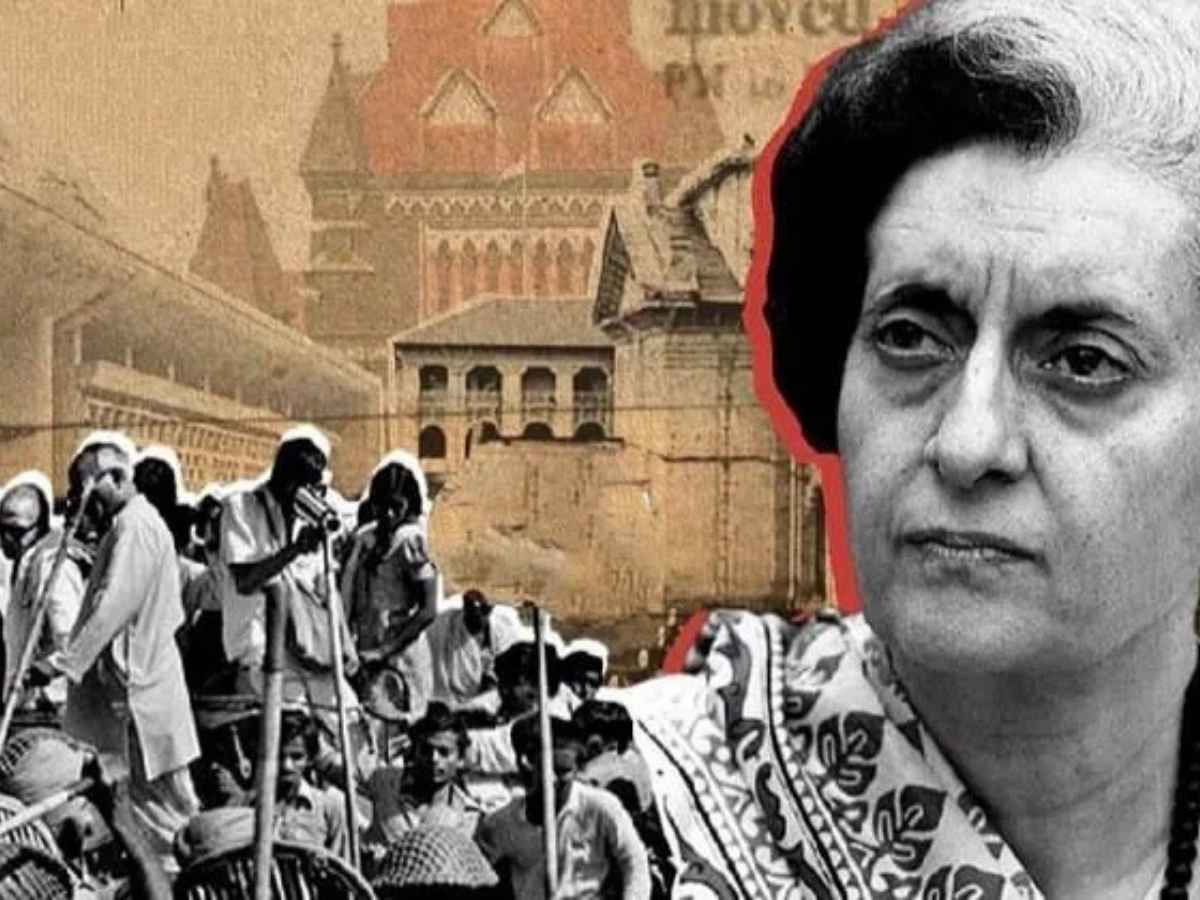
Emergency, June 25, 1975: Indian Democracy's Darkest Hour
June 25, 2025: The Emergency, declared by Prime Minister Indira Gandhi on June 25, 1975, ushered in one of the darkest periods of Indian democracy. As civil liberties were suspended, censorship throttled free speech, and political dissent was brutally crushed, a shadow regime emerged—led by her son Sanjay Gandhi and his close-knit inner circle.
Among the first casualties of this authoritarian rule were democratic institutions. Over 100,000 people were detained under draconian laws like MISA. Dissenters—be they journalists, students, or political opponents—were silenced. The media was brought to heel, and an atmosphere of fear settled over the nation.
Sanjay Gandhi, despite holding no elected office, became the de facto ruler. Backed by figures like:
Together, they created a parallel power structure that bypassed formal institutions. Forced sterilisation—cloaked under “population control”—was implemented with alarming cruelty. Demolitions in places like Delhi’s Turkman Gate further alienated the masses, particularly Muslims, stoking resentment and unrest.
Even within the Congress, murmurs of discontent grew. Stalwarts like Jagjivan Ram and Hemvati Nandan Bahuguna started to question the party’s direction. Outside, underground resistance picked up pace. Leaflets were secretly distributed, opposition leaders covertly coordinated, and international media, particularly the BBC, kept India’s slide into autocracy in global focus.
On January 18, 1977, in a surprising move, Indira Gandhi announced general elections. Whether spurred by overconfidence, mounting pressure, or the need for legitimacy, the decision shocked both loyalists and critics. Opposition leaders were released, and by February, the Janata Party had formed—a fragile but determined alliance led by Jayaprakash Narayan, Morarji Desai, George Fernandes, and others.
In March 1977, the people of India spoke.
The Janata Party secured 295 seats, and Morarji Desai became Prime Minister. For the first time since independence, the Congress was ousted from power.
The 42nd Amendment, a legacy of the Emergency, was later rolled back by the 44th Amendment in 1978. The judiciary’s role was restored. While Indira Gandhi would return to power in 1980, the Emergency left deep scars.
Some of the key figures saw their fates sealed:
The Emergency was a chilling reminder that even the world’s largest democracy is vulnerable to authoritarianism. Yet, it also reaffirmed a powerful truth: democracy in India bends, but it does not break.
As LK Advani put it:
“The Emergency taught us that democracy is not a gift; it is a responsibility.”
Actress weighs in on Iran–Israel discourse, ignites online reactions March 3, 2026: Television actress Devoleena…
India steps up diplomatic outreach as Iran-US conflict intensifies March 3, 2026: Prime Minister Narendra…
Actor clarifies intent after ‘misconception’ comment amid cheque bounce case March 3, 2026: Actor Sonu…
Israel says leadership compound hit; Kremlin signals de-escalation efforts March 3, 2026: The Israel Defense…
Party names nominees from six states for March 16 biennial polls March 3, 2026: The…
Filmmaker calls backlash “unfair” amid row over eight-hour shift demand March 3, 2026: Filmmaker Anubhav…