India Faced Three Adversaries in Operation Sindoor: Army Confirms China, Turkey’s Active Support to Pakistan
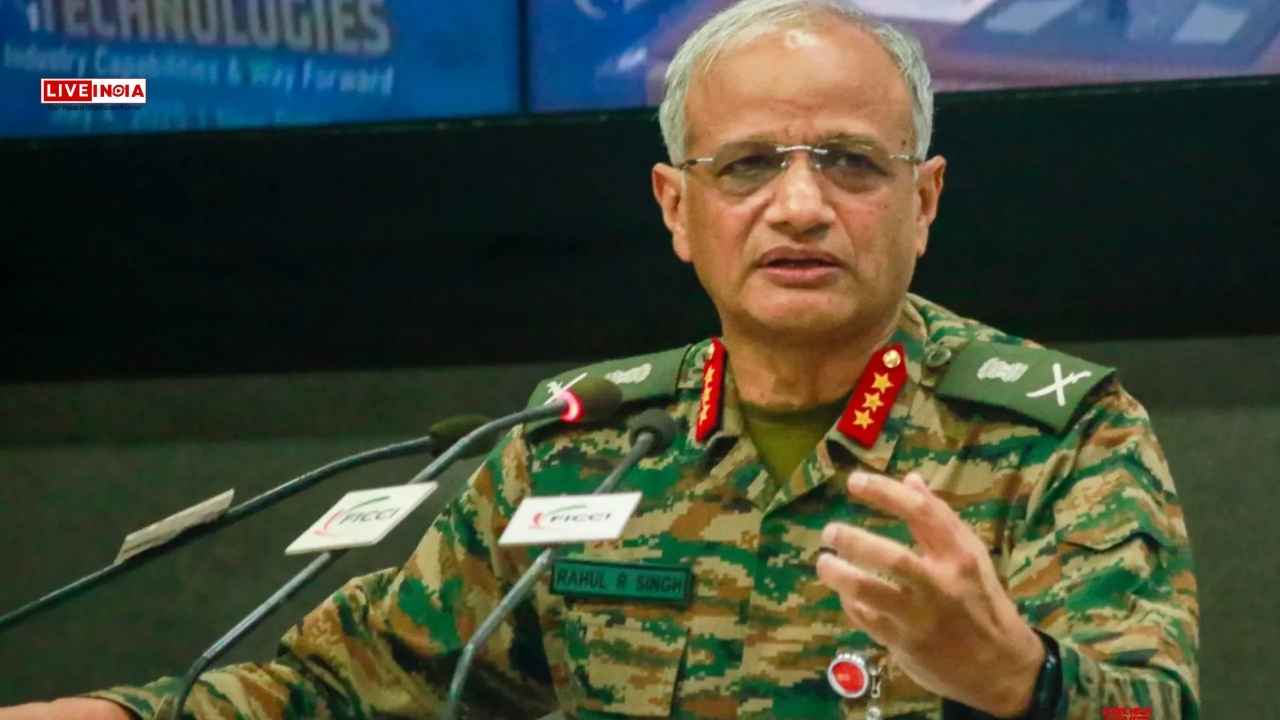
July-5, 2025: India’s Operation Sindoor, launched in response to the Pahalgam terror strike, was not merely a military confrontation with Pakistan—it involved facing three adversaries, the Indian Army has confirmed. Deputy Chief of Army Staff, Lt General Rahul R. Singh, stated on Friday that Pakistan received critical military support from China and Turkey, making the May 7–10 conflict the most complex military engagement India has encountered in recent decades.
Also Read: 36 Injured as Amarnath Yatra Buses Collide During Breakfast Halt in Ramban
Speaking at a FICCI conference on “New Age Military Technologies” in New Delhi, Lt Gen Singh said China used the clash as a “live lab” to evaluate the performance of its weapons systems—including JF-17 and J-10 fighter jets, PL-15 air-to-air missiles, and HQ-9 air defence systems—which it had supplied to Pakistan. He added that China provided real-time intelligence to the Pakistani military on Indian weapon deployments, and Pakistan directly referred to this intelligence during DGMO-level ceasefire talks.
Also Read: Panic in Japan as 1,000 Earthquakes Hit in Two Weeks Amid ‘Doomsday’ Vanga Prediction
Turkey’s involvement, Singh said, came in the form of drone support, including Bayraktar UAVs and other drone platforms, accompanied by trained personnel. The general’s remarks marked the first official confirmation of the coordinated, multi-nation support Pakistan received during the four-day conflict.
Also Read: Man Found Dead in Vishal Mega Mart’s Lift in Delhi’s Karol Bagh
“Pakistan was the front face, but we had China providing all possible support and Turkey playing a significant role too,” said Lt Gen Singh. He added that 81% of Pakistan’s military hardware in the past five years has been of Chinese origin, and Beijing used the engagement as an opportunity to test its systems without direct involvement—describing it as “killing with a borrowed knife.”
India launched Operation Sindoor on May 7, striking nine terror and military installations in Pakistan and PoK, after terrorists killed 26 people in Pahalgam. The swift and powerful strikes triggered an escalation involving fighter jets, drones, long-range artillery, and missile systems. By May 10, both countries agreed to halt military operations, a move that Singh described as “a masterstroke” in strategic escalation control.
He clarified that Pakistan’s ceasefire request stemmed from the looming threat of an even larger, undisclosed Indian military response, possibly involving naval assets. “There was a punch that was ready… Pakistan realised the consequences,” Singh said, emphasizing India’s new doctrine of swift and punitive response to terror strikes.
The general also warned that future escalations may see civilian population centres targeted, underscoring the need for enhanced air defence, drone countermeasures, and rapid technology adoption.
Singh’s disclosures triggered sharp political reactions. Congress MP Jairam Ramesh slammed the Modi government for avoiding a full parliamentary debate on India-China relations, citing China’s military role in aiding Pakistan as further proof of the strategic threat posed by Beijing.
The operation also offered valuable battlefield insights into enemy equipment, Singh said. “It was a combat testing ground. We must remain vigilant. China will continue to use proxies to test us,” he noted.
Lt Gen Singh concluded that Operation Sindoor not only sent an unambiguous strategic message—that terror will be met with force—but also demonstrated India’s capability to escalate and de-escalate conflict on its own terms.
Tags:
Operation Sindoor, India Pakistan China Turkey, India military operation, Lt Gen Rahul Singh, Chinese weapons in Pakistan, Turkey drones Pakistan, real-time intel China, Bayraktar drones, India defence strategy, Operation Sindoor ceasefire, Pahalgam terror attack, India national security
Family clarifies routine check-up; filmmaker celebrates birthday on ‘Love & War’ set February 25, 2026:…
PM to address Knesset, boost defence and strategic ties with Netanyahu February 25, 2026: Prime…
Freedom fighter and Communist leader dies at 101 in Chennai February 25, 2026: Veteran Communist…
CM assures strict action after Malviya Nagar incident targeting Northeast women February 25, 2026: Delhi…
Vigilance raid on senior mining official marks biggest recovery in state history February 25, 2026:…
PM to address Knesset, deepen strategic partnership with Netanyahu February 25, 2026: Prime Minister Narendra…