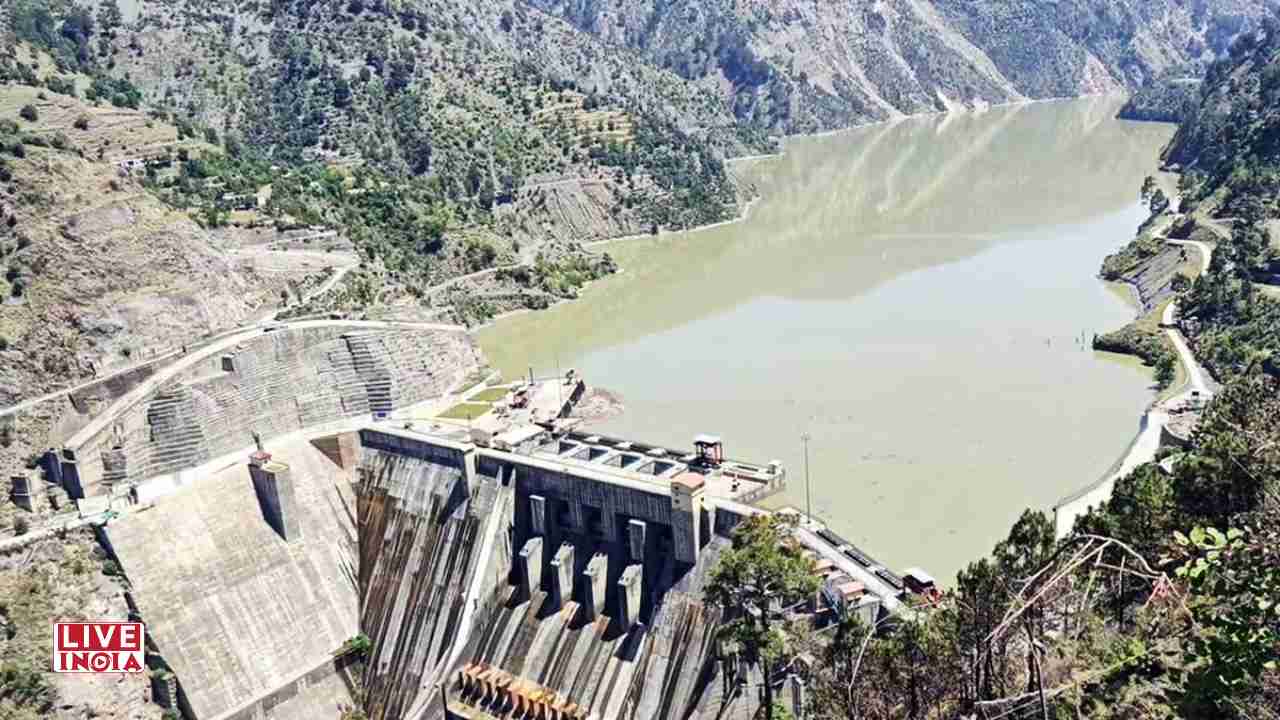
India Diverts Indus Waters to Four States, Suspends Treaty Implementation with Pakistan
New Delhi, May 9: The Indian government has initiated a major shift in its water-sharing policy by deciding to divert waters allocated to Pakistan under the Indus Waters Treaty for domestic use in Rajasthan, Haryana, Himachal Pradesh, and Delhi, according to official sources. The move comes amid escalating tensions with Pakistan following the Pahalgam terror attack and India’s precision counterstrikes under Operation Sindoor.
Sources from the Jal Shakti Ministry revealed that infrastructure development is being ramped up on a war-footing to ensure that no water meant for Pakistan goes unused. The decision aligns with Prime Minister Narendra Modi’s declaration that “Desh ka pani desh ke haq mein bahega” (India’s water will flow for India).
The shift also follows a high-level meeting chaired by Union Home Minister Amit Shah on April 25, attended by Jal Shakti Minister C.R. Patil and other top officials. Patil reiterated on Friday that India will not allow even a single drop of water to flow to Pakistan, confirming that implementation of the decision is underway and will proceed step by step.
In a significant diplomatic move, India has formally notified Pakistan of its intent to suspend the Indus Waters Treaty, citing violations of the spirit of the agreement and a failure to respond to calls for renegotiation. Secretary of Jal Shakti Ministry Devashree Mukherjee conveyed this to Pakistan’s Water Resources Secretary Syed Ali Murtaza in writing.
India’s rationale includes:
The Indus Waters Treaty, brokered by the World Bank, governs the distribution of six rivers in the Indus basin—three eastern (Ravi, Beas, Sutlej) allocated to India and three western (Indus, Jhelum, Chenab) to Pakistan.
While World Bank President Ajay Banga clarified that the bank’s role is strictly that of a facilitator, he dismissed speculation about external intervention:
“There’s a lot of speculation… but the World Bank’s role is merely as a facilitator.”
This historic pivot in water diplomacy comes amid heightened military tensions, as Indian Armed Forces launched targeted strikes on terrorist hubs in Pakistan and Pakistan-occupied Jammu and Kashmir on May 7, responding to the deadly April 22 attack in Pahalgam.
Sunny Deol and Akshaye Khanna face off in a high-stakes courtroom drama of ethics and…
No refund for Vande Bharat and Amrit Bharat tickets cancelled within eight hours of departure…
Services to four destinations suspended till February 28 over regional security concerns February 3, 2026:…
Eight Opposition MPs suspended after repeated disruptions over national security debate February 3, 2026: The…
Makers consider recast after Deepika Padukone’s exit from Kalki 2898 AD 2 February 3, 2026:…
Former India captain calls award a special moment, vows to keep winning matches for the…