
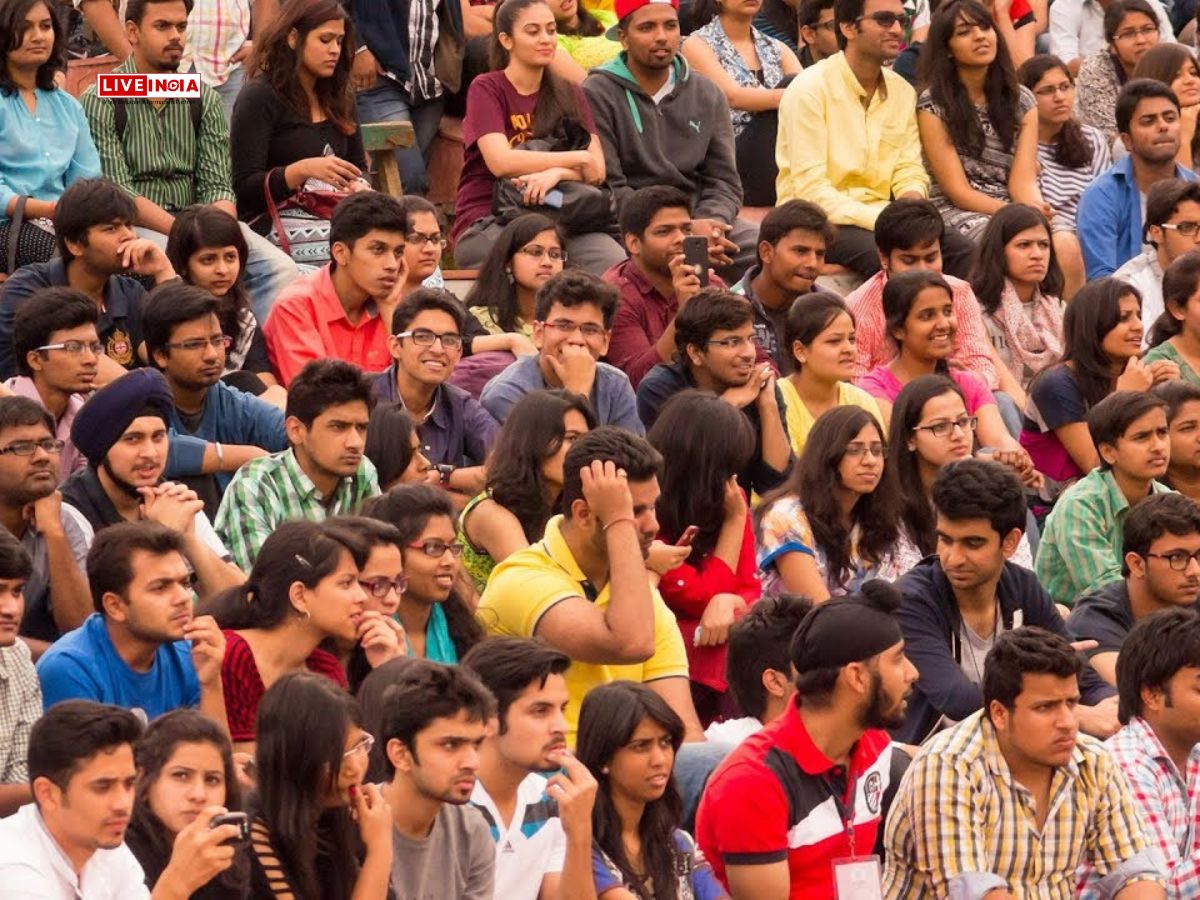


Conducted by Youth Ki Awaaz and Partners, the survey had some interesting findings
March 18, 2025: A new survey has revealed a paradox in India’s youth: 81% strongly identify with the nation, but trust in political parties is declining. The Voices for Inclusion, Belonging, and Empowerment (VIBE) Report, launched on March 18, sheds light on how young Indians engage with civic life, governance, and political participation.
Also Read: Maha Kumbh Was a Grand Display of India’s Unity and Strength: PM Modi
🔑 Key Findings from the VIBE Report:
1️⃣ National Identity vs. Personal Identity
- 81% of young Indians strongly identify with their national identity.
- 31% prioritize their individual identity, indicating a shift towards personal autonomy.
2️⃣ Declining Trust in Political Parties
- 43% of respondents said logistical challenges (such as being unable to travel home) were the reason for not voting in the 2024 Lok Sabha Elections.
- 18% cited lack of trust in political parties as a reason for not voting.
- 29% completely avoid political engagement.
3️⃣ Rise of Digital Activism & Civic Participation
Also Read: Zahan Kapoor Remembers Grandfather Shashi Kapoor On His 87th Birth Anniversary
- 46% of youth are involved in NGOs, advocacy groups, or citizen forums.
- 27% actively engage in online activism through public forums.
- 73% volunteer occasionally, with many participating in clean-up drives, petitions, and fundraising.
4️⃣ Political Engagement Beyond Traditional Politics
- 26% take part in political discussions but do not align with any party.
- Only 11% are formal members of a political party.
5️⃣ Entrepreneurial Aspirations Facing Challenges
- 49% of young Indians aspire to start a social enterprise.
- 58% cite lack of funding as the biggest hurdle.
- 39% say they need mentorship to succeed.
6️⃣ Strong Media Engagement
- 60% of youth follow news daily.
- 65% share their views on social media, indicating an active role in shaping public conversations.
📌 What Does This Mean?
✔️ Youth disengagement from traditional politics does not mean apathy—it reflects a shift towards issue-based and digital activism.
✔️ Social entrepreneurship and community engagement are rising, but institutional barriers like funding and mentorship remain obstacles.
✔️ Bridging the gap between youth aspirations and governance is critical to ensuring that young voices influence policy and decision-making.
🗣 Expert Takeaways:
🗨️ “For years, young people in India have been seen as passive. The VIBE report challenges this narrative by showing they are actively shaping civic discourse—but in new ways,” said Anshul Tewari, founder of Youth Ki Awaaz.
🗨️ “The challenge now is bridging the gap between youth aspirations and institutional support, ensuring young voices are truly heard in decision-making spaces,” said Rohit Kumar, co-founder of YLAC.
📊 Survey Methodology
📍 Conducted by Youth Ki Awaaz, YLAC, Synergy Sansthan, and Project Potential
📍 Supported by Rohini Nilekani Philanthropies
📍 4,972 responses collected (June – August 2024)
📍 Survey conducted via social media, email campaigns, and WhatsApp chatbot
🚀 What’s Next?
✔️ Will policymakers listen? The findings highlight a shift away from political parties towards civic engagement.
✔️ How can institutions support youth? Funding, mentorship, and youth-inclusive governance structures are needed.
✔️ Can digital activism translate into real-world change? Youth are engaging in petitions, clean-up drives, and fundraising—but will this influence policymaking?
💬 Do you think Indian youth are politically disengaged or just evolving? Let us know your thoughts! 🚀