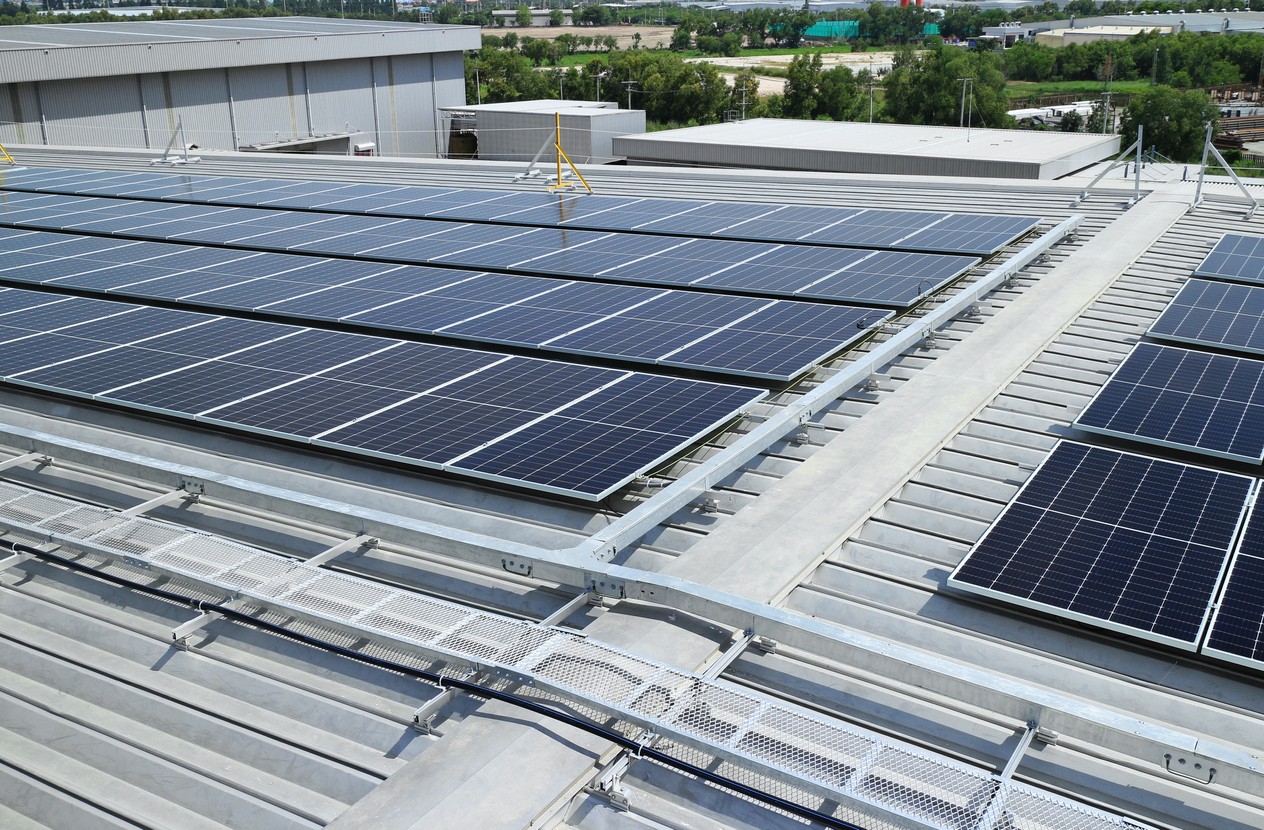
India's Solar Module Industry Set for Growth: Exports to Rise Amid Domestic Demand Surge
New Delhi, December 24: India’s solar module manufacturing industry is set for a transformative phase over the next five years, with a significant shift in the export-import balance, according to a recent CRISIL report. Robust domestic demand, oversupply potential, and strategic policy measures are expected to drive the sector’s growth and global competitiveness.
The report projects an average annual domestic demand of 50-55 GW for solar modules between Fiscal 2024 and 2030, driven by India’s clean energy targets and increasing adoption of solar power.
However, rising domestic production capacity is anticipated to outpace local demand by Fiscal 2025, paving the way for exports of surplus modules to international markets.
“The growth in production of modules is expected to result in oversupply from Fiscal 2025 onwards, leaving room for exports,” the report noted.
In Fiscal 2024, India exported approximately 7 GW of solar modules, representing 50% of the country’s production. While the share of exports in total production is expected to moderate to 25-32% by Fiscal 2030 due to increasing domestic consumption, absolute export volumes are forecasted to grow steadily.
“The share of exports in production is expected to moderate between 25% and 32% over the years owing to rising domestic consumption needs,” the report added.
The reintroduction of the Approved List of Models and Manufacturers (ALMM) from Fiscal 2025, coupled with increased domestic production capacity, is expected to significantly curb reliance on imported solar modules.
In Fiscal 2024, imports accounted for 59% of India’s solar module requirements. This figure is projected to drop sharply to 5-10% by Fiscal 2030, signaling a shift towards self-reliance in solar module manufacturing.
However, India’s solar sector will remain dependent on imports for upstream components such as polysilicon, wafers, and cells, owing to limited integrated manufacturing capabilities within the country.
Even with an expected increase in domestic cell manufacturing capacity, imported cells will continue to play a role, though reliance will reduce over time.
Falling prices of solar components over the past three years have incentivized imports. However, as domestic manufacturing scales up, the reliance on imports is expected to diminish, except for critical components where India lacks sufficient production capacity.
The report highlights that policy measures, including production-linked incentives (PLI) and a focus on integrated manufacturing, will support the sector’s expansion.
With growing production capabilities, strategic policy interventions, and a focus on balancing domestic demand with export opportunities, India’s solar module manufacturing sector is poised to become a global player.
The report concludes that the sector will contribute significantly to India’s clean energy goals, reduce dependency on imports, and establish the country as an export hub for solar modules.
Bahrain says it intercepted dozens of missiles and drones amid escalating Iran conflict March 6,…
Parties direct Lok Sabha members to attend Parliament as Budget Session resumes on March 9…
Congress leader tells students public life demands resilience, values and readiness to face hardships March…
In traditional Indian medicine, immunity is deeply connected with overall body balance. According to Ayurveda,…
After the vibrant celebrations of Holi, many people are left dealing with colour stains, dryness,…
Think tank analysis highlights soaring military expenses as conflict enters its first week March 6,…