
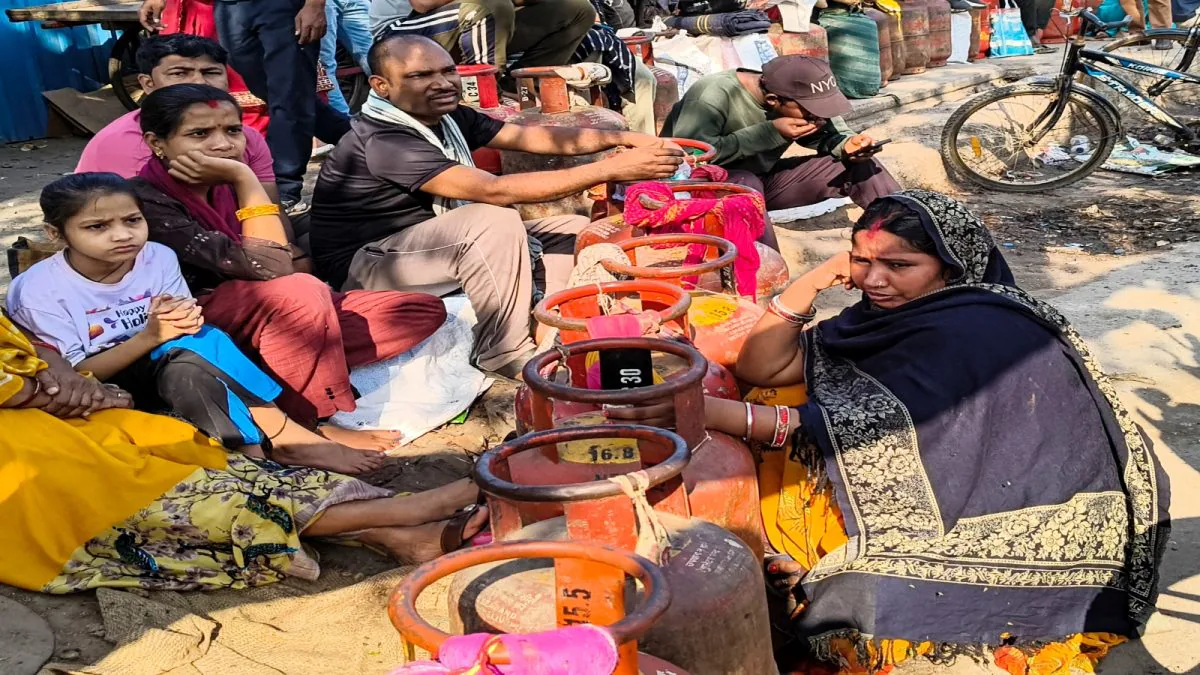


A fresh wave of migration is unfolding across India as an acute LPG (cooking gas) shortage—triggered by disruptions linked to the ongoing West Asia conflict—pushes thousands of migrant workers to leave cities and return to their villages.
Five years after the COVID-19 pandemic caused a massive reverse migration, similar scenes are emerging again. This time, the crisis is not lockdowns but the scarcity and soaring prices of cooking gas, which are hitting both livelihoods and daily survival.
Livelihood Crisis Deepens
Migrant workers, especially those employed in restaurants, hotels, and small food businesses, are among the worst affected. With irregular LPG supply, many eateries have reduced operations or temporarily shut down, leaving workers jobless.
Workers at Bihar’s Danapur railway station said they had no option but to return home as LPG cylinders were either unavailable or too expensive. “There is no gas, no work, and no way to cook,” one worker said, highlighting the severity of the situation.
Rising Costs Add To Burden
The crisis has also led to a sharp spike in LPG prices. A 5 kg cylinder, earlier priced around ₹500–₹550, is now being sold between ₹1,100 and ₹2,000. In some areas, a standard 14.2 kg cylinder is reportedly costing up to ₹4,000.
Black market sales have worsened the situation, with some workers claiming LPG is being sold at nearly ₹500 per kg—far beyond the reach of daily wage earners.
Impact Across Major Cities
The effect is visible across multiple cities:
- Mumbai: Migrants are leaving as food and cooking costs surge
- Surat: Over 1.5 lakh workers have reportedly left in the past month
- Delhi & Noida: Workers struggle with delayed deliveries and high prices
Train routes connecting metro cities to states like Uttar Pradesh, Bihar, and West Bengal are witnessing increased passenger movement, indicating a growing exodus.
Survival Challenges Beyond Jobs
For many migrants, the crisis goes beyond employment. Shared accommodations rely heavily on LPG for cooking, and with shortages, workers are forced to switch to alternatives like wood, increasing hardship.
Rising food prices have made eating outside unaffordable, compounding the problem.
West Asia Conflict Behind Disruptions
The LPG shortage is linked to global supply chain disruptions caused by the ongoing conflict in West Asia. India imports nearly 60% of its LPG, much of it from this region, making it vulnerable to such geopolitical tensions.
The disruption of key shipping routes has impacted fuel availability and driven up costs domestically.
Government Response
The Petroleum Ministry has stated that multiple steps are being taken to stabilise supply. These include:
- Prioritising LPG for households, hospitals, and institutions
- Increasing refinery output
- Monitoring distribution to prevent hoarding and black marketing
- Promoting alternative fuels like PNG and electric cooking
Authorities have also urged citizens to avoid panic buying and rely on official updates.
A Growing Concern
As the crisis continues, it is not just an energy issue but a socio-economic challenge. Job losses, rising living costs, and supply shortages are collectively forcing migrant workers to rethink urban livelihoods—raising concerns of a larger, sustained reverse migration trend.