
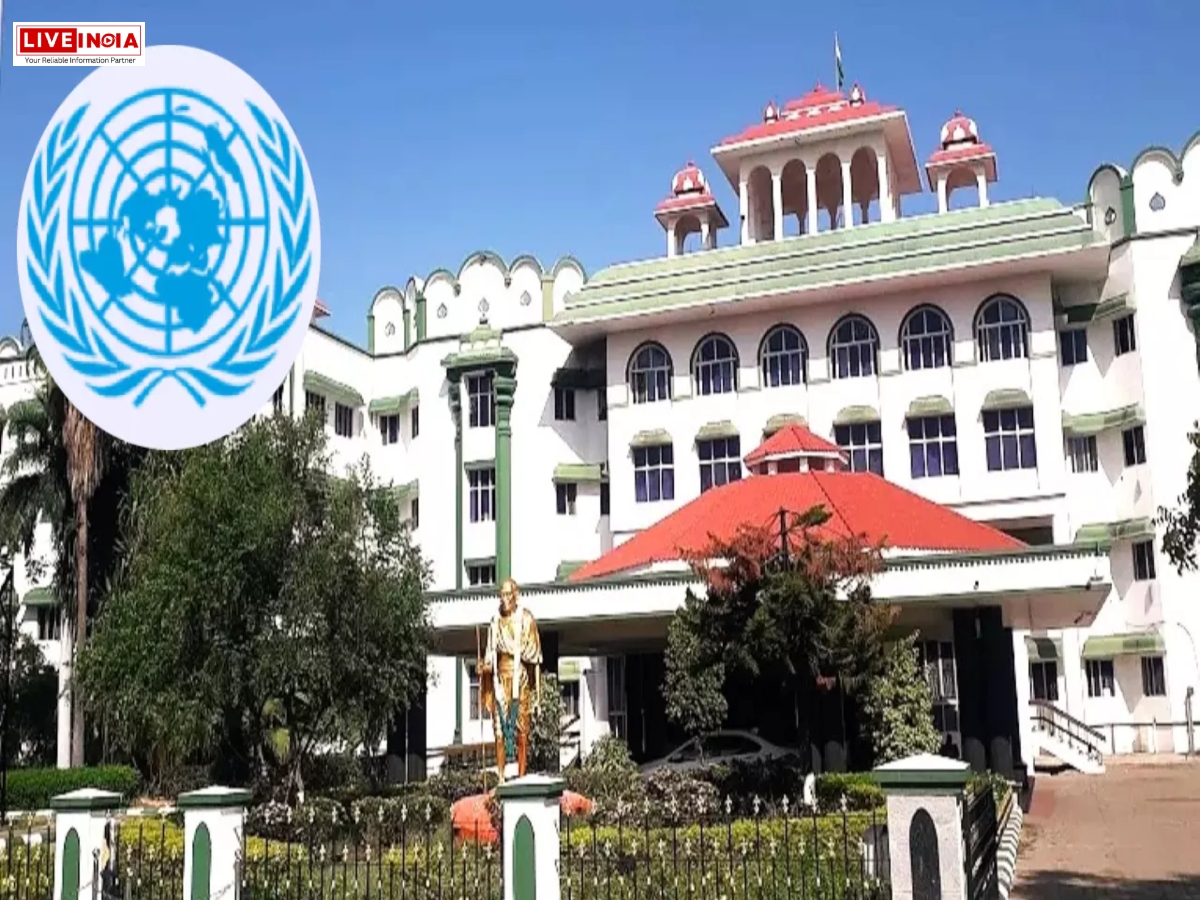


July 7, 2025: In a significant development, the Madras High Court has firmly dismissed a petition that called for India to demand a “definite reformation” of the United Nations Organisation (UNO). The court called the petition “misconceived” and clearly stated that such matters are beyond the powers of a high court to decide.
The petition, filed by a man named Abimani, had sought a Writ of Mandamus — a legal directive — asking the Ministry of External Affairs to push for structural reforms within the United Nations. According to the petitioner, such reforms would help India gain its “rightful place” in global decision-making and contribute to world peace.
Interestingly, the petition also listed several top government bodies as respondents. These included:
- The Prime Minister’s Office (specifically the Principal Secretary),
- The Ministry of Home Affairs,
- The Ministry of Law and Justice, and
- The Law Commission of India.
However, the case took a sharp turn when it was heard by a bench comprising Justice S.M. Subramaniam and Justice A.D. Maria Clete. Despite the absence of the petitioner during the hearing, the bench, in the presence of Central Government Senior Standing Counsel V. Malaiyendran, ruled that the court has no jurisdiction over international policy matters like restructuring the UNO.
The court observed:
“The relief sought for is absolutely misconceived and falls beyond the realm of the jurisdiction of the High Court. Thus, the writ petition stands dismissed. No costs.”
This ruling highlights a crucial legal boundary — while Indian citizens can file public interest litigations, foreign policy and international reforms fall strictly under the central government’s diplomatic domain. The judiciary, especially at the High Court level, is not empowered to direct foreign policy decisions.