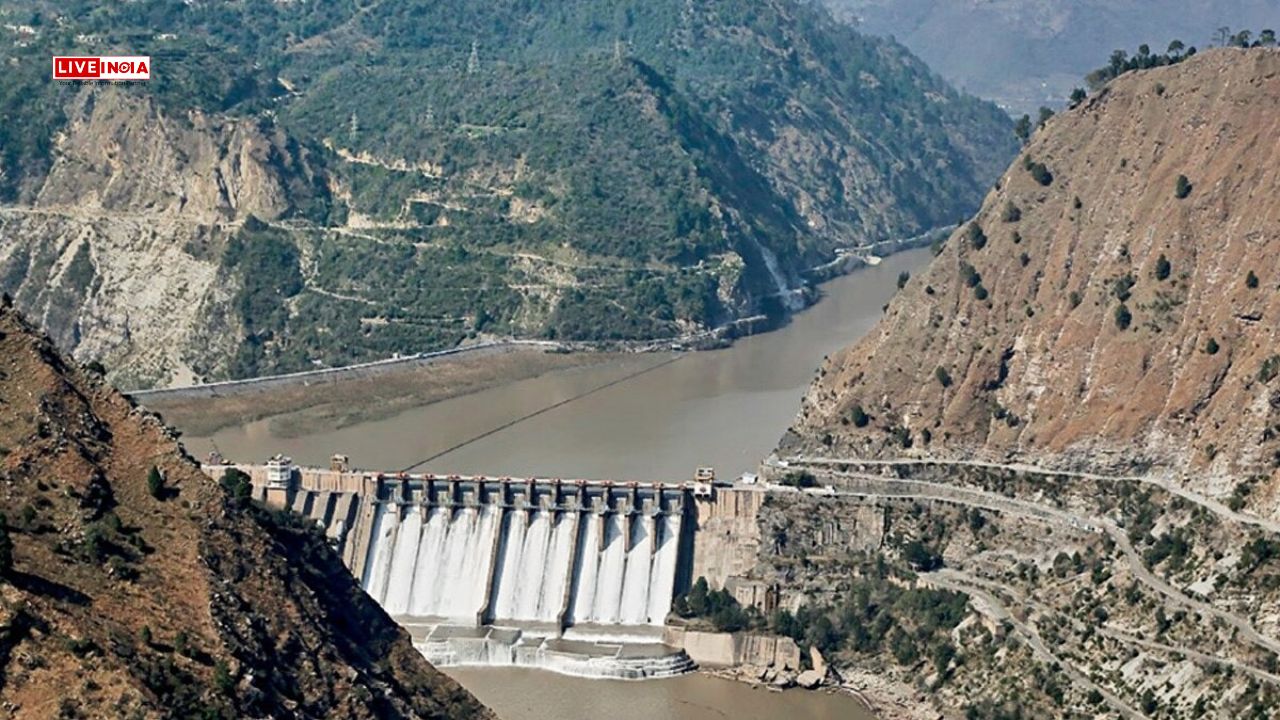
"Not A Drop To Pakistan: India Sets Immediate Plan In Motion To Suspend Indus Waters Treaty"
April 26, 2025: New Delhi:
Union Jal Shakti Minister CR Patil has asserted that India will ensure “not even a drop” of Indus river water flows to Pakistan, following the historic decision to suspend the Indus Waters Treaty of 1960.
Also Read: Chinese-Backed Construction Under Fire After Fatal Thai Building Collapse
This strong statement came after a key meeting at Home Minister Amit Shah’s residence on Friday, attended by senior officials and ministers. Mr. Patil, sharing the update on X (formerly Twitter), said, “The historic decision taken by the Modi government on the Indus Water Treaty is completely justified and in the national interest.”
The suspension of the treaty was officially announced on Wednesday in the wake of the brutal terror attack in Pahalgam, Jammu and Kashmir, where 25 tourists and a local resident lost their lives. The Ministry of Jal Shakti has already sent a formal notification to Pakistan’s Ministry of Water Resources regarding this decision.
Priority Areas Identified
At the meeting, detailed discussions were held to outline both immediate and long-term steps for implementing the suspension. Officials said short-term strategies include desilting existing dams on the Indus, Jhelum, and Chenab rivers and expanding reservoir capacities to significantly curb water flow into Pakistan.
The Indus Waters Treaty, brokered by the World Bank, gave India control over the eastern rivers (Ravi, Beas, and Sutlej) while Pakistan received water rights over the western rivers (Indus, Jhelum, and Chenab). By suspending the treaty, India aims to prevent Pakistani objections over Indian hydroelectric projects like Kishenganga and Ratle from impacting national plans.
Long-Term and Legal Preparedness
In the longer term, India is considering the construction of new dams and additional infrastructure across these rivers to consolidate control over water resources.
Officials also confirmed that a legal framework is being prepared to counter any international pressure, especially from the World Bank or other global institutions. Diplomatic outreach is ongoing to explain India’s rationale behind this decision.
“The government is committed to ensuring minimal inconvenience to Indian citizens. Coordination among the Jal Shakti Ministry, Home Ministry, and Ministry of External Affairs is key to this effort,” an official stated.
Pakistan’s Reaction
Pakistan reacted sharply, warning that any attempt to block or divert the flow of its share of water would be considered “an Act of War” and met with “full force across the complete spectrum of National Power.”
Despite the threat, Indian authorities are moving swiftly to implement the treaty suspension, marking a significant strategic shift in Indo-Pak relations.
India-Pakistan relations, Indus Waters Treaty, Amit Shah, CR Patil, Water Dispute, Pahalgam Terror Attack, Jal Shakti Ministry, India Foreign Policy, Kashmir Issue, Pakistan Threats, World Bank, Kishenganga Project, Ratle Project, Indian Dams
Sunny Deol and Akshaye Khanna face off in a high-stakes courtroom drama of ethics and…
No refund for Vande Bharat and Amrit Bharat tickets cancelled within eight hours of departure…
Services to four destinations suspended till February 28 over regional security concerns February 3, 2026:…
Eight Opposition MPs suspended after repeated disruptions over national security debate February 3, 2026: The…
Makers consider recast after Deepika Padukone’s exit from Kalki 2898 AD 2 February 3, 2026:…
Former India captain calls award a special moment, vows to keep winning matches for the…