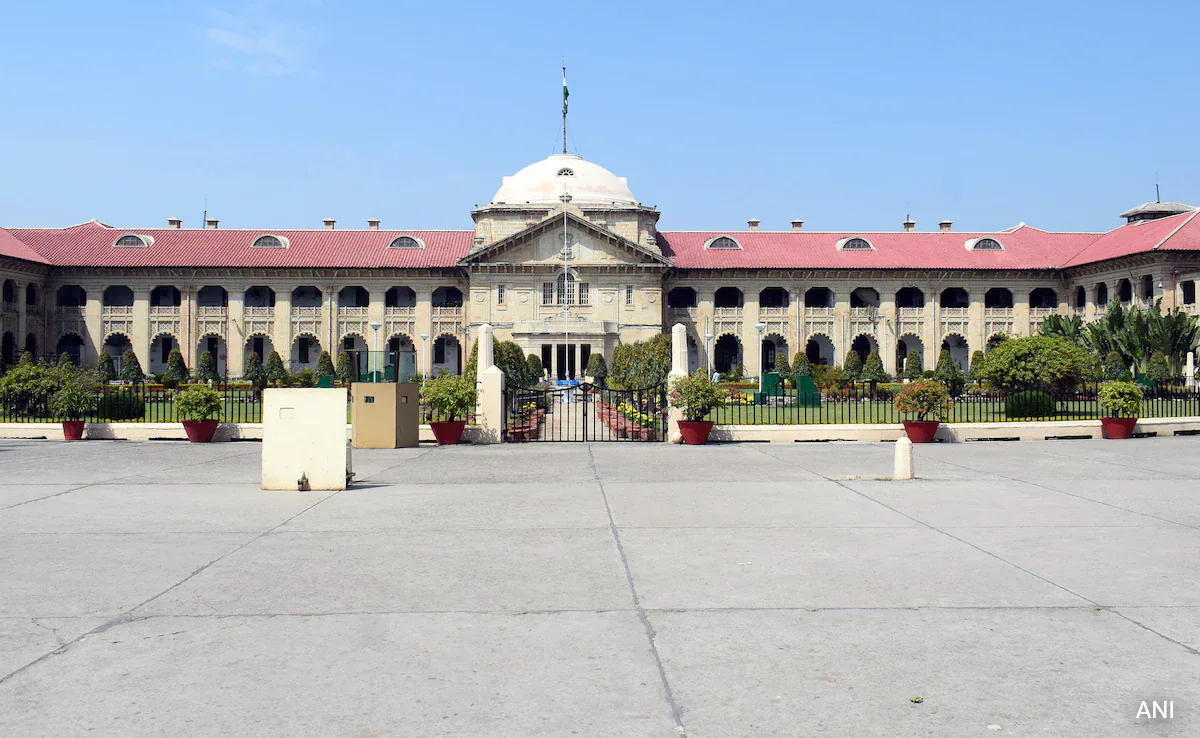
Not-Observing 'Parda' Cannot Be Grounds for Divorce: Rules The Allahabad High Court
January 1, 2025: The Allahabad High Court has rejected a husband’s plea for divorce on the grounds of mental cruelty, stating that his wife’s decision not to observe ‘parda’ (veil) does not constitute valid grounds for dissolution of marriage.
Also Read: IDF Confirms Killing of Hamas Commander Abd al-Hadi Sabah in Targeted Drone Strike
A bench comprising Justices Saumitra Dayal Singh and Donadi Ramesh ruled that an individual’s personal choices, such as being independent, traveling alone, or socializing in public spaces without forming any immoral relationships, cannot be interpreted as acts of mental cruelty.
Also Read: Atul Subhash’s Mother Moves Supreme Court Over Missing Grandson Amid Custody Battle
“The act of the wife being free-willed, traveling on her own, or interacting with members of society without engaging in any illegal or immoral behavior cannot be described as cruelty,” the bench observed.
Also Read: Strict Women Laws Are Not Tools for Extortion: Supreme Court
While dismissing claims of mental cruelty, the court acknowledged that the wife’s prolonged refusal to cohabit with her husband and her lack of effort to reconcile could be recognized as desertion.
The court stated, “The wilful act of the wife and her refusal to cohabit with the appellant-husband to revive her matrimonial relationship appears to be an act of desertion committed to a degree that may itself lead to the dissolution of marriage.”
This judgment underscores the importance of evidence and clarity in matrimonial disputes and sets a precedent that lifestyle choices and differences in perception cannot be treated as cruelty under marriage laws.
Tags: Divorce Case, Allahabad High Court, Mental Cruelty, Parda Observance, Family Law, Matrimonial Dispute, Legal Verdict, Indian Judiciary
Sunny Deol and Akshaye Khanna face off in a high-stakes courtroom drama of ethics and…
No refund for Vande Bharat and Amrit Bharat tickets cancelled within eight hours of departure…
Services to four destinations suspended till February 28 over regional security concerns February 3, 2026:…
Eight Opposition MPs suspended after repeated disruptions over national security debate February 3, 2026: The…
Makers consider recast after Deepika Padukone’s exit from Kalki 2898 AD 2 February 3, 2026:…
Former India captain calls award a special moment, vows to keep winning matches for the…