
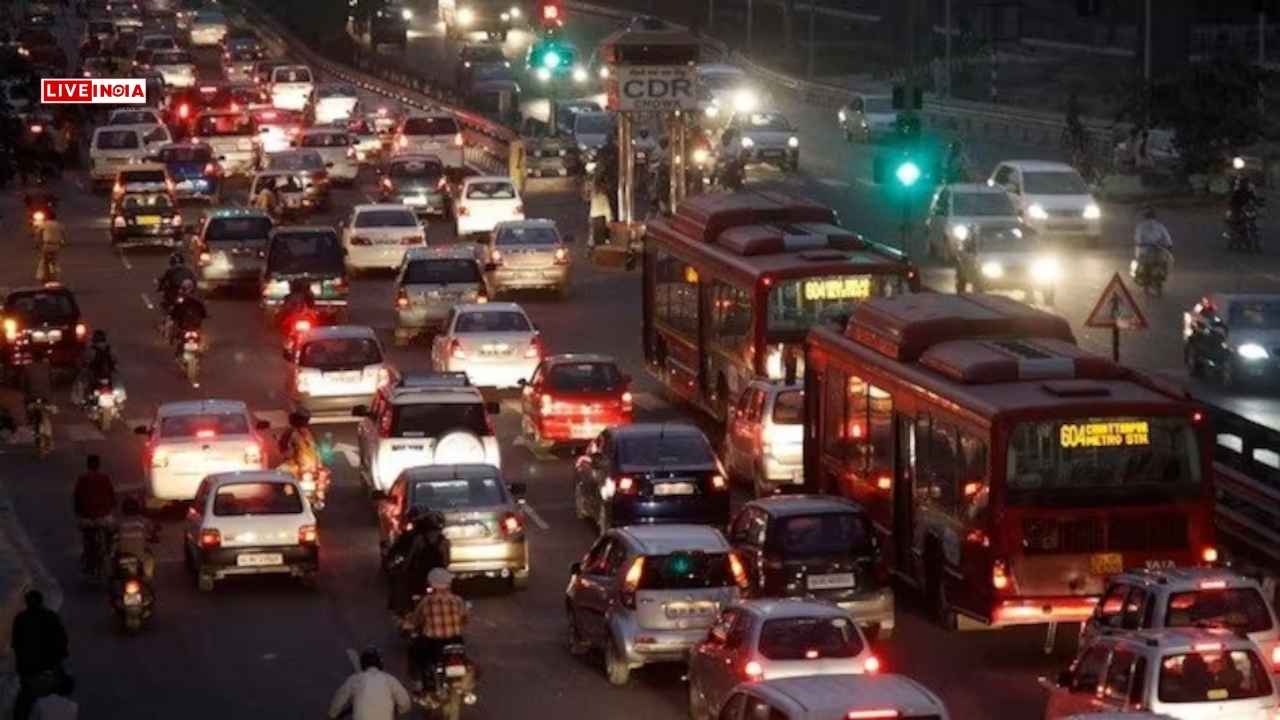


After facing intense backlash, Delhi government suspends its controversial plan to deny fuel to old cars and bikes; enforcement system deemed flawed and unfair.
New Delhi, July 3, 2025:
The Delhi government has put on hold its controversial ‘End of Life’ (EoL) fuel ban, which would have prohibited petrol vehicles older than 15 years and diesel vehicles older than 10 from refueling at stations across the capital.
Also Read: Tourist Entry Banned At Key Spots In Kodaikanal Amid Elephant Movement
Facing widespread public outrage and technical hurdles, Environment Minister Manjinder Singh Sirsa announced Thursday that the plan is being re-evaluated. “It’s a technically complex system and not yet robust enough,” he said, adding that authorities are working on a new mechanism to target poorly-maintained vehicles, not all older ones.
What Triggered the Reversal:
The original ban, implemented by the Commission for Air Quality Management (CAQM) on July 1, aimed to combat rising vehicular pollution in Delhi, which contributes to over 50% of the city’s air pollution.
Also Read: Mumbai Weather Forecast: IMD Issues Yellow Alert, Predicts Heavy Rain Today
The policy affected more than 62 lakh vehicles — including two-wheelers, trucks, and luxury and vintage cars — and required the use of Automatic Number Plate Recognition (ANPR) cameras at all 498 fuel stations to deny fuel to ELVs (End-of-Life Vehicles).
Delhi Environment Minister Manjinder Singh Sirsa writes to the Commission for Air Quality Management to place on hold the enforcement of Direction No. 89, which mandates the denial of fuel to End-of-Life (EOL) vehicles in Delhi
— ANI (@ANI) July 3, 2025
"We urge the Commission to put the implementation… pic.twitter.com/mgg1Ymdaes
However, the government admitted that the cameras cannot detect High Security Registration Plates (HSRP) issued post-April 2019, and cited frequent glitches, malfunctioning sensors, and unreliable systems as major obstacles.
Also Read: Filing Income Tax Return? What You Need to Know to Avoid ₹1.5 Lakh Fine
Public Fury Erupts:
Social media erupted with complaints from citizens who claimed the policy unfairly penalized responsible vehicle owners:
- One user posted about his 16-year-old, pollution-compliant Mercedes-Benz E280 V6 being deemed “vintage scrap” despite its clean emissions and maintenance record.
- Another user lamented selling his eight-year-old diesel Range Rover, barely used due to the pandemic, citing the government’s enforcement as financially punishing and “not a green policy but a penalty.”
This is my dad’s 16-year-old Mercedes E280 V6 still running stronger and cleaner than most of the so-called modern cars that keep breaking down on roads.
— Rattan Dhillon (@ShivrattanDhil1) July 2, 2025
Every single button still works, and the engine? Still does 0–100 in just 6–7 seconds. Zero pollution, zero nonsense.
But… pic.twitter.com/pXCdPvHNY3
The PUCC (Pollution Under Control Certificate) — currently mandated for all vehicles — was argued by many to be a sufficient measure. Critics emphasized the need for an emission-based model rather than an age-based one, saying the latter lacked nuance and punished responsible ownership.
What Happens Next:
While Delhi was the first to enforce the EoL fuel ban in the National Capital Region (NCR), neighboring regions like Gurugram were expected to follow on November 1. It is now unclear whether those plans will move forward or be re-evaluated.
The Delhi government’s climbdown represents a rare policy reversal driven by public sentiment and technological impracticalities. Officials have assured citizens that future action will be based on vehicle condition and emissions, not merely age.
Tags:
Delhi government, End of Life policy, vehicle fuel ban, pollution control, Delhi cars and bikes, ANPR camera issues, ELV fuel restrictions, CAQM order, HSRP problem, PUCC certificate