
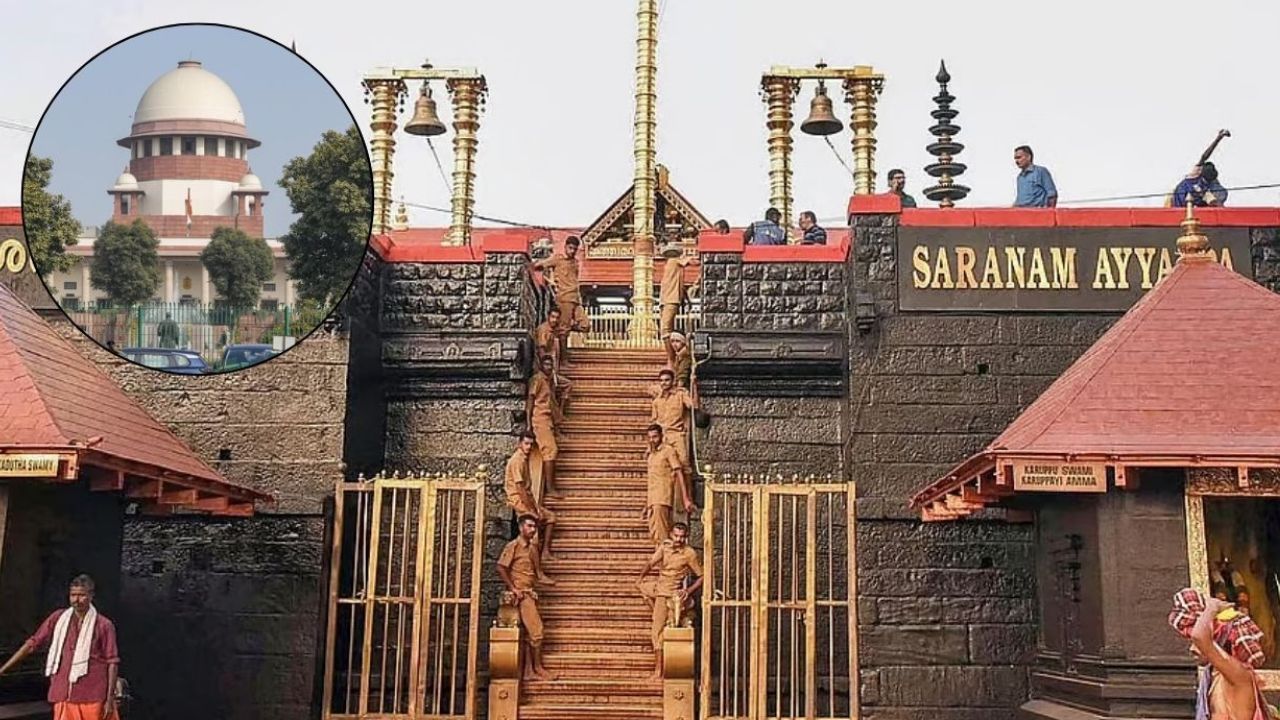


A nine-judge bench led by the Chief Justice will revisit key constitutional questions on religious freedom and women’s entry into Sabarimala
April 4, 2026: The Supreme Court of India has formally constituted a nine-judge Constitution bench to hear the long-pending review of the Sabarimala Temple verdict, reviving a major constitutional debate after nearly six years. The bench, led by Chief Justice Surya Kant, includes Justices B V Nagarathna, M M Sundresh, Ahsanuddin Amanullah, Aravind Kumar, A G Masih, R Mahadevan, Prasanna B Varale, and Joymalya Bagchi. The matter, linked to the 2018 ruling allowing women of all ages to enter the temple, will be heard from April 7, with arguments expected to conclude by April 22.
The case was last heard in detail in February 2020, when the court framed key constitutional questions and referred them to a larger bench. Earlier, a three-judge bench headed by the CJI had clarified procedural aspects, paving the way for this hearing. The court has already settled objections on whether such references can be made during review petitions, confirming that it is within its powers to do so. The Centre, represented by Solicitor General Tushar Mehta, has supported the review petitions, effectively opposing the unrestricted entry of women into the temple.
The bench will now examine broader constitutional issues, including the balance between religious freedom and individual rights, the scope of “essential religious practices,” and the limits of judicial intervention in matters of faith. The Sabarimala review is also linked to other significant cases, such as the Dawoodi Bohra excommunication matter and questions around religious identity after interfaith marriage. The outcome is expected to have far-reaching implications for how courts interpret the relationship between religion, equality, and constitutional values in India.