
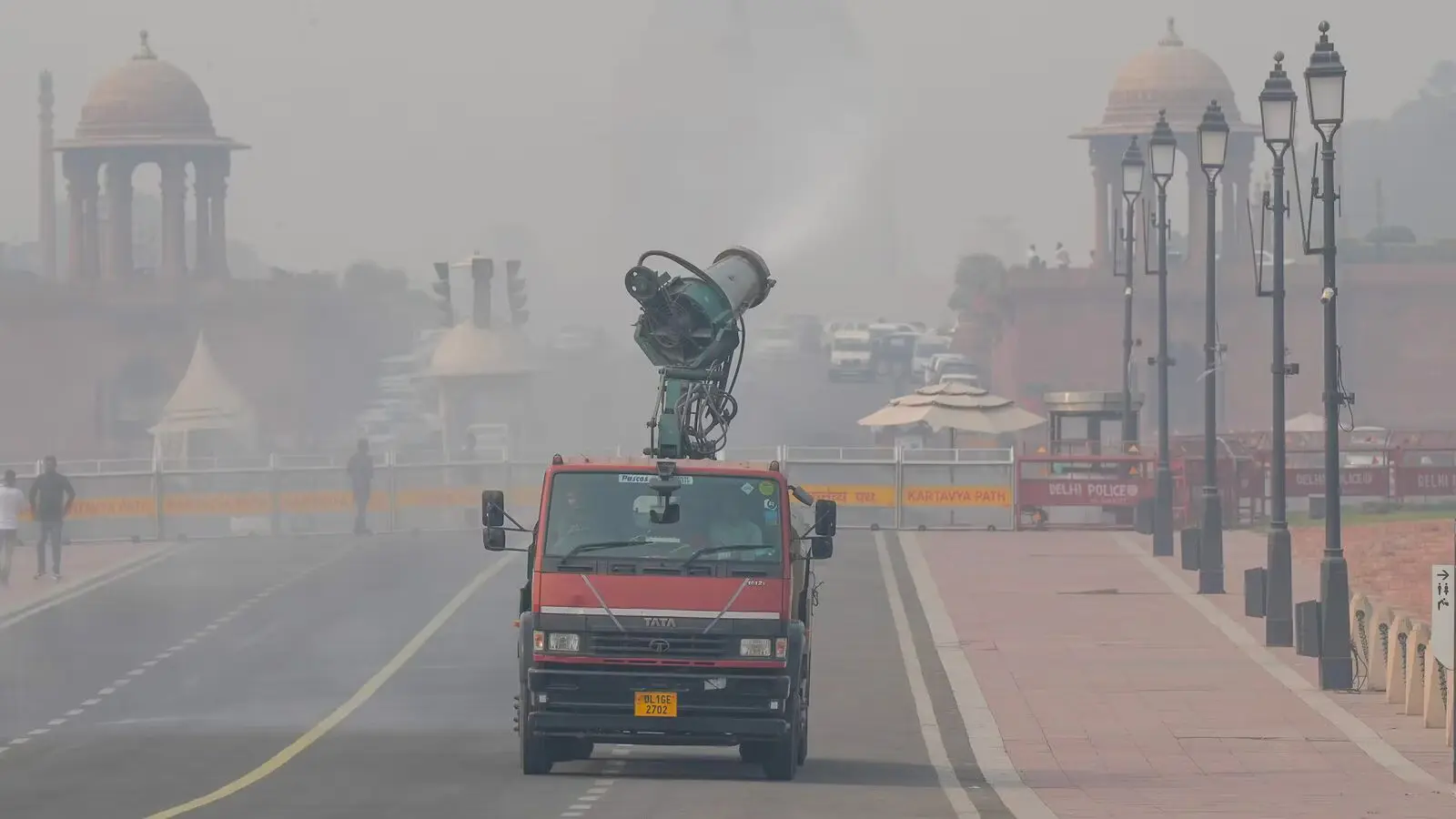


Ahead of the planned artificial rain experiment, CM Rekha Gupta defends the move, calling the weather modification technique an urgent requirement for the capital.
October 24, 2025: Amid a severe air quality crisis following the Diwali festival, Delhi Chief Minister Rekha Gupta on Friday declared cloud seeding a “necessity” for the national capital. The BJP leader’s remarks underscore the government’s commitment to scientific intervention as the city grapples with dangerously high pollution levels.
“Cloud seeding is a necessity for Delhi and is the first experiment of its kind. We want to try it in Delhi to see if it can help us control this very serious environmental problem,” CM Gupta.
The Chief Minister expressed optimism about the groundbreaking experiment, adding, “The blessings of the people of Delhi are with the government, and we feel that this will be a successful experiment and in future, we will be able to overcome these environmental problems.”
Artificial Rain Scheduled for October 29
CM Gupta’s comments follow her announcement a day earlier regarding the city’s first-ever artificial rain plan. After a successful test conducted in the Burari area, the Chief Minister confirmed that full-scale cloud seeding is scheduled for the end of the next week.
In a post on ‘X’, CM Gupta stated, “According to the weather department, cloudy conditions are expected on October 28, 29, and 30. If the weather remains favourable, Delhi is likely to witness its first artificial rain on October 29.”
The CM emphasized the scientific approach of the initiative, noting that it is “not only technologically historic but also establishes a scientific approach to combatting pollution in Delhi. The government aims to clean the capital’s air and balance its environment through this innovation.” The cloud seeding project is a joint effort between the Delhi government and the Indian Institute of Technology (IIT) Kanpur.
Post-Diwali Firecrackers Push AQI to ‘Severe’
The urgent need for an intervention like cloud seeding arises from the sharp deterioration of Delhi-NCR’s air quality following Diwali. Widespread bursting of firecrackers pushed the Air Quality Index (AQI) into the ‘Severe’ category.
Experts highlight a critical shift in the composition of the capital’s air. Where earlier in the month the air was dominated by photochemical pollutants, the last four days—including and immediately after Diwali—saw the air severely polluted by particulate matter.
According to experts, this data points directly to a sharp rise in combustion-driven emissions, primarily firecrackers, compounded by emissions from vehicles, industries, and local burning. The ozone and carbon monoxide on the AQI charts were notably replaced by particulate matter from October 20 onwards, showcasing the immediate and severe impact of the festivities.