
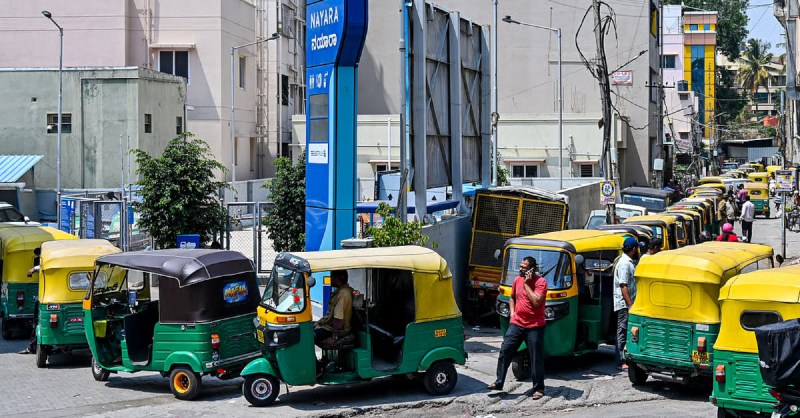

 supply has forced nearly half of Bengaluru’s autorickshaw fleet off the roads)
BENGALURU — A severe disruption in Liquefied Petroleum Gas (LPG) supply has forced nearly half of Bengaluru’s autorickshaw fleet off the roads, leaving thousands of commuters stranded and shifting the burden of urban mobility onto Compressed Natural Gas (CNG) vehicles.
With approximately 80,000 LPG-run autos currently struggling to find fuel, the city is witnessing a stark disparity in transport availability. While CNG-operated vehicles—numbering around 100,000—remain stable, their LPG counterparts are trapped in “informal information loops” and queues stretching hundreds of metres.
- The “Certainty” Crisis for Drivers
The shortage intensified last week when a key LPG outlet in central Bengaluru ran out of stock. For drivers, the struggle isn’t just the lack of fuel, but the lack of reliable information.
Informal Networks: Drivers like Ravi Kumar are refusing to chase unverified leads across the city. “Driving without certainty doesn’t feel practical. By the time you reach it, the fuel may already be gone,” he noted.
The Waiting Game: Salim Ahmed, another driver, highlighted the overcrowding at the few functional stations. “You spend hours in line without knowing if you’ll get anything.”
Fuel Hoarding: M. Manjunath, President of the Adarsha Auto and Taxi Drivers’ Union, noted that some drivers are now storing extra fuel in advance, which is further tightening the already limited supply for others.
- Structural Shifts: LPG to CNG Conversion
The current crisis has exposed a broader structural trend in the city’s energy infrastructure.
Station Conversions: Many traditional LPG outlets have been steadily converted into CNG stations over the last year, reducing the total number of refuelling points for LPG drivers.
Price Volatility: While prices have eased slightly from ₹95 per litre to ₹89.50 at some outlets, private stations remain shut for days at a time due to zero stock.
- Relief on the Horizon: New Mangalore Port Shipments
Officials are looking toward the coast for a long-term fix. Increased fuel inflows at the New Mangalore Port are expected to stabilise the supply chain across Southern India.
Strategic Reserves: A massive crude oil tanker carrying 270,000 tonnes is currently unloading at an offshore facility for the Indian Strategic Petroleum Reserves Limited.
LPG Consignments: Several vessels are in the queue for IOCL, HPCL, and BPCL, with shipments dedicated to clearing the backlog in Bengaluru and surrounding regions.
Bengaluru Autorickshaw Fleet: Fuel Distribution
| Fuel Type | Estimated Count | Current Status |
| CNG (Compressed Natural Gas) | 1,00,000 | Stable: Primary option for commuters. |
| LPG (Liquefied Petroleum Gas) | 80,000 | Disrupted: Severe shortages; long queues. |
| Electric (EV) | ~12,000+ | Operational: Growing but limited market share. |
Impact on Commuters
The shortage has led to a significant spike in ride-hailing cancellations and “surge” pricing across popular apps. Commuters in areas like Indiranagar, Koramangala, and Hebbal have reported waiting over 30 minutes for an auto, with many forced to pay double the usual fare to CNG drivers who are managing the increased demand.