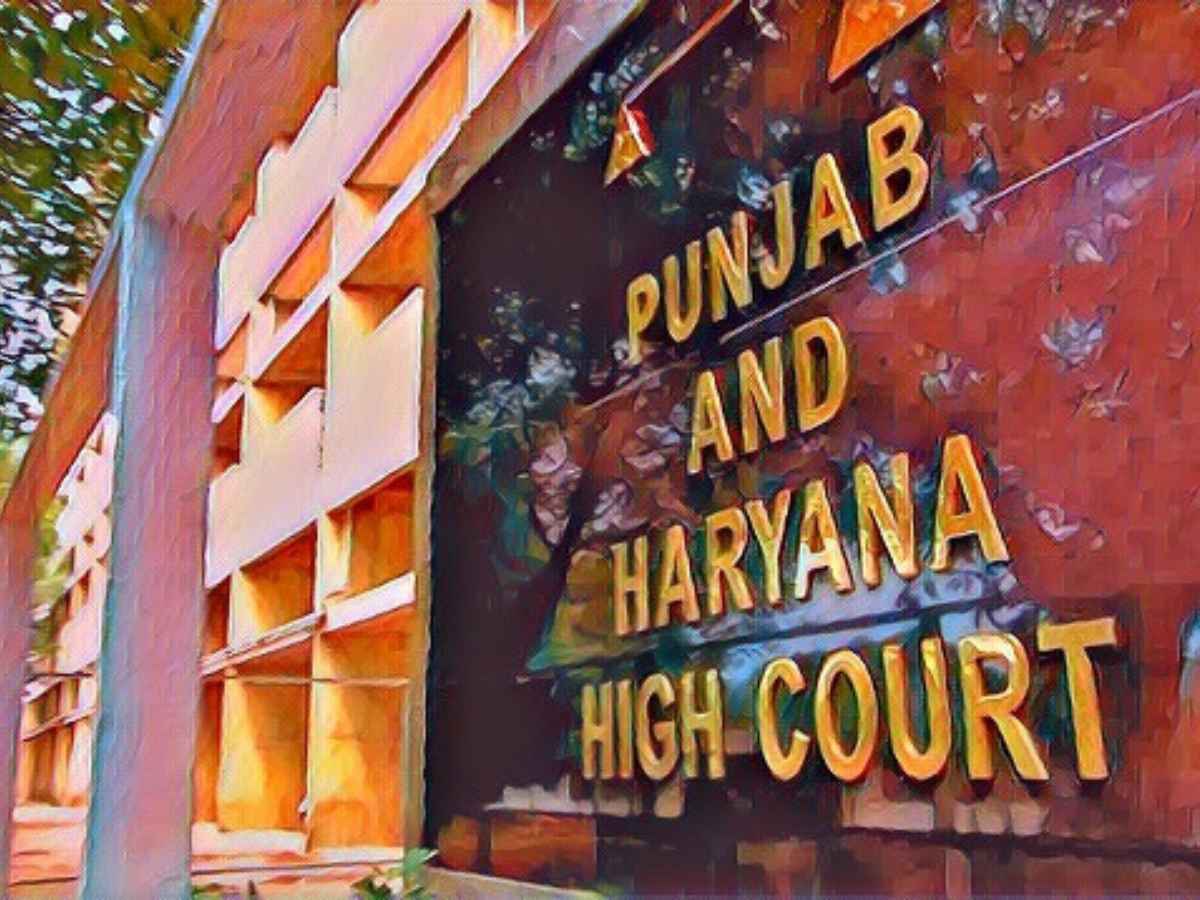
'Prisoners Are Not Second-Class Citizens': Punjab & Haryana High Court Slams Parole Delays
The District Magistrate of Moga has been ordered by the Punjab and Haryana High Court to make a decision on the parole application of a prisoner who is requesting interim release in order to help his sick mother and children within two weeks. A prisoner’s right to life and dignity is violated by delays in processing parole pleas, the court said, criticizing state officials for what it described as a “culture of apathy” in this regard.
“That state agencies exhibit such laxity in dealing with applications for temporary release is deeply concerning,” said Justice Harpreet Singh Brar, who issued the order on July 9. The value of liberty as seen by a prisoner, who experiences its absence on a daily basis, is beyond the administration’s comprehension.
For a 2020 case in Ferozepur, the petitioner, Jaspal Singh, also known as Jassa, is currently receiving a 10-year sentence under the NDPS Act. In September of last year, he requested eight weeks of parole to take care of his mother, who has age-related diseases, and to spend a limited time with his two kids. However, the application was still pending after almost ten months, so he took it to the High Court.
The Punjab Good Conduct Prisoners (Temporary Release) Act, 1962, according to Justice Brar, was humanitarian in nature and shouldn’t be viewed as merely a “paper ritual.” He cited Sunil Batra v. Delhi Administration, a seminal Supreme Court decision from 1978, which stated that “Convicts are not, by mere reason of the conviction, denited of all the fundamental rights which they otherwise possess.”
The judge also cited previous High Court rulings, such as Joginder Singh v. State of Punjab and Mahammad Shehbaz v. State of Punjab, that established deadlines for such rulings. Advocate Lakhwinder Singh Lakhanpal, who represented Singh, contended that the prisoner and his family had suffered psychologically as a result of the inaction. Additional Advocate General Subhash Godara is the state’s representative.
In dismissing the petition, the court established a more general rule that all parole pleas must be resolved within four months, in addition to directing the DM to make a final decision on Singh’s application within two weeks. The judge cautioned that failure to do so without good cause could result in contempt proceedings.
In order to guarantee compliance throughout the region, the High Court has additionally ordered that copies of the ruling be delivered to the legal representatives of Punjab, Haryana, and Chandigarh.
Sunny Deol and Akshaye Khanna face off in a high-stakes courtroom drama of ethics and…
No refund for Vande Bharat and Amrit Bharat tickets cancelled within eight hours of departure…
Services to four destinations suspended till February 28 over regional security concerns February 3, 2026:…
Eight Opposition MPs suspended after repeated disruptions over national security debate February 3, 2026: The…
Makers consider recast after Deepika Padukone’s exit from Kalki 2898 AD 2 February 3, 2026:…
Former India captain calls award a special moment, vows to keep winning matches for the…