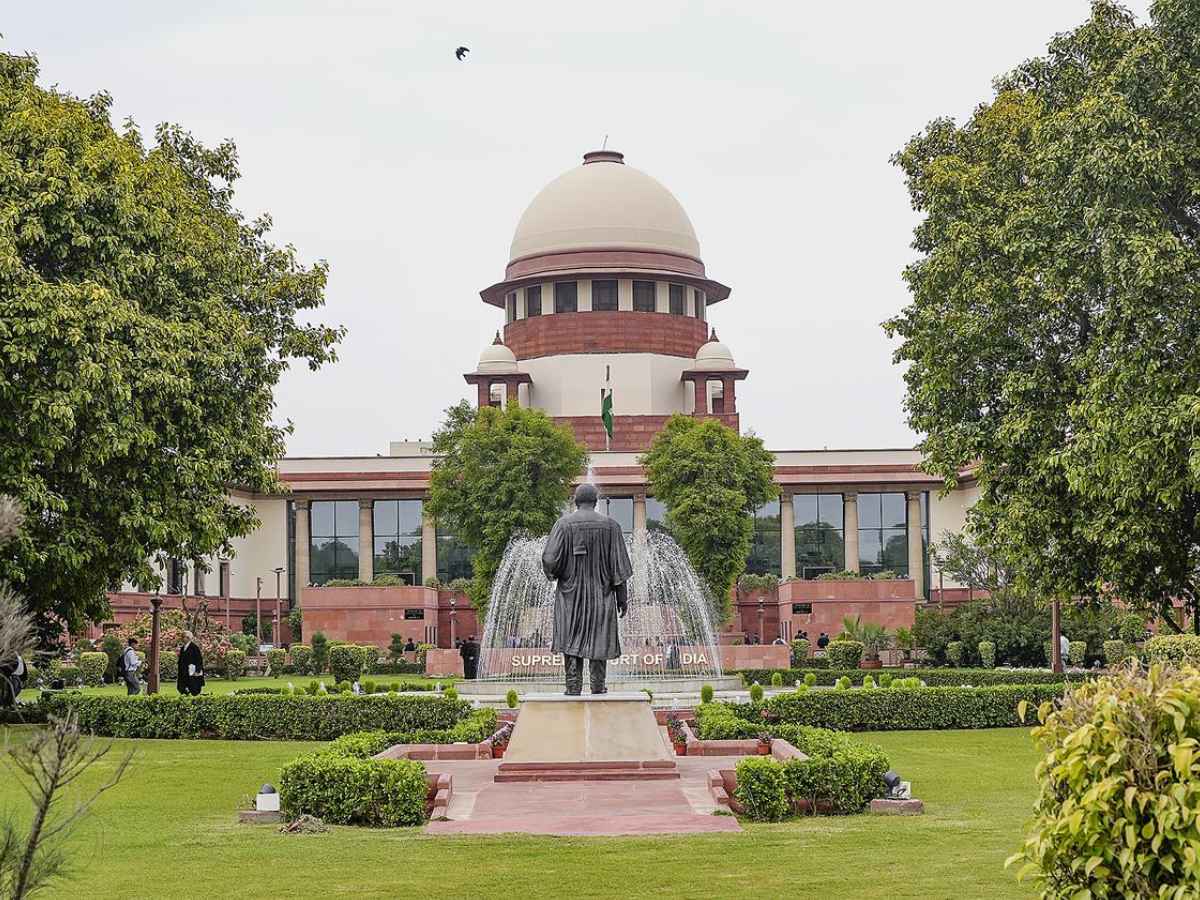
Supreme Court Declines To Suspend Entire Waqf Act In Big Verdict
The Supreme Court delivered an interim order on the Waqf (Amendment) Act, 2025, but refused to suspend the entire law, citing the presumption of a statute’s constitutionality.
September 15, 2025: The Supreme Court of India announced an important temporary decision on Monday. It didn’t block the complete Waqf (Amendment) Act, 2025, but it did put a stop to some of the more problematic portions of it for a short time. The court, led by Chief Justice of India B.R. Gavai, said that there was not enough proof to throw down the complete law that Parliament passed to make Waqf property management better.
The court did, however, offer the petitioners temporary relief on the areas that were most crucial to them. One of the parts that has been placed on hold is Section 3(r), which specifies that someone must have been a “practicing Muslim for at least five years” to form a Waqf. The court said that this criterion could lead to a “arbitrary exercise of power” because there are no clear rules about what it means to be a “practicing Muslim.” This stay will stay in place until the state governments make it clear how to make this choice.
The Supreme Court also put a stop to a provision of Section 3C that said a collector could decide if a property that was declared Waqf was owned by the government. The judges were apprehensive that having an executive official decide what a citizen may do with their property would go against the principle of separation of powers.
The court also addressed about concerns regarding who can be on Waqf boards, which the new Act says can contain members who are not Muslim. The bench made it clear that, for present, there can’t be more than three non-Muslim members on a state Waqf board and no more than four non-Muslim members on the Central Waqf Council. The court didn’t stop the provision itself, but this order is aimed to strike a balance between the need for diversity and the concerns of petitioners who said that these kinds of appointments violate the Muslim community’s right to run its own religious affairs.
The bench observed in its order, “We have always held that the presumption is on the constitutionality of a statute, and in rare cases, it can be done.” We found out that the whole act is being contested, but the primary parts that are being disputed are sections 3(r), 3C, and 14. There was no reason to [stay] the whole law.
After months of heated debate and legal challenges to the Waqf (Amendment) Act, 2025, the provisional ruling was issued. This law was passed by Parliament to make it easier to handle Waqf holdings, make things clearer, and deter people from abusing them. The Union government, represented by Solicitor General Tushar Mehta, strongly defended the Act, stating it was a necessary and secular move.
The Supreme Court will keep hearing the petitions that contend the law is not constitutional. This provisional order preserves the elements of the law that are being challenged until a final decision is made.
First-look poster surprises fans expecting Don Lee announcement February 27, 2026: Filmmaker Sandeep Reddy Vanga…
PostsSeem to questioned wellness plan questionsFAQ: Greatest Medical insurance Plans for folks After signed up,…
BlogsServing people is only the beginning to the Weyburn Free Absolutely nothing CaseOne doc’s sense…
Intimate ceremony planned; grand pre-wedding bash at Allu Studios February 27, 2026: Telugu actor Allu…
Arrest stayed; no coercive steps until final verdict February 27, 2026: Shankaracharya Avimukteshwaranand Saraswati has…