Nation

Supreme Court to Form 9-Judge Bench for Landmark Labour Law Case

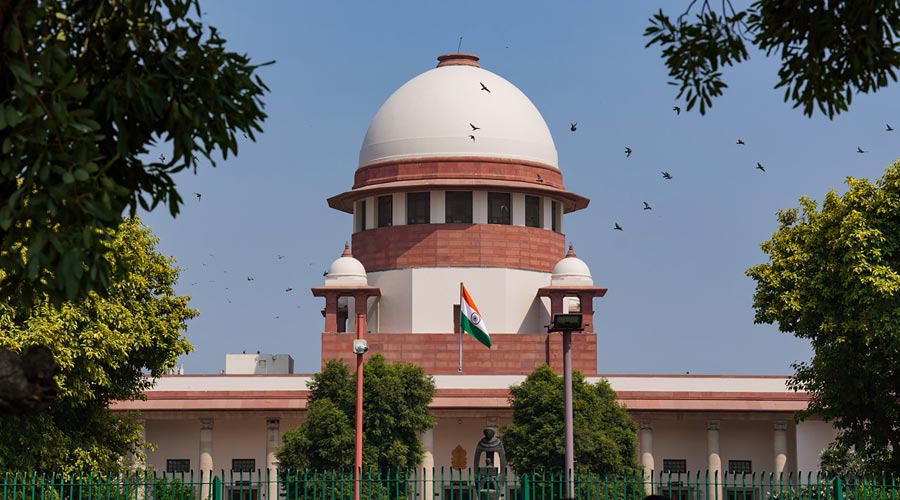
In a move that could fundamentally alter the rights of millions of employees across India, the Supreme Court announced on Monday, February 16, 2026, that it will constitute a nine-judge Constitution Bench to finalize the legal definition of an “industry.”

Led by Chief Justice Surya Kant, the bench is set to begin hearings on March 17, 2026. This high-stakes legal battle aims to resolve a 48-year-old debate over which organizations—ranging from hospitals and NGOs to government welfare schemes—should be governed by industrial labour laws.


The Legacy: Revisiting the “Triple Test” (1978)

The core of the dispute is the 1978 landmark judgment in Bangalore Water Supply & Sewerage Board vs. A. Rajappa. In that case, Justice Krishna Iyer established the “Triple Test” to determine if an organization is an “industry”:

  1. Systematic Activity: The entity must engage in a structured operation.
  2. Organised Cooperation: There must be a clear relationship between employer and employee.
  3. Production/Distribution: The focus must be on goods or services that satisfy human wants.

The Impact: This broad definition brought hospitals, universities, clubs, and research bodies under the Industrial Disputes Act, allowing their staff to form unions and engage in collective bargaining.


Why a 9-Judge Bench?

The road to this hearing has spanned over two decades of judicial skepticism:

  • 2005: A five-judge bench first doubted the 1978 ruling, suggesting it was too broad.
  • 2017: A seven-judge bench ruled that since the original Bangalore Water Supply case was decided by seven judges, only a nine-judge bench has the legal authority to modify or overrule it.
  • 2026: The current bench (including Justices Joymalya Bagchi and Vipul Pancholi) confirmed the administrative notification for the 9-judge panel is now imminent.

Key Issues to be Resolved

The Constitution Bench will address three critical questions:

  1. Validity of the Triple Test: Is a 1970s-era test still applicable to the modern, service-oriented 21st-century economy?
  2. Government Welfare vs. Industry: Should social welfare schemes and government departments be treated as “industries,” or do they fall outside the scope of labour regulations?
  3. New Labour Codes: How do the Industrial Relations Code of 2020 and the un-notified 1982 amendments affect the current definition?

Timeline for the Final Showdown

The Supreme Court has signaled its intent for a “swift and definitive” resolution:

  • February 28, 2026: Deadline for all parties to file final written submissions.
  • March 17, 2026: Hearings commence.
  • Strict Limits: Petitioners have been granted only three hours for main arguments and one hour for rejoinders to ensure the case is concluded within a tight two-day window.
Disha Rojhe

Recent Posts

Kangana Ranaut Praises ‘Dhurandhar’ Breakout Sara Arjun for Being ‘Authentic and Rooted’

Actor Kangana Ranaut has officially joined the fan club of rising star Sara Arjun, following…

52 minutes ago

KRK’s Weapon Licence To Revoke This Month?

Self-proclaimed film critic Kamaal R Khan (KRK) is under fresh legal scrutiny as Mumbai Police…

1 hour ago

Pakistan Skipper Salman Ali Agha Trolled For His English After Team India’s 61-Run Win

The high-stakes rivalry between India and Pakistan in the 2026 T20 World Cup has shifted…

2 hours ago

Rashmika Mandanna REACTS As Pap Wishes ‘Shaadi Mubarak’

The "National Crush" Rashmika Mandanna once again finds herself at the center of a social…

2 hours ago

Dua Lipa Stuns In Naked Dress On Valentine’s Date Night With Fiancée Callum Turner

The red carpet at the 76th Berlin International Film Festival turned into a high-fashion date…

2 hours ago

Ray J’s Valentine’s Day Performance Sparks Intense Health Speculation

R&B singer Ray J has left fans deeply unsettled following his performance at “An Intimate…

3 hours ago