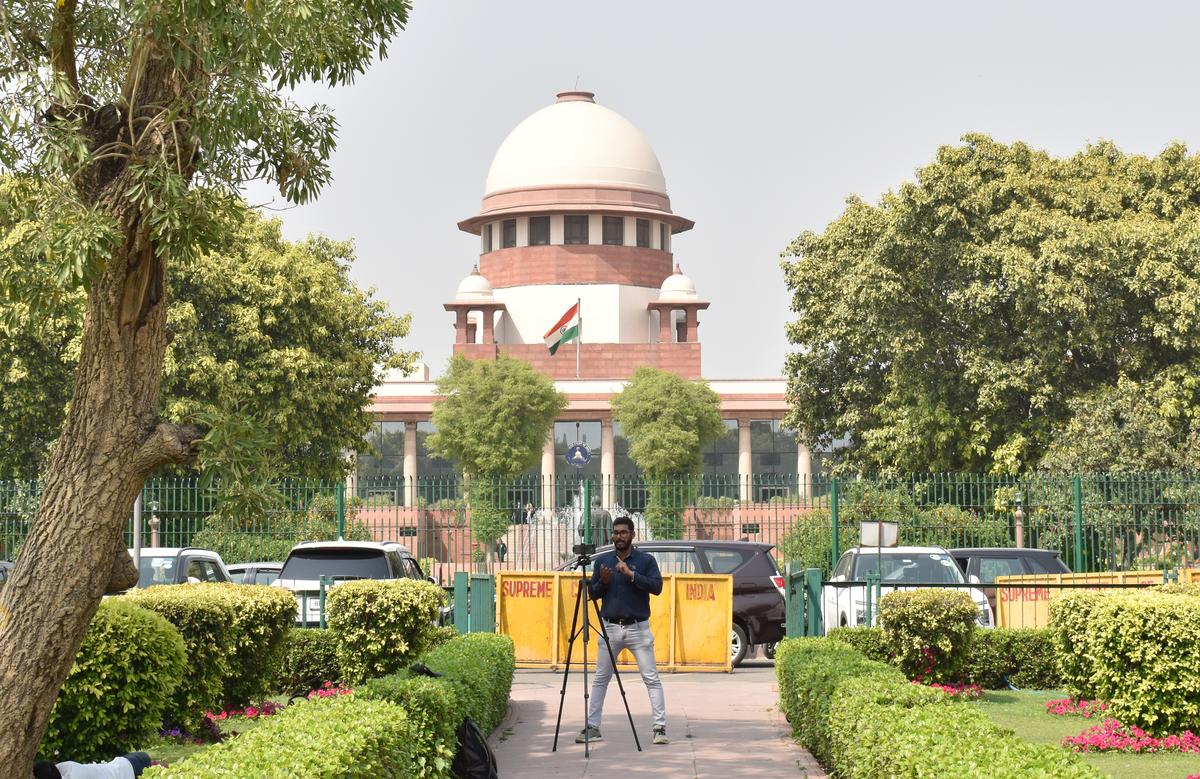
Supreme Court to Hear Pleas Challenging Waqf Amendment Act Today
New Delhi, April 16, 2025 – A Supreme Court bench led by Chief Justice Sanjiv Khanna will today hear a batch of over 10 petitions challenging the constitutional validity of several provisions under the Waqf (Amendment) Act.
The petitions, filed by politicians, religious leaders, and civil rights groups, claim that the amended legislation infringes on religious freedom, minority rights, and waqf autonomy.
Prominent petitioners include AIMIM MP Asaduddin Owaisi, AAP MLA Amanatullah Khan, the All India Muslim Personal Law Board (AIMPLB), and religious bodies like Jamiat Ulema-i-Hind, represented by Maulana Arshad Madani, among others.
Petitioners argue that the amendments “distort the religious identity of waqfs” and compromise the democratic management of waqf properties. They claim the law gives excessive control to the government over Muslim charitable endowments, threatening both the religious essence and legal autonomy of waqfs.
Also Read: Violent Protests Over Waqf Act Rock West Bengal; Railway Tracks Blocked, Police Injured
Maulana Arshad Madani stated in his petition that the changes “destroy the very foundation of waqf jurisprudence in India” and aim to redefine the religious institution’s societal role.
The petitions contend the Act violates multiple constitutional provisions:
Also Read: Waqf Amendment Bill Becomes Law After Heated Debates, President Murmu Gives Assent
The Central Government has filed a caveat, requesting the court not to issue any interim order without hearing its side. Petitioners, however, have urged the court to stay implementation of the law until a final verdict is delivered.
Political parties like the RJD and DMK have also submitted separate pleas, arguing the amendments enable unconstitutional state interference in religious institutions. DMK’s A Raja and RJD’s Manoj Jha and Faiyaz Ahmad are among those opposing the law.
Passed amid sharp opposition, the Waqf (Amendment) Act has triggered protests across the country, especially among Muslim organizations and community leaders who say it is an attempt to centralize and secularize control over religious endowments.
Tags: Waqf Amendment Act, Supreme Court of India, S Jaishankar, Asaduddin Owaisi, AIMPLB, constitutional rights, Article 25, minority rights, religious freedom, Indian judiciary
Single identity proof now enough for passengers booked on the same PNR March 12, 2026:…
Plea challenges case against journalist over alleged WhatsApp remarks on Hindu beliefs March 12, 2026:…
Star spinner to marry childhood sweetheart in Mussoorie after T20 World Cup triumph March 12,…
Actor Gaurav Khanna, who won Bigg Boss 19, has clarified that he has already received…
The Indian Rupee weakened against the US Dollar on Thursday, ending 16 paise lower at…
Minister says LPG availability intact despite Iran–Israel–US conflict concerns March 12, 2026: Petroleum Minister Hardeep…