
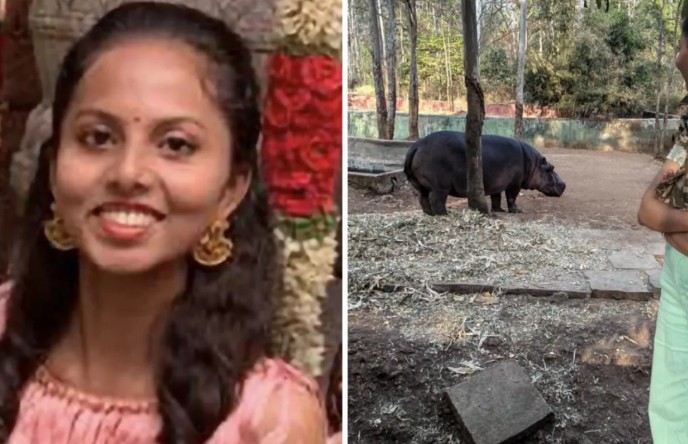


A 27-year-old trainee veterinarian, Dr. Sameeksha Reddy, tragically lost her life on Friday, March 20, 2026, after being attacked by a hippopotamus at the Tyavarekoppa Tiger and Lion Safari. The incident has raised serious questions regarding safety protocols and the supervision of trainee staff at wildlife facilities.
Dr. Reddy, who had joined the veterinary team on a contractual basis just six weeks ago, was reportedly conducting a medical check on a pregnant hippo when the animal turned aggressive.
1. The Incident: A Late-Night Inspection Gone Wrong
According to safari officials, the attack occurred around 11:45 PM on Thursday night.
- The Mission: Dr. Reddy entered the enclosure to monitor a pregnant hippopotamus that was expected to deliver within days. The animal had reportedly stopped eating, prompting the need for a thermal camera inspection.
- The Attack: While using a ladder to get a better view, Dr. Reddy reportedly fell into the enclosure. The hippopotamus, already in a sensitive state due to its pregnancy, immediately became aggressive and charged.
- The Aftermath: Zoo staff managed to pull her out and rush her to a private hospital in Shivamogga. Despite undergoing surgery for severe abdominal and liver injuries, she passed away at 6:30 AM on Friday due to massive blood loss.
2. Government Response and Inquiry
Forest Minister Eshwara Khandre has taken serious note of the lapse in safety.
- Seven-Day Deadline: A high-level inquiry team, including senior veterinarians and forest officials, has been ordered to submit a report within one week to identify any procedural failures.
- SOP Review: The Minister has directed all zoos across Karnataka to rigorously re-examine and follow Standard Operating Procedures (SOPs) for handling dangerous animals.
- Compensation: The state has promised compensation to Dr. Reddy’s family as per government norms.
3. Kin Demand Answers: “Why Was She Alone?”
The victim’s family has expressed grief and outrage over the circumstances of her death.
- Lack of Supervision: Family members questioned why a trainee with only six weeks of experience was permitted to enter the enclosure of one of the world’s most dangerous land animals late at night without senior supervision.
- Communication Lapses: The kin alleged they were initially given conflicting reports about the severity of her injuries before learning of the extensive internal damage.
Hippopotamus Attacks: The Danger Context
Hippos are widely considered the most dangerous large land mammals in Africa and in captivity due to their highly territorial and unpredictable nature.
- Aggression Factors: They are particularly dangerous when guarding young or when females are pregnant.
- Speed and Strength: Despite their size, they can run up to 30 km/h and possess a bite force of nearly 1,800 psi.