
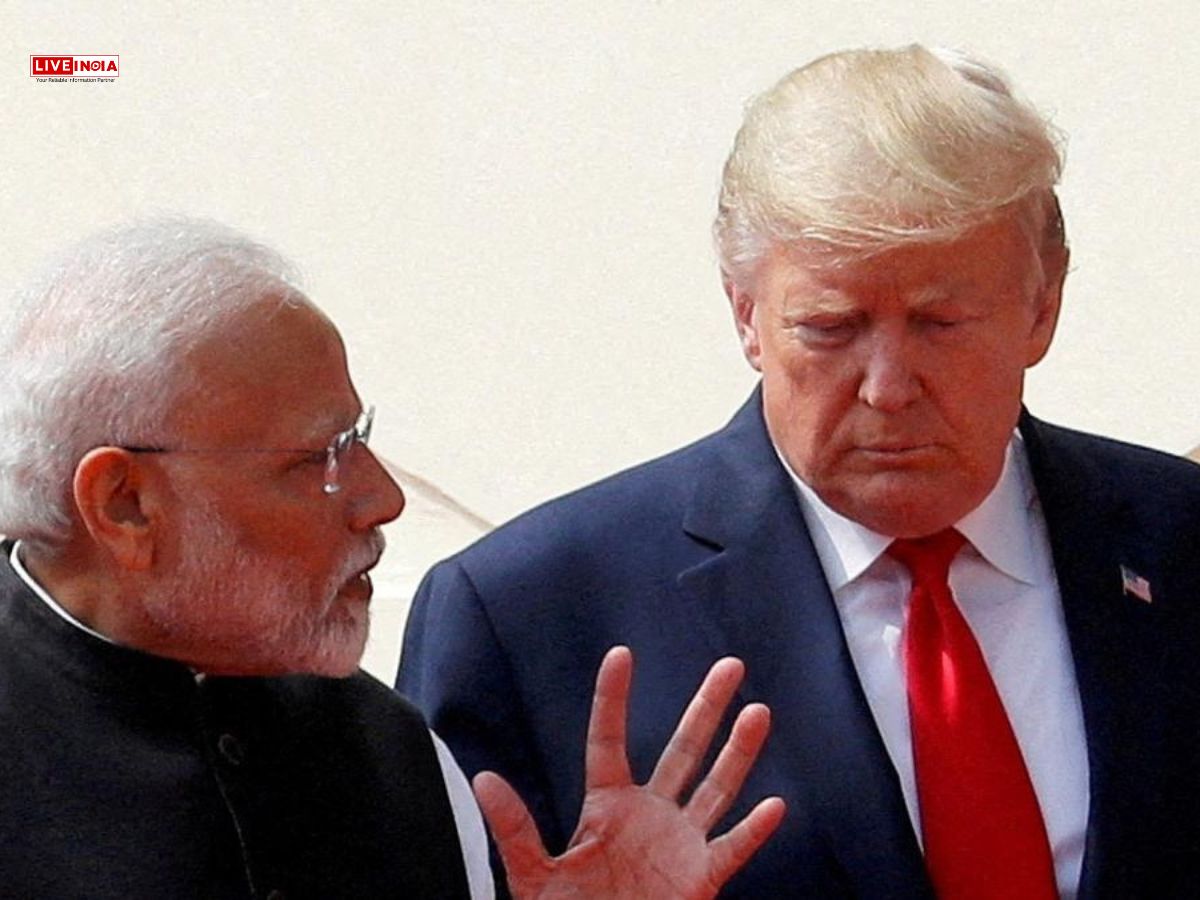


As PM Modi meets Trump in Washington, the US President’s latest tariff policy sparks concerns over India’s exports and global trade relations.
February 13, 2025: Trump’s Tariff Announcement Sets the Stage for High-Stakes Talks with PM Modi
Just hours before Prime Minister Narendra Modi’s highly anticipated meeting with US President Donald Trump in Washington, Trump took to Truth Social to emphasize what’s at stake.
“THREE GREAT WEEKS, PERHAPS THE BEST EVER, BUT TODAY IS THE BIG ONE: RECIPROCAL TARIFFS!!! MAKE AMERICA GREAT AGAIN!!!”
This cryptic yet explosive message, posted at 6:46 AM EST (5:16 PM IST), signals Trump’s aggressive trade strategy—one that could have significant ramifications for India and other US trading partners.
Also Read: “Ukraine May Be Russian Someday” Trump’s Remark Sparks Global Reactions
What Are ‘Reciprocal Tariffs’ and Why Should India Worry?
Trump’s ‘reciprocal tariffs’ policy essentially means that if any country imposes high import duties on American products, the US will retaliate with an equivalent tariff on their exports.
This policy, which is seen as a trade war tactic, comes as part of Trump’s broader “America First” economic agenda.
The White House has confirmed that the announcement of new tariff measures could come before PM Modi’s meeting, making trade a major flashpoint in their discussions.
How This Impacts India: Key Concerns
- Steel and Aluminium Tariffs
- Trump has already imposed a 25% tariff on global steel and aluminium imports, impacting Indian producers like Vedanta and Hindalco.
- While India is not a major steel supplier to the US, America remains one of India’s largest markets for aluminium exports.
- This move led to a 1,000+ point crash in the Indian stock market, reflecting investor concerns over trade tensions.
Also Read: Trump’s Tariffs Trigger Market Crash: Sensex Plunges Over 1,000 Points
2. Wider Trade Restrictions
- Trump has repeatedly criticized India’s high import duties, labeling the country a “very big abuser” in trade.
- His economic adviser Kevin Hassett even stated that India’s tariffs are “enormously high” compared to other nations.
- Indian Countermeasures?
- India recently slashed customs duties on high-end American products like Harley-Davidson motorcycles, Tesla cars, and Apple components, hoping to ease tensions.
- However, Finance Minister Nirmala Sitharaman clarified that these changes were aimed at boosting India’s economy, not merely a response to Trump’s tariff threats.
Trump vs Modi: A High-Stakes Meeting
PM Modi, who landed in Washington DC today, is set to raise concerns over the tariffs in his bilateral discussions with Trump.
With India’s manufacturing sector relying heavily on US trade, Modi is expected to push back against additional tariffs and advocate for a mutually beneficial trade policy.
This meeting also follows a recent diplomatic controversy, where the US deported 104 Indian migrants in shackles, sparking outrage in India.
What’s Next?
Trump’s hardline stance on trade is not just an issue for India but for global trade relations.
While his first term (2017-2021) saw similar tariffs, exemptions were later granted to Canada, Mexico, Britain, Japan, and the EU under Joe Biden’s administration.
If new tariffs are enforced, India’s exports could suffer, pushing domestic industries to find alternative markets—a process that could take months, if not years.
As PM Modi and President Trump meet today, the stakes couldn’t be higher. Will the leaders find common ground, or are we heading toward a new chapter of economic conflict? Stay tuned for updates!
Tags: PMModi, DonaldTrump, TradeWar, ReciprocalTariffs, USIndiaRelations, ModiInUSA, GlobalEconomy,