
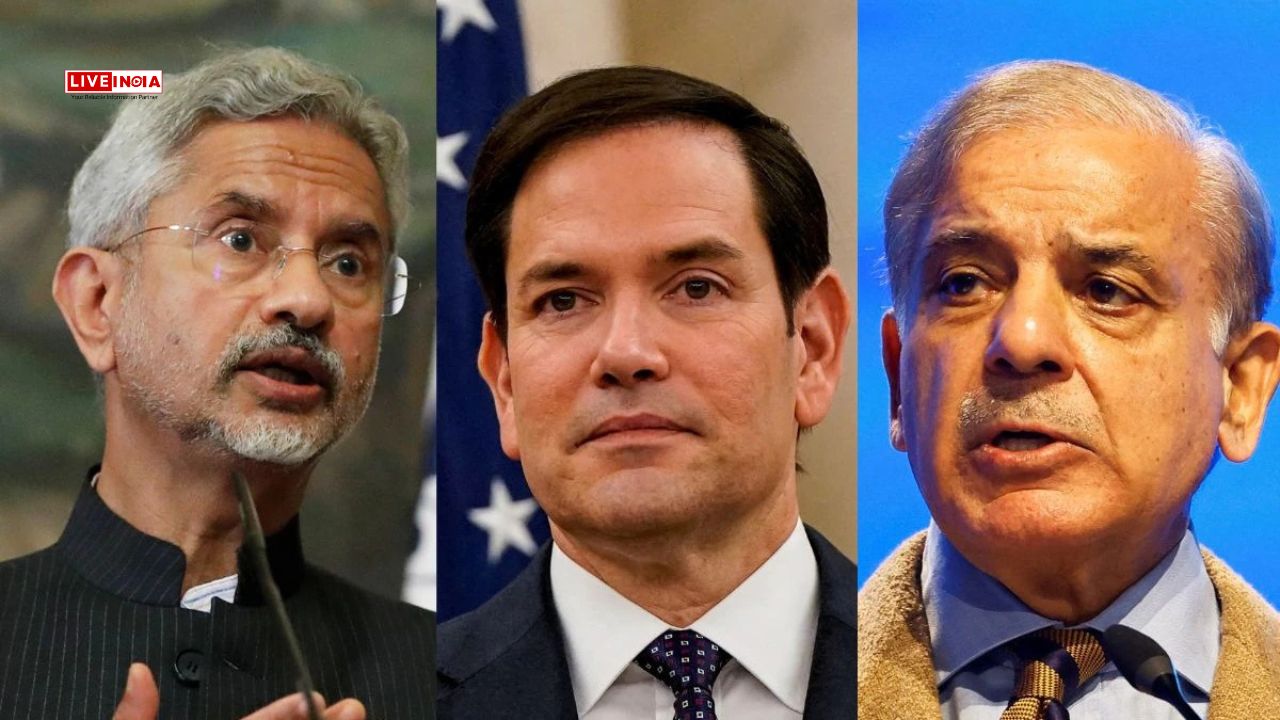


Rubio calls S. Jaishankar and Shehbaz Sharif, expresses solidarity with India, and asks both nuclear-armed nations to avoid further escalation while cooperating on anti-terror efforts.
Washington, May 1:
Amid soaring tensions following the Pahalgam terror attack that left 26 dead, US Secretary of State Marco Rubio held separate calls with Indian External Affairs Minister S. Jaishankar and Pakistan Prime Minister Shehbaz Sharif, urging both countries to exercise restraint and focus on de-escalation.
Also Read: India Blocks Instagram Accounts of Pakistani Celebrities After Kashmir Attack
The United States reiterated its solidarity with India and emphasized the importance of combating terrorism while also encouraging open communication between the two neighbours.
Secretary of State Marco Rubio spoke with Indian External Affairs Minister Dr S Jaishankar today. The Secretary expressed his sorrow for the lives lost in the horrific terrorist attack in Pahalgam, and reaffirmed the United States' commitment to cooperation with India against…
— ANI (@ANI) April 30, 2025
During his conversation with Jaishankar, Rubio conveyed condolences for the lives lost in the April 22 terror attack and reaffirmed Washington’s commitment to counterterrorism cooperation with India. At the same time, he called for “caution and restraint” as India accuses Pakistan of backing the assault and considers retaliatory options.
Discussed the Pahalgam terrorist attack with US @SecRubio yesterday. Its perpetrators, backers and planners must be brought to justice.
— Dr. S. Jaishankar (@DrSJaishankar) May 1, 2025
“Perpetrators, backers and planners must be brought to justice,” Jaishankar posted on X after the call.
In his call with Pakistani Prime Minister Sharif, Rubio pressed Islamabad to condemn the attack unequivocally and cooperate fully in any international investigation. US State Department spokesperson Tammy Bruce said the Secretary “urged Pakistani officials’ cooperation in investigating this unconscionable attack.”
Also Read: India vs Pakistan: A 2025 Military Strength Comparison Amid Fresh Border Tensions
Today, Secretary Marco Rubio spoke with Pakistan's Prime Minister Muhammad Shehbaz Sharif and encouraged Pakistan to work with India to de-escalate tensions, re-establish direct communications, and maintain peace and security in South Asia: US State Department spokesperson Tammy…
— ANI (@ANI) April 30, 2025
Rubio also urged both leaders to re-establish direct channels of communication, reduce tensions along the Line of Control, and ensure peace and stability in the region.
US Diplomatic Tightrope:
India has squarely blamed Pakistan for the Pahalgam attack, pointing to The Resistance Front (TRF), a known proxy of Lashkar-e-Taiba (LeT), which has claimed responsibility. Pakistan has denied involvement, instead calling for an independent probe.
While President Donald Trump and Vice President JD Vance publicly condemned the attack and expressed support for India, Washington has stopped short of directly criticizing Islamabad, trying to maintain a delicate balance in a region marked by historic hostilities.
India’s Retaliatory Measures:
In response to the attack, New Delhi has:
- Suspended the Indus Waters Treaty for the first time since 1960,
- Revoked all visas issued to Pakistani nationals,
- Closed the Wagah-Attari border, and
- Downgraded diplomatic relations with Islamabad.
Meanwhile, Pakistan has shut its airspace to Indian carriers, warned of a potential Indian military incursion, and reported cross-border firing along the Line of Control.
The situation remains tense as both nations weigh their options under international scrutiny, with the US and other global powers watching closely to prevent any further escalation.
Tags:
Marco Rubio, India Pakistan tensions, Pahalgam terror attack, S Jaishankar, Shehbaz Sharif, US foreign policy, terrorism, South Asia diplomacy, Indus Waters Treaty, cross-border firing