Waqf Act Hearing: Supreme Court Flags ‘Genuine Concern’ Over Waqf by User; CJI Says Article 26 Is Secular

Kapil Sibal, Abhishek Manu Singhvi challenge constitutionality of Waqf Act provisions; SC debates legality and Parliament’s role in Muslim personal law

New Delhi, April 16, 2025 – The Supreme Court of India began hearing a batch of petitions challenging the constitutional validity of the Waqf (Amendment) Act, 2025. A three-judge bench led by Chief Justice Sanjiv Khanna, along with Justices Sanjay Kumar and K.V. Viswanathan, is hearing arguments against provisions that several petitioners, including senior advocates Kapil Sibal and Abhishek Manu Singhvi, say threaten religious freedom and property rights.

Also Read: NHRC Sends Team to Murshidabad After Deadly Protests Over Waqf Act


⚖️ Key Highlights from the Hearing

  • CJI Sanjiv Khanna acknowledged a “genuine concern” over the Waqf by user provision, noting, “We are told Delhi HC is built on waqf land… not all waqf by user is wrong, but there is genuine concern.”
  • Kapil Sibal argued that Section 14 of the amended law, which allows non-Muslim nominations to the Waqf Board, is “a complete takeover” and violates the original intent of the Waqf Board under the 1995 Act.
  • On Section 3(r) and its proviso — allowing existing Waqf by user claims to stand unless disputed — Sibal said this would unjustly validate encroachments, potentially triggering mass adverse possession claims.
  • The Supreme Court questioned whether the matter should instead be referred to the High Court, a move Singhvi opposed, arguing that the case required SC’s constitutional scrutiny.

Also Read: Supreme Court to Hear Pleas Challenging Waqf Amendment Act Today


🕌 Parliament’s Role in Religious Laws

  • Sibal contended, “Who is the State to tell us how inheritance works in my religion?” referring to Islamic personal law.
  • In response, CJI Khanna remarked, “But in Hindu law, Parliament has also enacted laws… Article 26 is secular and applies universally.”

Also Read: Waqf Act Protests Turn Deadly in Bengal: 3 Dead, 150 Arrested; BJP Alleges Hindus Fleeing Murshidabad


🧾 Background

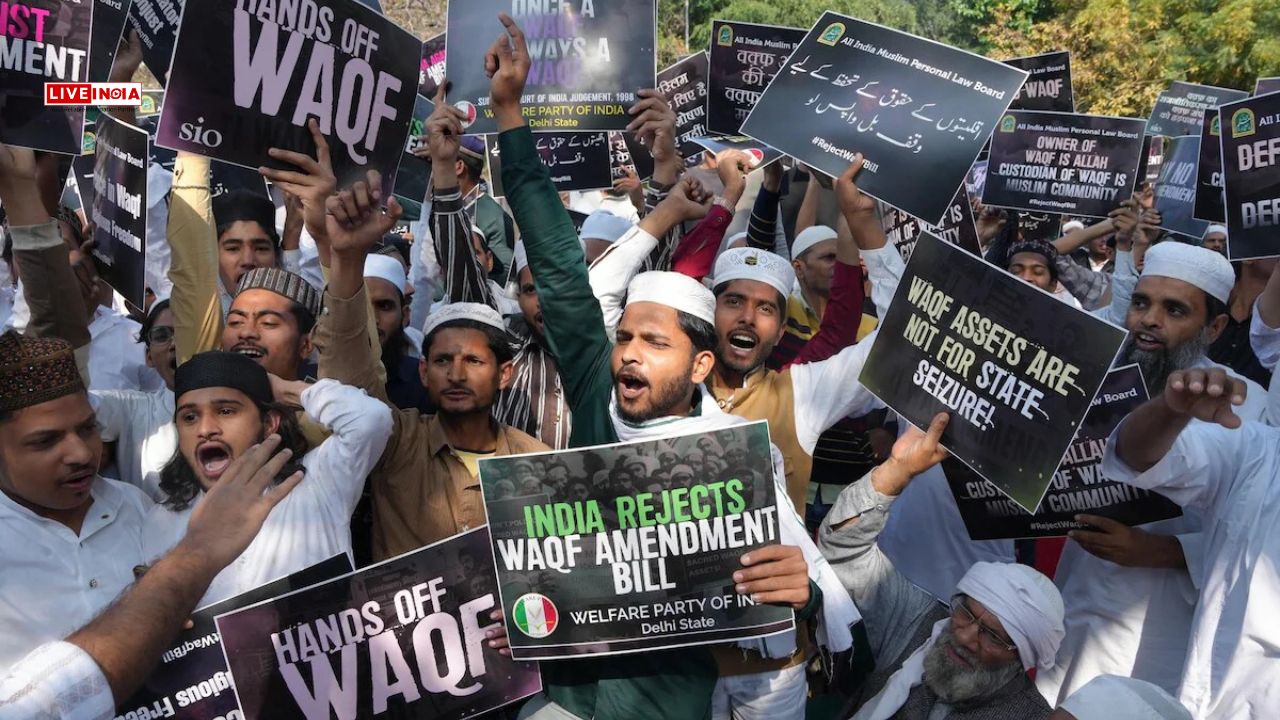
The Waqf Amendment Bill was passed by the Lok Sabha with 232 votes in favour and by the Rajya Sabha with 128 votes, receiving Presidential assent on April 5 and coming into force on April 8, 2025. The bill has drawn widespread protests from religious groups and opposition leaders who allege it infringes on minority rights and religious autonomy.


📌 What’s Next?

The apex court has asked counsels to clarify whether the case merits being heard by a constitutional bench or referred to respective High Courts. The hearing is ongoing and updates will follow.

Tags: Waqf Act 2025, Supreme Court Waqf hearing, Kapil Sibal Waqf case, Abhishek Manu Singhvi, Article 26 Constitution, Waqf by user, CJI Sanjiv Khanna, Waqf law protests, Muslim personal law, Waqf property dispute

News Desk

Recent Posts

Aryan Khan Secures No. 2 Spot on IMDb’s Most Popular Indian Directors List

Just over two months after the premiere of his directorial debut, the Netflix series The…

1 day ago

Ram Gopal Varma Defends Comments on Actresses, Calls Them “Praise, Not Objectification”

Filmmaker Ram Gopal Varma (RGV) has once again stirred controversy by defending his descriptive comments…

1 day ago

Kim Kardashian Reclaims Narrative, Confronts Robbers “Dripping in Diamonds”

Nine years after her terrifying 2016 Paris robbery, Kim Kardashian made a powerful statement of…

1 day ago

Aishwarya Rai Bachchan: Motherhood and Conviction Guide Career at Red Sea Film Festival

Bollywood icon Aishwarya Rai Bachchan captivated the audience at the Red Sea Film Festival 2025…

1 day ago

Which One is better for you amid current toxic air pollution levels: A1 or A2 milk?

Amid concerns over air pollution stressing the body, the choice of dairy milk can play…

1 day ago

How IndiGo crisis sent nationwide airports into meltdown

India's largest airline, IndiGo, is facing an unprecedented operational crisis, with over 1,000 flights cancelled…

1 day ago