


SC bars new Waqf Board appointments, protects existing Waqf properties until next hearing; Owaisi vows continued legal battle against the 2025 amendment
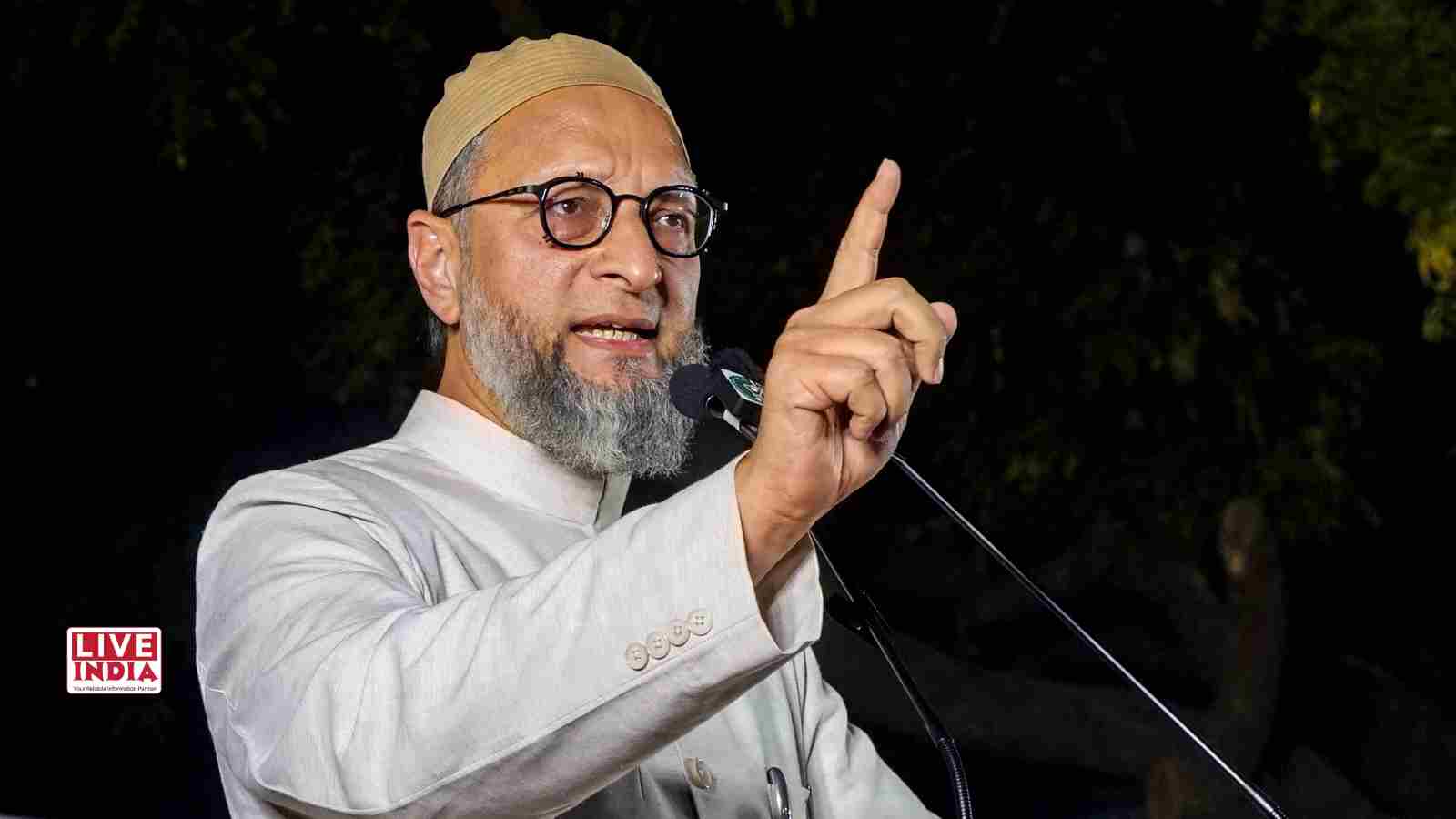
New Delhi, April 17: AIMIM MP Asaduddin Owaisi on Thursday labelled the Waqf (Amendment) Act, 2025, as “unconstitutional” and reiterated his opposition during the ongoing legal challenge in the Supreme Court. His remarks came shortly after the apex court granted the Centre an additional week to file a preliminary response to the petitions challenging the Act.
“We consider this Act unconstitutional. The Court has made it clear that no new Central or State Waqf Councils will be constituted for now, and Waqf-by-user properties cannot be deleted,” Owaisi said outside the court.
The Supreme Court, while noting the Centre’s stance, ordered status quo on appointments and property classifications, directing that no Waqf properties—whether notified, declared, or user-based—be altered or identified until further hearing.
SC Observes Government Cannot “Rewrite History”
A three-judge bench headed by Chief Justice Sanjiv Khanna, with Justices PV Sanjay Kumar and KV Viswanathan, is hearing the batch of petitions challenging the constitutional validity of the Act.
CJI Khanna observed that the government cannot rewrite history by introducing provisions to de-notify Waqf properties already declared as such through court orders.
The bench made key interim observations:
- No de-notification of Waqf properties declared through courts or traditional usage.
- Collectors may continue proceedings, but without invoking contentious new powers.
- Only Muslim members, apart from ex officio appointments, should be appointed to Waqf Boards and Councils.
Justice Viswanathan compared the situation to the Hindu Charitable Endowments Act, noting that “Hindus govern Hindu endowments—so Waqf must remain with Muslims.”
Kapil Sibal: “It’s Parliamentary Usurpation of Faith”
Senior advocate Kapil Sibal, representing one of the petitioners, sharply criticized the amended law for granting Collectors the power to decide whether a property qualifies as Waqf, calling it “a judge in his own cause.”
“This provision is per se unconstitutional. Only Muslims governed Waqf Boards until now. Allowing non-Muslims alters the very essence of the Waqf institution,” Sibal argued, adding, “It is a parliamentary usurpation of the faith of 200 million persons.”
Legal and Political Battle Intensifies
The Supreme Court declined to stay the Act in its entirety but emphasized the need to protect the status quo during judicial review. The court indicated it may later consider staying some key provisions, including:
- Inclusion of non-Muslims in Waqf bodies,
- Powers given to district collectors over Waqf properties,
- Provisions for de-notifying properties historically declared as Waqf.
The court was preparing to issue an interim order but held back after Solicitor General Tushar Mehta requested a full hearing on the matter, promising a detailed response within a week.
Widespread Opposition Across Political Spectrum
The Waqf (Amendment) Bill, 2025, which received President Droupadi Murmu’s assent on April 5, has sparked nationwide protests and drawn legal challenges from:
- MPs: Asaduddin Owaisi, Mahua Moitra, Manoj Jha, Faiyaz Ahmad
- Parties: AIMIM, Congress, RJD, DMK, CPI, AAP, YSR Congress, TVK
- Muslim bodies: AIMPLB, Jamiat Ulema-i-Hind, Samastha Kerala Jamiatul Ulema
The petitioners argue that the Act is arbitrary, discriminatory, and violates the fundamental rights of the Muslim community.
Meanwhile, BJP-ruled states such as Rajasthan, Haryana, Madhya Pradesh, Maharashtra, Assam, and Uttarakhand have filed applications in support of the Act, asserting it brings much-needed transparency and reform to Waqf governance.
The next hearing is expected to take place after the Centre files its preliminary response.