
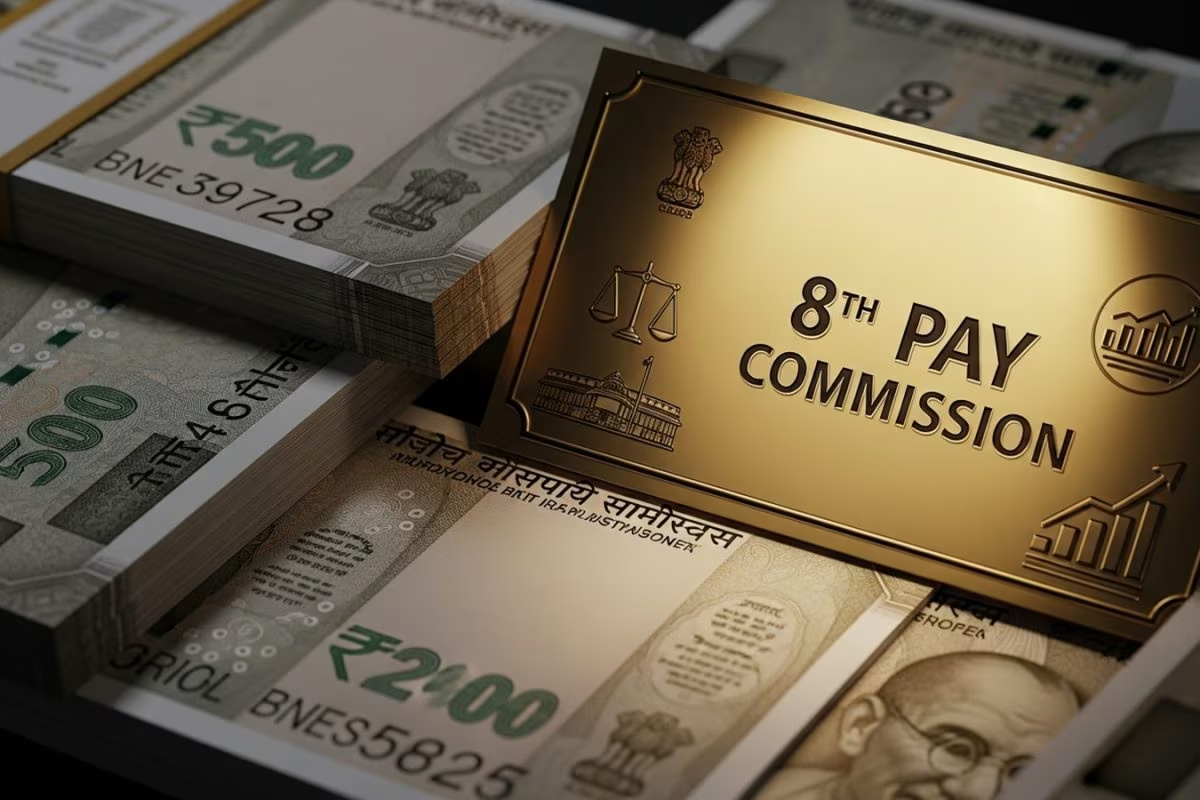


Even as the Government of India advances toward implementing the 8th Pay Commission, West Bengal continues to operate under its 6th Pay Commission framework (ROPA 2019), creating a widening gap in salaries and benefits for state government employees.
Why West Bengal Is Still On The 6th Pay Commission
The primary reason lies in the state’s independent pay revision cycle. Unlike the Centre, which follows a roughly 10-year revision pattern, West Bengal implemented its 6th Pay Commission only in 2020. As a result, it is still considered within its operational timeline.
However, the “6th Pay Commission” label can be misleading. In terms of salary structure, it was designed to align broadly with the Centre’s 7th Pay Commission. Despite this, employees argue that the gap in real earnings remains significant, especially when compared to central government staff.
8th Pay Commission: Where The Rest Of India Stands
The Government of India formally set up the 8th Pay Commission in late 2025, with implementation expected to reflect from 2026 onwards.
The new commission is likely to bring a substantial salary revision, with estimates suggesting a 30–50% increase in basic pay through a revised fitment factor. Consultations are currently underway, and the rollout is expected by mid-2027.
For West Bengal employees, this creates a stark contrast—while others prepare for their third major revision since 2006, they remain on their second.
Dearness Allowance (DA): The Core Issue
The biggest flashpoint is the gap in Dearness Allowance (DA), which is meant to offset inflation. As of April 2026, the difference between DA paid by the Centre and West Bengal exceeds 30%.
This disparity has triggered long-standing protests and legal battles. In a significant ruling, the Supreme Court of India directed the state government to clear pending DA arrears accumulated over nearly a decade.
Following the order, Chief Minister Mamata Banerjee announced that payments would begin from March 2026 in phased installments. While this addresses past dues, it does little to bridge the current gap with central pay standards.
A Growing Gap And Rising Discontent
The delay is no longer seen as a routine administrative lag but as a structural issue tied to fiscal constraints and policy choices. Employees argue that while the state’s pay scale may be technically aligned with older central benchmarks, the real income gap continues to widen due to lower DA and slower revisions.
What Lies Ahead
With the 8th Pay Commission moving forward nationally, pressure is mounting on West Bengal to revisit its pay structure sooner than its usual cycle. Whether the state accelerates reforms or continues with its independent timeline will determine how the wage gap evolves in the coming years.