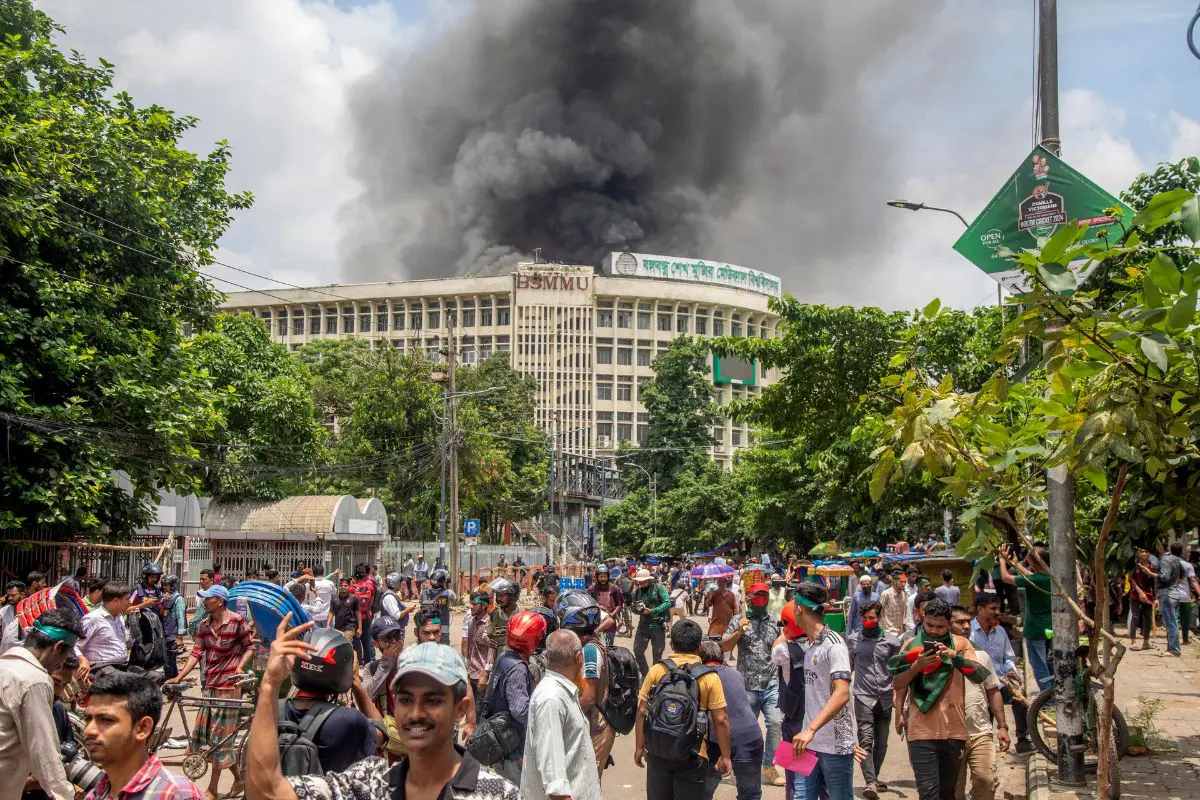
Bangladesh Plunges into Chaos as Protests and Violence Escalate
Bangladesh faced a day of unprecedented violence on Monday, with at least 135 people killed in clashes, according to the Dhaka Tribune. The unrest stemmed from confrontations between demonstrators and members of the Awami League, leading to severe casualties and widespread chaos.
The Dhaka Tribune reported that 96 people were killed in police firings during clashes. The Savar and Dhamrai regions on the outskirts of the capital witnessed intense violence, resulting in the deaths of 18 individuals. Additionally, 50 people, including multiple journalists, were injured as police used tear gas and bullets to disperse the crowd.
In a particularly shocking incident in the capital’s Uttara area, 10 people were killed after individuals in civilian clothes reportedly opened fire on protesters from the Uttara East police station. The enraged crowd retaliated by setting the police station ablaze.
As reported by Prothom Alo, Dhaka Medical College Hospital received 37 bodies between 11 am and 8 pm on Monday. Among these, three were unidentified and had suffered bullet wounds. The hospital also treated 500 people for various injuries, with 70 admitted for serious conditions.
The violence wasn’t confined to Dhaka. In Sreepur, Gazipur, Border Guard Bangladesh (BGB) personnel opened fire on miscreants blocking two BGB trucks, injuring six people.
Adding to the chaos, rumors about Prime Minister Sheikh Hasina’s departure from Bangladesh led to widespread celebrations in Chittagong. Crowds marched through the city, distributing sweets and celebrating the news.
Facing mounting protests and political instability, Prime Minister Hasina resigned and arrived in India on Monday evening. Her future plans remain uncertain, with speculation suggesting a potential move to London.
In Dhaka, leaders of the Anti-Discrimination Student Movement proposed an interim government led by Nobel Laureate Dr. Muhammad Yunus to address the crisis. This proposal was made in a video message released by key student leaders Nahid Islam, Asif Mahmud, and Abu Bakar Mazumdar. President Mohammed Shahabuddin approved the formation of an interim government to manage the situation.
The protests, initially sparked by students demanding the abolition of the quota system for government jobs, have evolved into broader anti-government demonstrations, plunging Bangladesh into a severe political crisis.
In a revelation that has added a heroic layer to Royal Challengers Bengaluru's (RCB) historic…
Mayor Zohran Mamdani, currently in the first 100 days of his historic term, spoke out on Wednesday,…
The International Cricket Council (ICC) has indefinitely paused ticket sales for the India vs. Pakistan…
High-stakes Muscat meeting tests whether diplomacy can outrun rising military pressure February 6, 2026: Iran’s…
US President again credits Washington with averting war, India denies third-party role February 6, 2026:…
Commuters across India should prepare for a major transport disruption on Saturday, February 7, 2026,…