
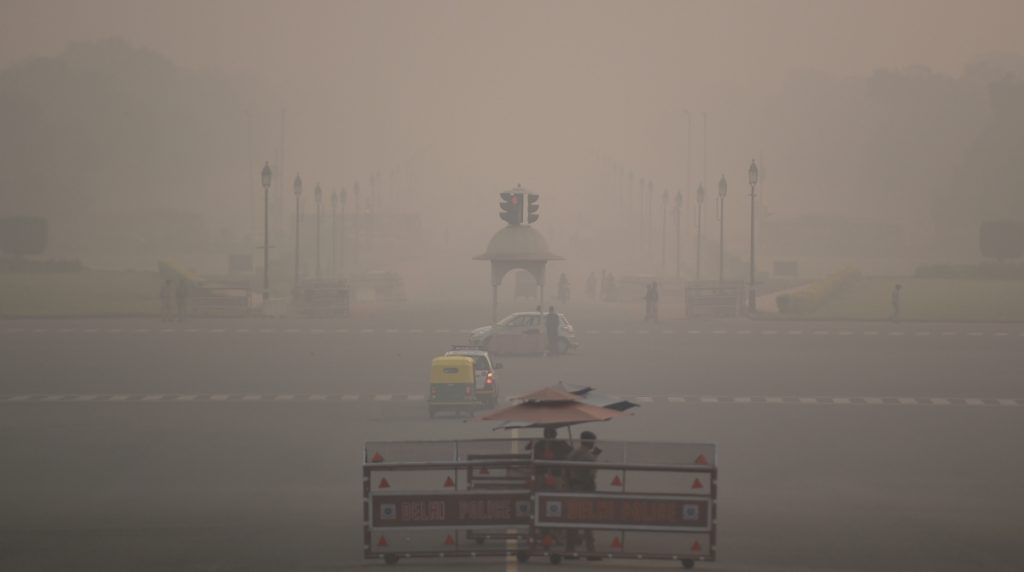


Social Media Buzzes with Old Screenshots and Private Device Readings; Official CPCB Data Shows ‘Poor’ to ‘Very Poor’
Amid the annual deterioration of air quality in the national capital, screenshots and videos claiming that the Air Quality Index (AQI) in Delhi and its surrounding areas has reached 999 and above have gone viral on social media, particularly following the Diwali festival.
However, official data from government monitoring stations does not support these high figures.
Viral Claims and Political Allegations
The viral posts, many of which appear to be older, show a person holding a device that purportedly records the AQI spiking to 999 when taken outside. The highest reading on many monitoring devices is capped at 999, which is why users claim the actual pollution level is higher.
- One post on X read, “AQI jumps to 999 from 194 in Delhi due to Diwali firecrackers. It’s more than 999 but this meter could measure up to 999 only.”
- AAP MLA Saurabh Bharadwaj shared a similar clip, alleging that the government was “purposely hiding actual AQI data” from the public to avoid triggering stricter anti-pollution measures.
- Another AAP leader, Sanjay Singh, had previously shared a screenshot showing an extremely high, though unofficial, AQI reading of 1991 in Naraina Village on October 20.
What Official Monitoring Stations Show
Despite the anecdotal videos and political claims, official real-time air quality data does not reflect AQI levels of 999 or above.
- CPCB Data (Current/Recent): Data from the Central Pollution Control Board (CPCB) shows the overall AQI for Delhi has been fluctuating between the ‘Poor’ (201-300) and ‘Very Poor’ (301-400) categories. As of recent readings, the average CPCB data has been in the range of 200-300, with hotspots occasionally touching the ‘Severe’ (401-500) category.
- Other Portals: Websites like IQAir and AQICN, while showing concerning readings, also place the average AQI far from the 999 mark, with Delhi currently ranked among the world’s most polluted cities, but with readings well below the rumored level.
While a few monitoring stations have historically recorded the maximum readable limit of 999, particularly immediately after intense firecracker bursting on Diwali night in previous years (e.g., in 2018), this high figure is not representative of the current city-wide average.
Experts and official bodies have forecasted that air quality is expected to deteriorate further over the coming days, likely slipping into the ‘Very Poor’ category across most areas due to low wind speeds and colder temperatures trapping pollutants.