


- Advertisement -
The Ministry of Environment, Forest and Climate Change (MoEFCC) has provided an update in the Rajya Sabha regarding India’s air quality standards, its relationship with global guidelines, and improvements in the Delhi-NCR region.
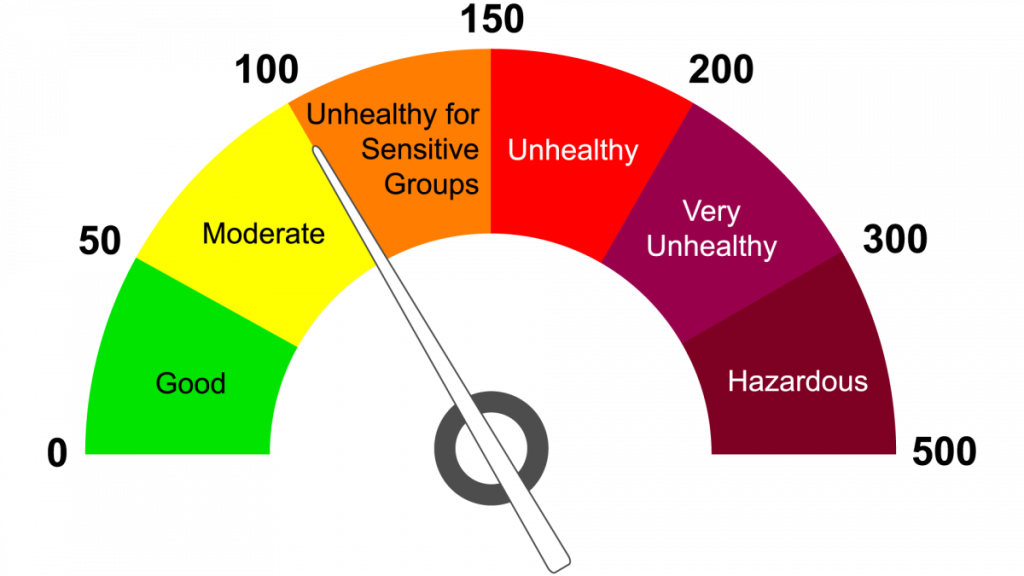
India’s Air Quality Standards vs. WHO Guidelines
Minister of State (MoS) for Environment, Kirti Vardhan Singh, clarified the government’s approach to air quality standards in response to a query from CPI(M) MP V Sivadasan:
- WHO Guidelines: The World Health Organisation’s (WHO) air quality guidelines are a guidance document with recommended values.
- National Standards: Countries, including India, establish their own air quality standards based on geography, environmental factors, background levels, socio-economic status, and national circumstances.
- India’s NAAQS: The MoEFCC has notified the National Ambient Air Quality Standards (NAAQS) for 12 air pollutants to safeguard public health and environmental quality.
| Pollutant Measurement | Revised WHO Threshold | India’s 2009 NAAQS | Comparison (India vs. New WHO) |
| PM2.5 (24-Hour Average) | $15\mu g/m^3$ | $60\mu g/m^3$ | 4 times higher |
| PM2.5 (Annual Average) | $5\mu g/m^3$ | $40\mu g/m^3$ | 8 times higher |
| PM10 (24-Hour Average) | $45\mu g/m^3$ | (Not explicitly mentioned, but higher) |
Monitoring and Progress
The Ministry highlights its efforts to track and improve air quality:
- Swachh Vayu Survekshan: The MoEFCC conducts this annual survey to rank 130 cities covered under the National Clean Air Programme (NCAP) based on implementation of air quality improvement measures.
- Improvement in Delhi-NCR: Union Environment Minister Bhupender Yadav noted that focused policy interventions have led to progressive improvement in Delhi-NCR air quality:
- Good Air Quality Days (AQI < 200): Increased to 200 days in 2025 from 110 days in 2016.
- Average AQI (Jan-Nov 2025): Recorded at 187, down from 213 in 2018.
- Severe Plus Days (AQI > 450): Has not been reached for a single day in Delhi in 2025 so far.
- Stubble Burning Reduction: Punjab and Haryana recorded about 90% reduction in fire incidents during the paddy harvesting season in 2025 compared to 2022.