

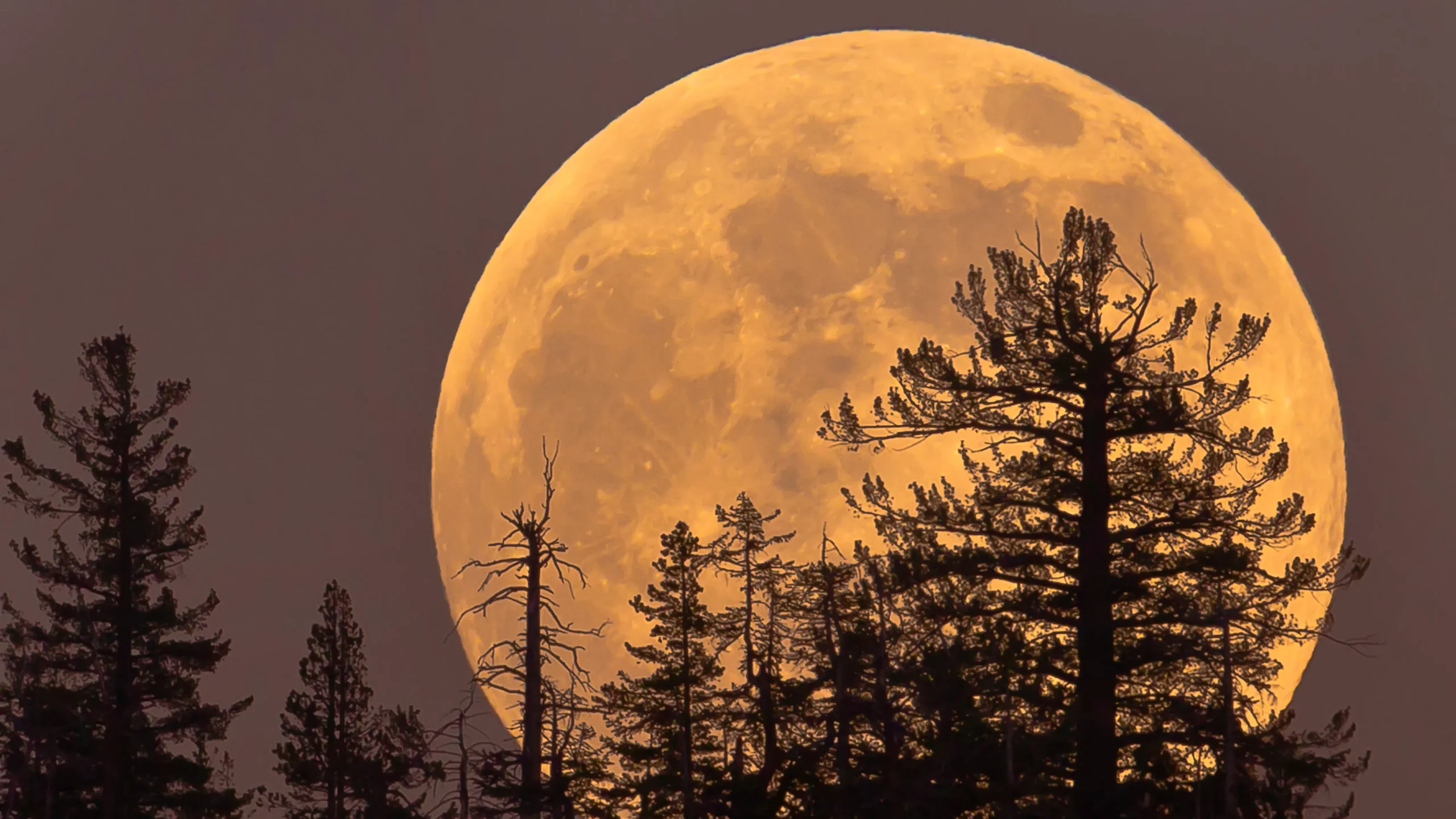


Skywatchers across North America are in for a spectacular sight tonight, December 4th, as the last Supermoon of the year, known as the ‘Cold Moon,’ reaches its peak illumination.
The event, which sees the Moon appear notably bigger and brighter, is drawing attention from astronomy enthusiasts.
What is the Cold Moon?
The name ‘Cold Moon’ is rooted in Native American culture. It is traditionally used to refer to the Full Moon that occurs closest to the winter solstice, marking the unofficial inauguration of the winter season.
Understanding a Supermoon
A Supermoon is a popular term for the astronomical event where a Full Moon or a New Moon coincides with lunar perigee—the point in the Moon’s orbit where it is closest to the Earth.
While not an official scientific term, the concept was coined by astrologer Richard Nolle in 1979. He defined a Supermoon as an occurrence where the Full or New Moon is within 90 per cent of its closest point to Earth. Only the Full Supermoon is visible, making tonight’s event particularly special.
When and Where to Watch
The Supermoon will be visible across North America from Moonrise on December 4th.
- Peak Illumination: The Moon will reach its brightest at 6:14 PM ET.
- Best Viewing Time: The full majesty of the Moon is best seen when the lunar body is close to the horizon.
- East Coast Moonrise: Approximately 3:35 PM ET (15:35).
- Pacific Coast Moonrise: Approximately 4:22 PM PT (16:22).
While the Cold Moon will be a pleasant experience for the naked eye, using binoculars or a telescope is recommended to appreciate the unique features of the lunar surface.