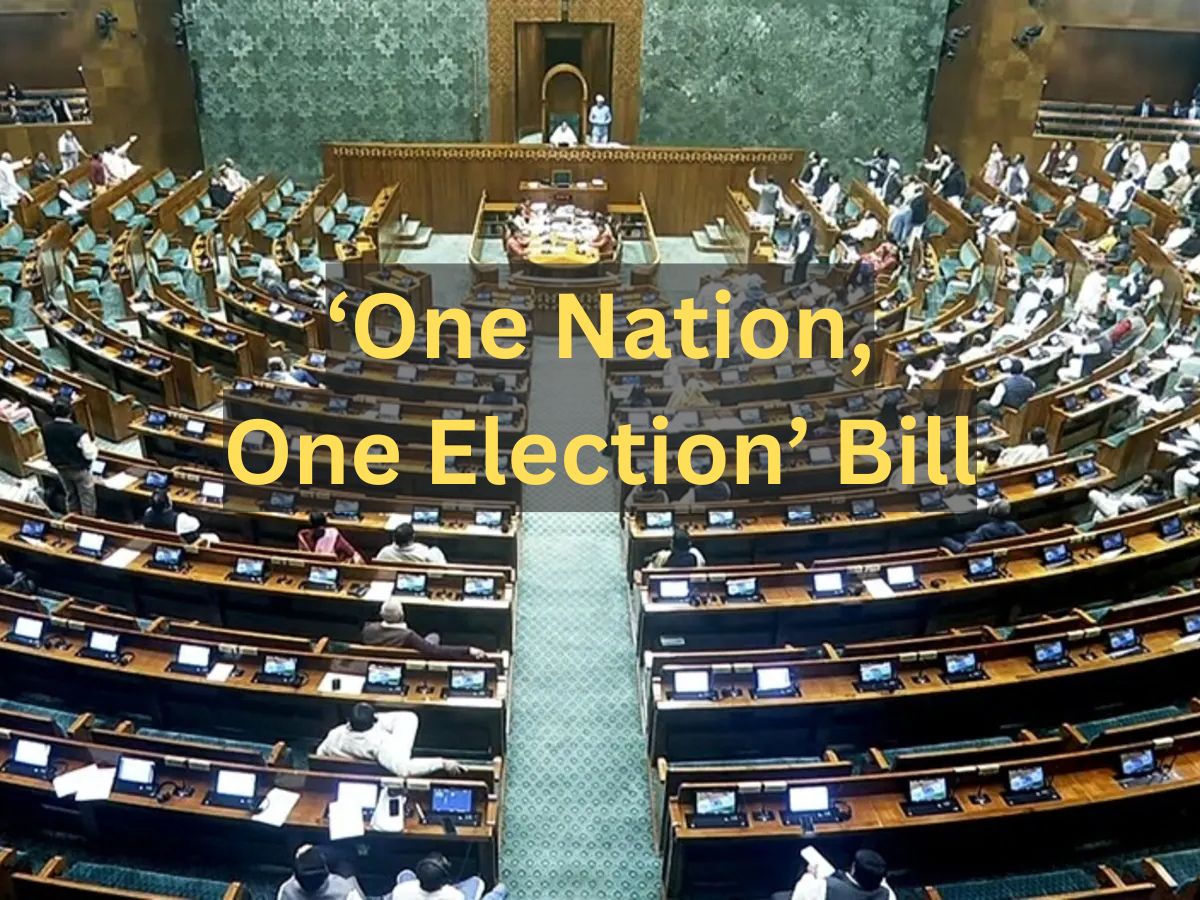
One Nation, One Election Bill
New Delhi, December 18: The Lok Sabha’s introduction of the ‘One Nation, One Election’ Bill on Tuesday sparked heated debates, with Opposition parties strongly opposing the proposal, calling it an attack on federalism and democracy. The contentious legislation aims to enable simultaneous elections for the Lok Sabha and state assemblies.
Despite the ruling BJP’s backing, the bill’s introduction saw 269 votes in favor and 196 against. It will now be referred to a Joint Parliamentary Committee (JPC) for detailed examination.
Congress leaders and other Opposition members raised concerns about the potential ramifications of the bill.
Congress MP Gaurav Gogoi criticized the government’s proposal, stating:
“The bill seeks to save 0.02% of the budget’s expenditure but risks dismantling India’s federal structure and undermining the autonomy of state governments.”
MP Kiran Kumar Chamala called the legislation unconstitutional, urging further discussion before referring it to the JPC. Similarly, TMC MP Saugata Roy demanded the bill’s withdrawal, citing risks to India’s constitutional framework.
Shashi Tharoor, another senior Congress leader, emphasized the government’s lack of a two-thirds majority required to pass the constitutional amendment, cautioning against persistent efforts to push the bill forward.
TMC leader Kalyan Banerjee alleged that the move paves the way for a presidential-style government, striking at the heart of India’s parliamentary democracy.
The BJP and its allies defended the legislation, highlighting its potential to streamline elections, reduce costs, and enhance governance.
Union Minister Shivraj Singh Chouhan noted that frequent elections disrupt policymaking and hinder the country’s development. Shiv Sena MP Milind Deora welcomed the initiative, emphasizing that simultaneous elections could reduce the financial burden on taxpayers and allow governments to focus on long-term goals.
Senior RSS leader Indresh Kumar hailed the bill as a step toward realizing the foundational values of the Constitution, describing it as a “significant move to strengthen India’s democratic structure.”
Interestingly, 20 BJP MPs, including senior leaders like Nitin Gadkari, Giriraj Singh, and Jyotiraditya Scindia, were absent during the bill’s introduction, despite the party issuing a whip for attendance. Sources indicate that notices may be served to these MPs to clarify their absence.
The Constitution (One Hundred and Twenty-Ninth Amendment) Bill, 2024, and The Union Territories Laws (Amendment) Bill, 2024, will undergo deliberation in the JPC. Union Home Minister Amit Shah emphasized the government’s commitment to detailed discussions, adding that PM Modi himself directed that the bill be referred to the JPC for further analysis.
The debate over the bill is expected to intensify, reflecting broader concerns about its impact on India’s electoral and governance frameworks.
In a deeply moving interview on the On Purpose podcast on February 5, 2026, singer…
On February 5, 2026, Prime Minister Narendra Modi addressed the Rajya Sabha to reply to…
In a shocking development for fans of the newly launched reality show The 50, veteran…
In a viral Instagram video shared on February 4, 2026, comedian Samay Raina delivered a…
New details have emerged in the investigation of the firing incident outside filmmaker Rohit Shetty’s…
Singer Talwiinder, the enigmatic masked voice behind hits like Khayaal, has finally addressed the whirlwind…