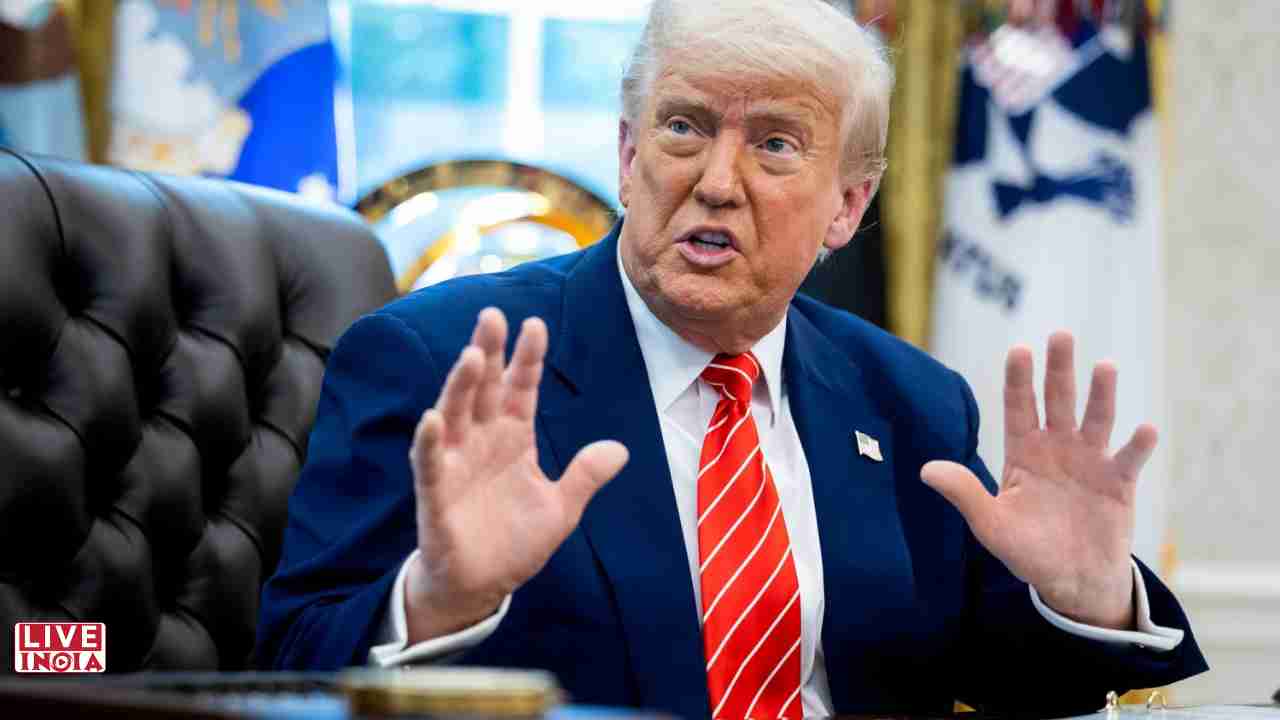
Trump Signs Proclamation Banning Entry from 12 Nations, Citing National Security Threats
Washington, DC [US], June 5: In a move that marks a sharp escalation of immigration control under the guise of national security, U.S. President Donald Trump has signed a sweeping proclamation banning the entry of foreign nationals from 12 countries, including Afghanistan, Iran, and Libya, while imposing partial restrictions on another seven nations. The decision, released by the White House on Tuesday, is being justified on grounds of “public safety and national security.”
The proclamation bars the entry of immigrants and nonimmigrants from Afghanistan, Myanmar (Burma), Chad, Republic of the Congo, Equatorial Guinea, Eritrea, Haiti, Iran, Libya, Somalia, Sudan, and Yemen. Simultaneously, Burundi, Cuba, Laos, Sierra Leone, Togo, Turkmenistan, and Venezuela face limited or conditional entry.
In his proclamation, Trump noted:
“During my first Administration, I restricted the entry of foreign nationals into the United States, which successfully prevented national security threats from reaching our borders and which the Supreme Court upheld.”
He reiterated that Executive Order 14161, issued on January 20, 2025, outlined a renewed focus on preventing entry of individuals who might commit terrorist attacks, threaten national interests, or misuse U.S. immigration systems.
Trump warned that visa processing must be approached with vigilance, to ensure applicants do not harbor hostile views or affiliations with terror groups.
“The U.S. must ensure that admitted aliens… do not bear hostile attitudes toward its citizens, culture, government, institutions, or founding principles,” he stated.
He also stressed the differing risks posed by immigrants versus nonimmigrants, arguing that immigrants—once granted lawful permanent resident status—are far more difficult to remove than nonimmigrants, even if security concerns emerge.
“Lawful permanent residents are more difficult to remove… which increases the costs and aggravates the dangers of errors,” Trump noted.
The proclamation asserts that countries lacking proper identity verification and information-sharing protocols cannot be trusted to vet their nationals sufficiently, thus putting the U.S. at risk.
As part of the official rationale, Trump cited specific justifications for banning entry from each of the 12 countries.
For example:
The White House emphasized that the latest restrictions are also designed to pressure foreign governments into greater cooperation on U.S. immigration vetting standards and counterterrorism coordination.
“The restrictions and limitations imposed by this proclamation are required to garner cooperation from foreign governments, enforce our immigration laws, and advance other important foreign policy, national security, and counterterrorism objectives,” the proclamation concludes.
The directive is likely to draw significant domestic and international scrutiny, reigniting debate around the ethics and legality of broad-based immigration bans, a controversial hallmark of Trump’s first term. Critics are expected to challenge the order in courts, echoing legal battles that followed similar bans during his previous administration.
Whether these new policies withstand judicial review remains to be seen—but the message is unmistakable: under Trump, immigration policy will be driven by an uncompromising national security-first framework.
Sunny Deol and Akshaye Khanna face off in a high-stakes courtroom drama of ethics and…
No refund for Vande Bharat and Amrit Bharat tickets cancelled within eight hours of departure…
Services to four destinations suspended till February 28 over regional security concerns February 3, 2026:…
Eight Opposition MPs suspended after repeated disruptions over national security debate February 3, 2026: The…
Makers consider recast after Deepika Padukone’s exit from Kalki 2898 AD 2 February 3, 2026:…
Former India captain calls award a special moment, vows to keep winning matches for the…