

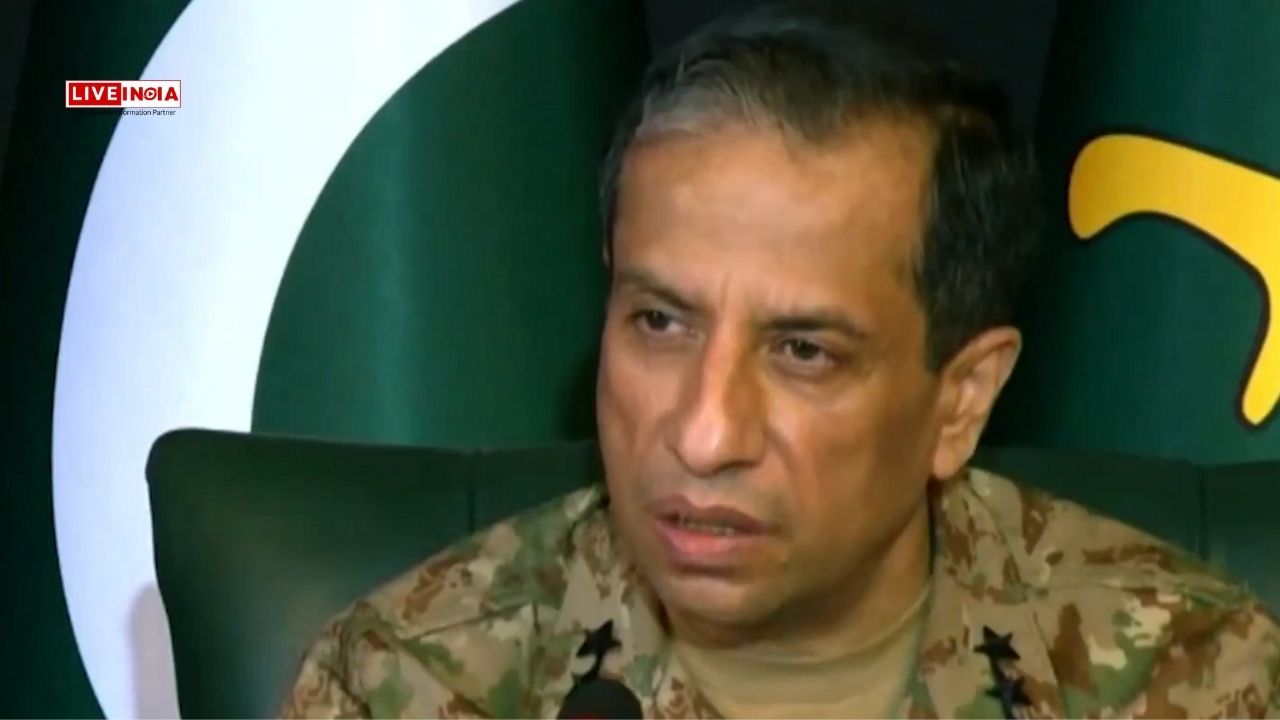


Lt Gen Ahmed Sharif Chaudhry invokes terrorist Hafiz Saeed’s infamous rhetoric in response to India suspending the Indus Waters Treaty following the Pahalgam terror attack.
May 23, 2025 | Pakistan’s military has escalated tensions with India by issuing a veiled threat over the suspension of the Indus Waters Treaty, with a top army official using rhetoric previously employed by UN-designated terrorist Hafiz Saeed.
Also Read: India Urges Turkiye to Press Pakistan on Terror Support Amid Celebi Row
Speaking at a public event at a university in Pakistan, Lt Gen Ahmed Sharif Chaudhry, Director General of Inter-Services Public Relations (DG-ISPR), declared:
“If you block our water, we will choke your breath.”
The threat comes weeks after India suspended key provisions of the 1960 Indus Waters Treaty in response to the April 22 terror attack in Jammu and Kashmir’s Pahalgam, in which 26 people were killed.
Mirroring Hafiz Saeed’s Words
Chaudhry’s choice of words drew immediate attention for their uncanny similarity to those of Hafiz Saeed, the Lashkar-e-Taiba founder and 2008 Mumbai attacks mastermind.
A resurfaced video circulating on social media platform X shows Saeed delivering the exact same line:
🔴#BREAKING Pakistani military spokesperson @OfficialDGISPR is at a university in Pakistan delivering hate and violence-encouraging speeches against India echoing what terrorist Hafiz Saeed said some years ago !
— Taha Siddiqui (@TahaSSiddiqui) May 22, 2025
Shameful! pic.twitter.com/W7ckNPePOH
“If you stop our water, we will choke your breath.”
Analysts and netizens have pointed out the dangerous overlap in tone between a military spokesperson and a globally designated terrorist, raising fresh questions over Pakistan’s continuing ties to extremist elements.
India’s Stand: “Blood and Water Cannot Flow Together”
India suspended the treaty on April 23, a day after the Pahalgam attack, as part of a wider counter-terror response that also included Operation Sindoor—a coordinated strike on nine terror camps across Pakistan and Pakistan-Occupied Kashmir on May 7.
Also Read: ‘Pakistan Breeds Terrorism’: Indian Diplomat’s Blistering WHO Rebuttal Goes Viral
New Delhi has consistently reiterated its stance:
“Blood and water cannot flow together; talk and terror cannot go together.”
Signed in 1960 and brokered by the World Bank, the Indus Waters Treaty governs the water-sharing of the Indus River and its tributaries between India and Pakistan. It also mandates periodic sharing of hydrological data and coordinated dispute resolution mechanisms.
Background: Escalating Tensions
- Pakistan has been lobbying for India to reconsider its suspension, calling it a unilateral move and a treaty violation.
- India maintains the move is a lawful countermeasure tied to national security.
- Pakistan’s top leadership and military have adopted an increasingly hostile tone in public forums.
Conclusion: Diplomatic Fallout Continues
With military officials echoing terrorist rhetoric, diplomatic space between the two countries appears to be rapidly shrinking. As international stakeholders watch closely, the future of the Indus Waters Treaty — once hailed as a model of water diplomacy — now hangs in the balance.
Tags:
Indus Waters Treaty, Ahmed Sharif Chaudhry, Hafiz Saeed, India-Pakistan tensions, Operation Sindoor, Pahalgam attack, Pakistan Army, cross-border terrorism, water dispute, India retaliation, DG-ISPR, Hafiz Saeed threat, OperationSindoor,